

Things Princess Diana Couldn't Do After She Married Prince Charles
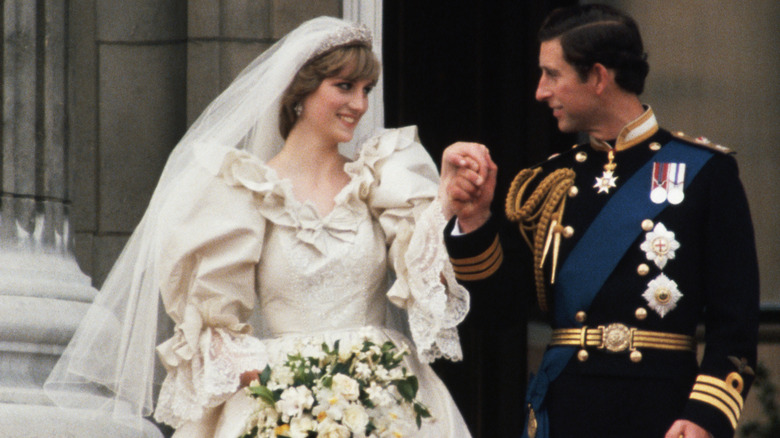
If you thought Prince Harry was the ultimate rebel in the royal family, you should know that he got it from his mother. When Princess Diana married King Charles III, she gave up a normal life, and there were a multitude of things she was no longer allowed to do as the future queen of England.
Even so, there were many strict royal rules Diana dared to break. What's more, she established some new royal traditions in the process, like taking pictures with your newborn baby in front of the Lindo Wing at St. Mary's Hospital. Not only did Diana disregard the royal tradition of giving birth at home, she also started the tradition of giving birth at that specific hospital, with Princess Catherine and Prince William following in her footsteps with the birth of all three of their children. Before that, she already raised the eyebrows of royal traditionalists when she omitted the phrase about obeying her husband from her wedding vows. Years later, Catherine and Meghan Markle both followed her lead when they married into the royal family.
Diana was, in many ways, someone who helped modernize the monarchy. She put her family before her royal duties, spoke openly about mental health, and even sent William to public school, which we bet left some clutching their pearls, since the prince was the first ever heir to the British throne to get his formative education alongside the general public. Of course, there were plenty of royal rules that mandated there were certain things the Princess of Wales could no longer do once she said "I do" to Charles, and some of them were harder to shake than others.
Princess Diana's signature could no longer include her maiden name
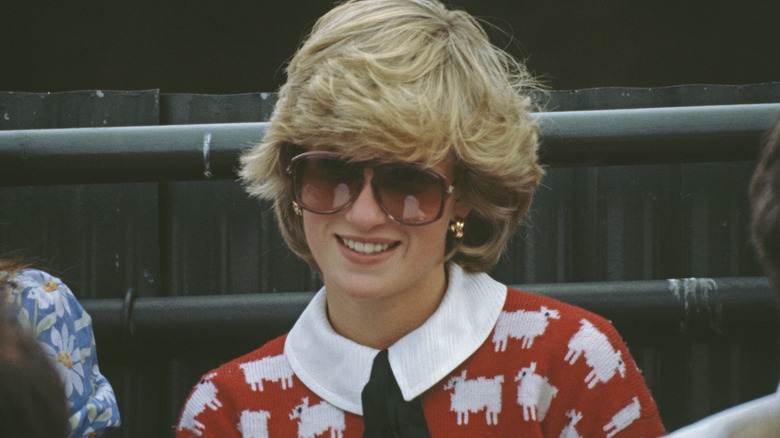
When you become a member of the royal family, your identity changes. The life Princess Diana had before she met King Charles III came to an end the moment she walked down the aisle and said her vows. The immediate physical proof of this was the way she had to alter her signature. Those who marry into the royal family only sign their first name, not their last, but the princess proved she was a royal rebel in the making when she signed her wedding register as "Diana Spencer." She did eventually conform to the rule, signing only her first name.
Aside from omitting your last name from your signature, royals are also supposed to refrain from putting their John Hancock on any memorabilia from fans. This rule was implemented to help prevent their signatures from being forged by individuals with nefarious intentions. Per People, Princess Catherine confirmed this when she addressed students at the 2022 Chelsea Flower Show, explaining, "My name's Catherine. I'm not allowed to write my signature, it's just one of those rules."
It shouldn't shock anyone that Diana didn't always adhere to this rule. She notably sent an autographed photograph to a fan she met in Hyde Park in 1997 before her death. Said fan, Jim McGinnis, was lost, and asked her for directions, only to realize he was speaking to the Princess of Wales. Per Marie Claire, she took a photo with him (something else royals didn't usually do), and had him mail it to her. She mailed it back to him with a sweet message that read, "Dearest Jim, with lots of love from Diana."
Princess Diana couldn't physically interact with the public anymore
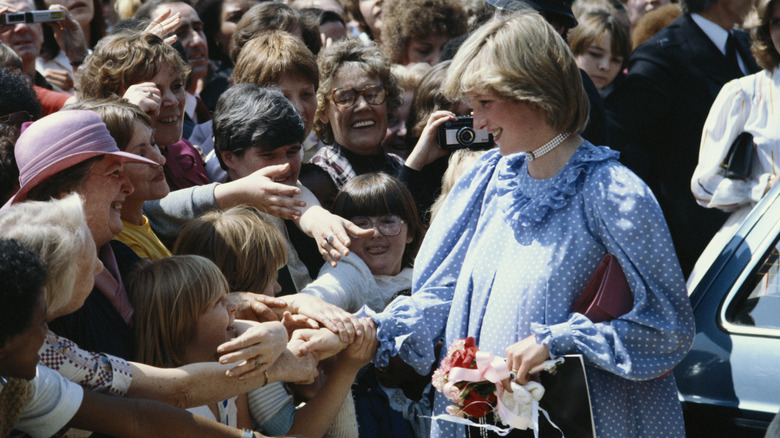
Some of the biggest mistakes people have made when meeting Queen Elizabeth II simply occurred because, well, they interacted with her like she was any other famous human. But she wasn't, and there are certain rules the public is expected to follow when they meet a royal — whether in private or in public. Princess Diana is known for being the People's Princess, but when she married King Charles III, the royal rules applied to her too, and suddenly, she couldn't quite interact with the public the way she used to once she became the Princess of Wales.
Members of the royal family have a security team ensuring their safety, which puts a bit of distance between them and the public. Diana had a security detail as well, and those who met her had to follow certain rules. Simply hugging the princess without invitation was no longer acceptable and taking pictures with her was a sticky situation that required discretion. "[It's] best not to initiate personal physical contact with a member of the royal family," British etiquette expert Lucy Hume told Reuters in 2018, adding that the royal needs to make the first move.
Diana also went from being a lady to a princess when she married Charles, which meant the way people addressed her also changed. The royal family's website stipulates that those who meet with female members of the royal family need to refer to them as "Your Royal Highness," and, after the initial greeting, should refer to them as "Ma'am."
Princess Diana had less freedom to wear whatever she wanted
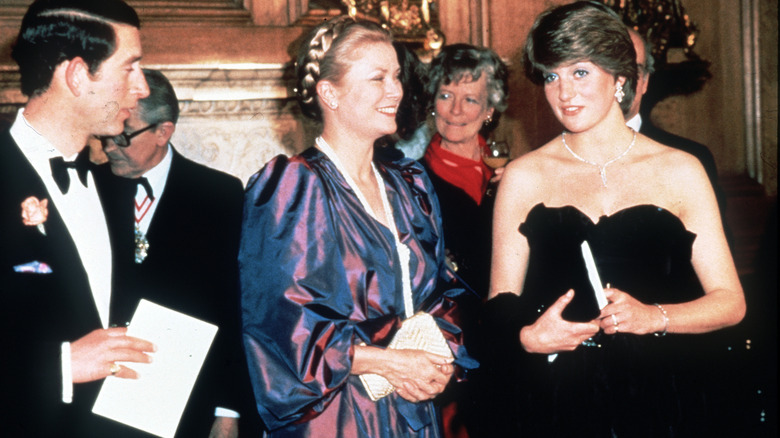
The royal family dress code has been discussed and dissected at length. Princess Diana certainly added her own flair to the royal wardrobe, but she was held to certain limitations. Of course, she didn't always follow them.
When you're a member of the Firm, your ensemble needs to be on point. Hats are worn to formal events; the silhouette of your clothing should be modest; not revealing; and even when you're opting for a casual look, you still need to look put together. Royal women often favor bright colors when they do public engagements — it helps the public to easily spot them among a crowd — and if you're wearing a dress or skirt, pantyhose are a must. Then, of course, there's the golden rule of only wearing black to funerals or when the family is in mourning. Diana, however, decided early on that this rule did not apply to her.
While Diana certainly dressed the part of a royal for most of her life, she did break the rules every now and then, and before she married King Charles III, she sported a strapless black dress to their first royal engagement as an engaged couple. As she recalled to biographer Andrew Morton for "Diana: Her True Story — In Her Own Words," Charles told her a black outfit wasn't appropriate and reserved for mourning when you're a royal. She clapped back, "Yes, but I'm not part of your family yet."
Princess Diana technically wasn't supposed to go wild with the nail polish
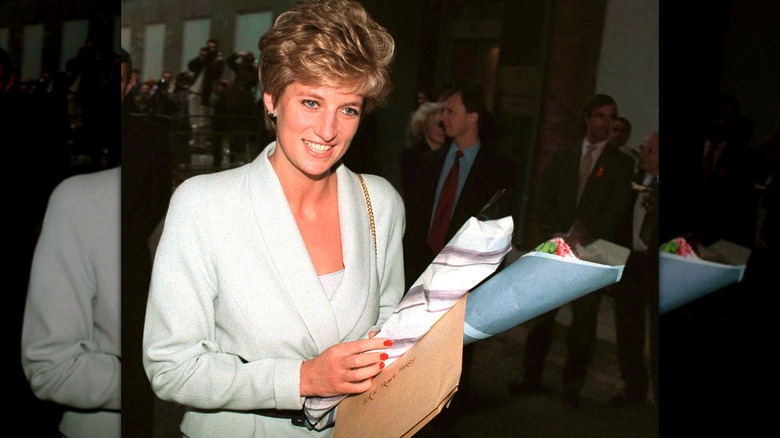
It's been said for years that there are certain nail polish colors the royals are forbidden from wearing, all thanks to Queen Elizabeth II's preference for laid back colors that look great without drawing too much attention. Her Majesty notably favored Essie's Ballet Slippers shade, and other women in the family adopted the queen's preferred hue. Naturally, Princess Diana was expected to do the same when she married King Charles III, if not by the queen herself, then certainly by eagle-eyed royal pundits.
Royal author Omid Scobie told Harper's Bazaar in 2018 that there was no strict rule dictating the color of nail polish women in the royal household had to wear, but that the colors chosen were "simply about being appropriate." So while Diana could probably have painted her nails black if she really wanted to, she likely would have gotten some stink eye from Her Majesty at the dinner table for her choice. The Daily Mail has reported that the queen deemed eye-catching nail polish "vulgar."
Diana notably did paint her nails a bold red after she divorced Charles. However, during her tenure as a royal, the subtle nail polish rule seemed to be one she followed most of the time.
The People's Princess could not be openly political
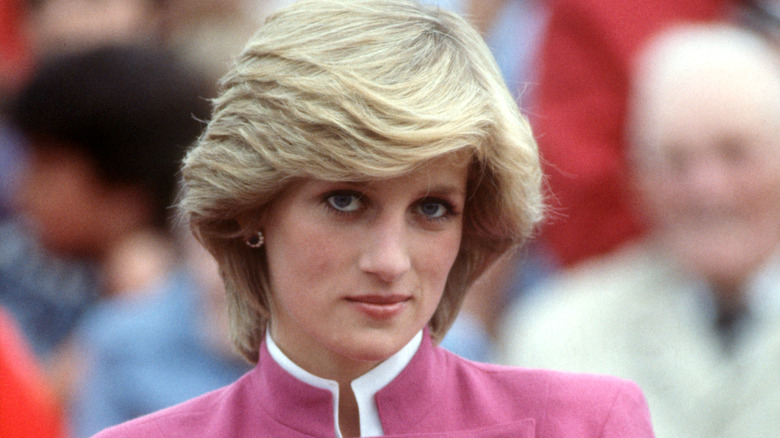
When you become a member of the royal family, your days of talking politics are over. The royal family is expected to remain mum on their political views, and it's been that way for decades. However, if you're not a working royal, it won't really be frowned upon if you make your way to the ballot box on election day. Princess Diana, of course, was a senior working royal, which meant it was imperative she remained politically neutral after she married King Charles III, even though she wasn't legally forbidden to vote.
"The king and active members of the royal family can legally cast a vote at general elections on the same basis as other eligible citizens, but in practice do not do so for obvious reasons, especially because it would cause a furore of media speculation and violate the constitutional requirement today that they maintain a strict party political impartiality," constitutional law expert Robert Blackburn told Time in 2024. Constitutional expert Alastair Bruce explained to Sky News that any member of the royal family can cast their vote in elections if they want to, but that the monarch is not allowed to do so.
This is one rule Diana followed. She never broached politics during her tenure as the Princess of Wales, instead focusing on her humanitarian projects.
Princess Diana technically wasn't allowed to fly on the same plane as Prince William
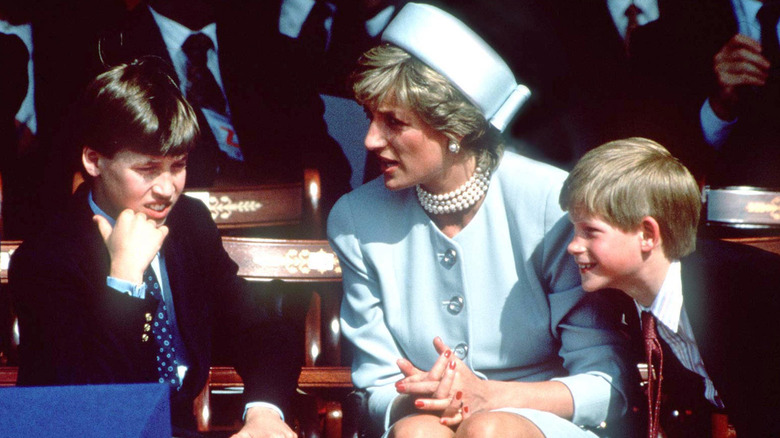
Accidents happen, and the royal family has implemented a certain traveling rule that prevents the heir and the heir apparent from perishing in the same aviation accident, should such a tragedy occur. Royal protocol dictates that the two do not get to fly together and need to be in separate aircrafts. This meant that Princess Diana technically couldn't fly with her eldest son, Prince William. She'd fly with her husband, King Charles III, and William would fly on his own, but the couple didn't initially follow this rule.
"Interestingly, we flew all four: the Prince, the Princess, Prince William and Prince Harry, up until when Prince William was 12 years old," former royal pilot Graham Laurie dished on Hello!'s "A Right Royal Podcast" in 2023. "After that, he had to have a separate aircraft and we could only fly all four together when they were young with the written permission of Her Majesty." Laurie said that Charles and Diana requested Queen Elizabeth II's permission to fly with their eldest son when he was still very young because the prince would have found traveling alone intimidating.
William notably followed his mother and father's lead with his own son, Prince George, who flew with both his parents before he turned 12 in 2025. "Accidents do happen, and this seems like a sensible precaution which ought to be observed, as it was with King Charles and William during Queen Elizabeth's reign," royal expert Richard Fitzwilliams told Fox News in 2025.
Princess Diana could no longer eat whatever she wanted for dinner
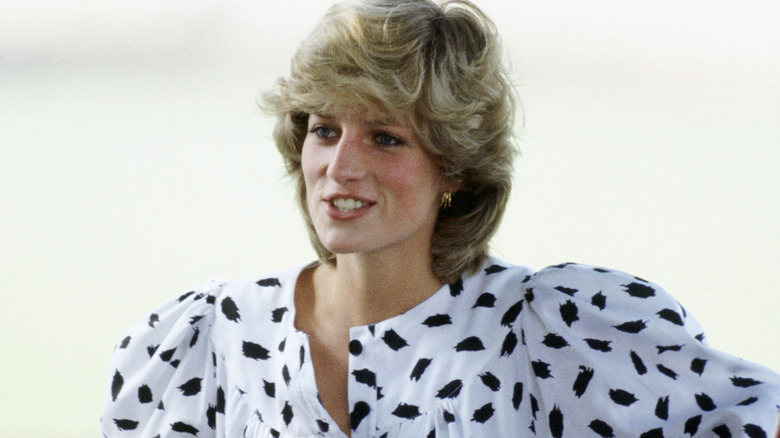
Those who have been keeping up with the royal family long enough are well aware that there are certain foods the royals never eat, so when Princess Diana married King Charles III, she might have had her food prepared by the royal chef, but she couldn't necessarily indulge in whatever she wanted, especially at dinnertime. Former royal chef Darren McGrady told The Telegraph in 2015 that Queen Elizabeth II was not a fan of carbs at dinner, which meant nobody else got to help themselves to it either. "No potatoes, rice or pasta for dinner." McGrady told the outlet. "When she [the queen] dines on her own she's very disciplined. No starch is the rule...Just usually something like grilled sole with vegetables and salad." McGrady clarified, however, that if the queen happened not to be dining with the rest of the family, they could certainly request some carbs to feast on.
There were also certain foods Diana reportedly had to steer clear of at all costs. Former royal butler Grant Harrold told the Express in 2022 that shellfish is something the royals are supposed to avoid, along with garlic. "When dining, the royal family has to be careful with shellfish due to shellfish poisoning. You will not normally find this on the royal menu," he asserted. The ban on garlic speaks for itself — no one wants to be mingling with a royal who has very un-royal breath.
Princess Diana couldn't casually engage in PDA with King Charles III
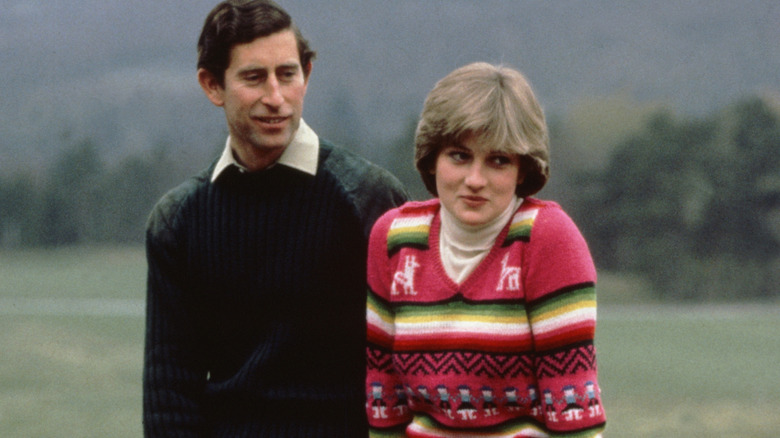
Back when Princess Diana was married to King Charles III, they were expected to follow the leads of royal couples before them and avoid PDA. Needless to say that, on the rare occasions royal PDA moments were caught on camera, it had pundits buzzing.
Royal etiquette expert Myka Meier told People in 2018 that Queen Elizabeth II didn't exactly impose strict rules on PDA, but that royal couples were expected to behave a certain way out in public. "Senior members of the royal family would likely not be told how to interact or when they can or can not show PDA and would be trusted to use their better judgement as to when it's appropriate," Meier explained. "The royals often adjust PDA to mirror the formality of the event they are attending. At a somber or more formal event, we are less likely to see PDA than at a casual event where it would be deemed more fitting."
Diana and Charles did push the boundaries a little shortly after they got married, with the queen's former press secretary, Dickie Arbiter, telling True Royalty TV's "The Royal Beat" (via Daily Mail) that the couple was smitten in the early days of their marriage. "They couldn't keep their hands off each other. Charles used to pat her bum regularly. There were times when he would even squeeze it, even in Australia," Arbiter said, referring to the couple's royal tour Down Under shortly after they tied the knot.
Princess Diana was banned from uttering the word 'toilet'
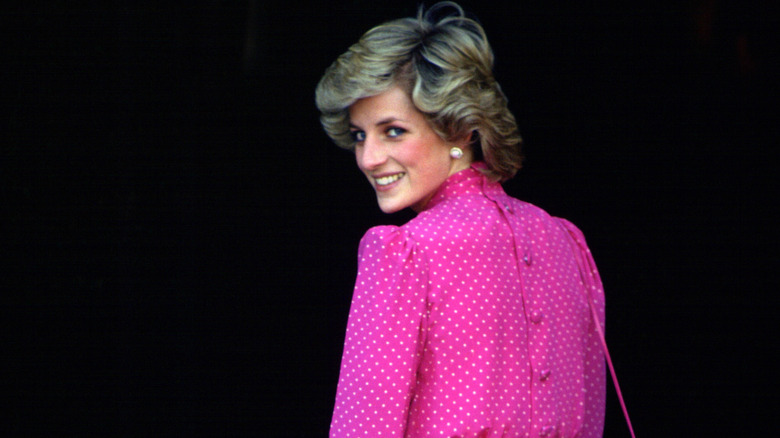
It turns out that, when you join the royal family, you also have to forfeit some words, and we don't just mean the profane sort. Some everyday words us mere mortals utter as a normal part of conversation are not allowed in royal circles, so when Princess Diana married King Charles III, she had to clean up her vocabulary.
In her book "Regal Rules for Girls," Jerramy Fine explained that uttering the word "toilet" is out of the question. "This is as jarring to an upper-class English ear as the f-word," she explained. "In fact, I get the impression that they would actually prefer the f-word. Never say 'toilet.' Ever. This rule is not optional. It is imperative." Instead, the terms "lavatory" or "loo" should be used.
Other common words are also frowned upon. Diana couldn't refer to herself or the royal family as posh, regardless of the fact that she was pretty posh, given that she came from an aristocratic family. The royals do not like this word, with social anthropologist Kate Fox noting in her tome "Watching the English: The Hidden Rules of English Behaviour" that the royals prefer the word "smart" because "posh" is considered to be a word used by the lower class. Well, ouch. Diana also had to use the word "sorry?" or "what?" instead of "pardon?" whenever she wanted someone to repeat themselves.
Princess Diana couldn't go shopping like a normal civilian
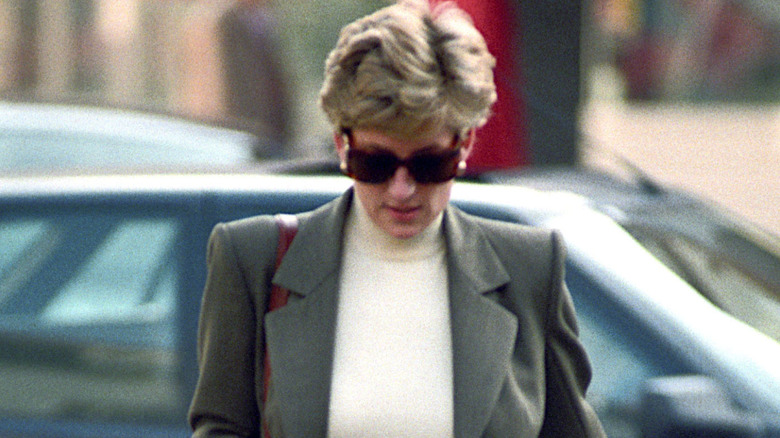
Marrying a prince seems like the stuff of fairytales until you have to conform to all the royal rules and protocols — and the fact that you are now a famous princess who can no longer come and go in public without being recognized. After Princess Diana married King Charles III, her days of going shopping undetected were over.
Stefan Kyriazis, the former manager of the Joseph flagship store in Kensington, once recounted to Marie Claire that the store would temporarily close so the princess could do her shopping without prying eyes from the public. Not even all of the members of the staff were allowed to be present, with only Kyriazis and the store's cashier allowed to share the space with Diana. The Princess of Wales was accompanied by her security detail, along with her lady-in-waiting. Kyriazis noted that other prominent stores like Nichols and Harvey also temporarily closed to the public for the princess.
Former royal butler Paul Burrell claimed in his book "A Royal Duty" (via Marie Claire) that on a few occasions, he helped Diana conceal her identity before she left the palace. "When she was feeling particularly daring, she opted to wear an elaborate disguise, and kitting her out soon became part of my duty," Burrell penned. The princess would don a brunette wig paired with glasses, and Burrell recalled how well the disguise worked. "[She looked like] a different person," he claimed.
Princess Diana couldn't pursue a career of her choosing
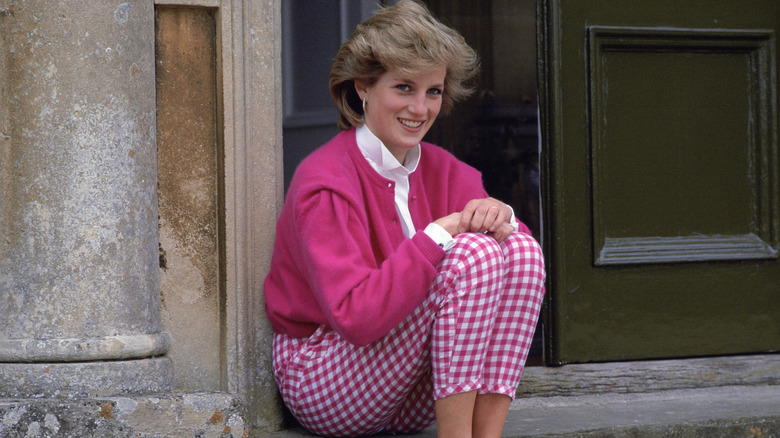
When you marry into the royal family, you gain many things — fame, prestige, and a royal title. But few talk about what you give up, and what many don't realize is that, while royals certainly live an interesting and lavish life, there are many things they miss out on, like following a career of their choosing. Princess Diana worked as a teacher at a nursery before she became the Princess of Wales, and she also picked up some nannying jobs.
Of course, after she married King Charles III, Diana's child-minding days were over for good. Senior working royals don't have normal careers — they serve the monarchy and spend their lives doing royal engagements and doing work for charitable organizations. Not only do they hardly have time for an ordinary job alongside all these duties, but attempting to make a living outside of the monarchy will inevitably invite criticism suggesting they're using their royal status to make money while living off the taxpayers' dime.
Even after she divorced Charles, Diana never got around to pursuing another career before her untimely death. In the short time after her divorce, she continued to lend her efforts to charitable causes, though she notably reduced her patronages from 100 to a mere six.