

Quote Of The Day By Epictetus: 'A Good And Excellent Person Does Nothing For The Sake Of...'
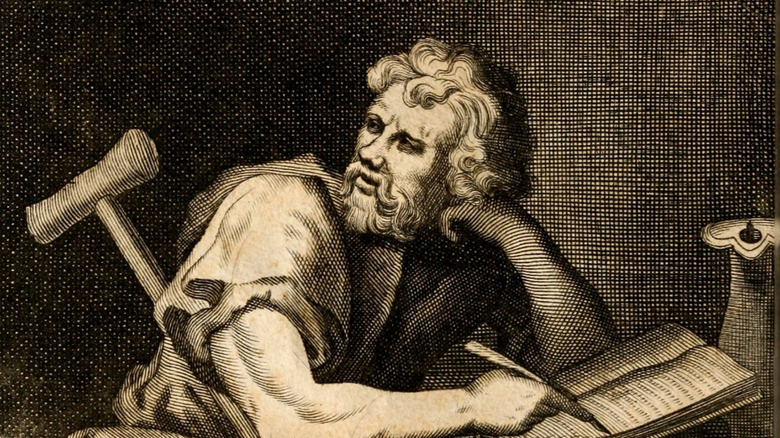
If you want to be told what you're doing is fine, ask your friends. If you want to look like a good person, consult a publicist. But if you want the truth, if you wish to be a good person rather than pretend to be one, and, lastly, if your desire is to be content rather than restless, ask the Stoics. In the olden days, most philosophers had to imagine losing everything, but Epictetus, the Roman slave turned thinker, pretty much started there.
He was born in the 50s C.E. in a Greek city in Phrygia called Hierapolis. That city survives today as the Turkish town of Pamukkale. Epictetus was shipped to Rome as the property of Epaphroditus, who had won his own freedom from slavery. Even the name history gave Epictetus isn't really his name. The Greek word "epiktetos" means "acquired," a label designating his standing in life.
While he was enslaved, Epictetus learned Stoicism under Musonius Rufus, a Roman senator. Epictetus ultimately earned his freedom and began his own work as an orator. He was then swept out of Italy around 89 C.E., due to Domitian's ban on philosophers. He rebuilt in Nicopolis, on the Greek coast, and wealthy Romans made the trip out to hear him speak. As with Socrates, Epictetus reportedly wrote nothing himself, and everything we have of him has been passed down by his student Flavius Arrian. The man with no name or rank had firm opinions about what was important in life — and that's why we've given Epictetus the podium for today's quote of the day.
Quote of the Day by Epictetus
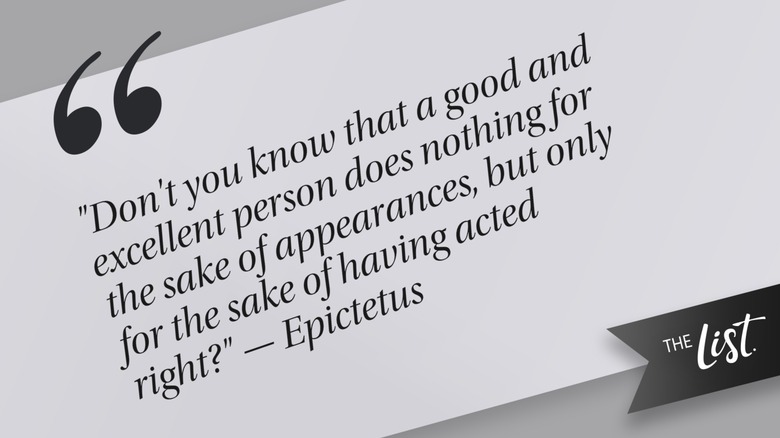
Epictetus asked, "Don't you know that a good and excellent person does nothing for the sake of appearances, but only for the sake of having acted right?" The line comes from "Discourses" Book 3 Chapter 24, a compilation of classroom sessions Flavius Arrian reportedly recorded around 104 to 107 C.E.
Epictetus seemingly thinks that even in an empty room, people should bother with doing the right thing. With this quote, the philosopher posits that the genuinely decent person only cares about the righteousness of their action, not the weight of perception attached to it.
Deeper Meaning of Epictetus' Quote — It Matters More to Be Good Than Seem Good
What Epictetus is setting out here is one of the foundational questions in moral philosophy. Do we do things because they're right, or do we do them because of how they're perceived in the eyes of others? Approval comes and goes, and it depends on people who aren't paying much attention. Too often we worry whether the grind is documented and the effort seen, because it sometimes feels like being observed doing something good matters most. But here's the heart of what Epictetus is saying: Doing the right thing is the whole point, and the reward is the action itself.
You can try it this week, and start small. Do a favor you won't mention or talk about afterward. Keep a standard nobody is checking, and see how you feel about yourself and about what you did. Don't cater your behavior to who's watching, because at the end of the day, what matters is the good you do, not who saw it.
More Quotes From Epictetus
- "On no occasion call yourself a philosopher, and do not, for the most part, talk among laymen about your philosophic principles, but do what follows from your principles."
- "If you wish to make progress, then be content to appear senseless and foolish in externals, do not make it your wish to give the appearance of knowing anything[.]"
- "If it should ever happen to you that you turn to externals with a view to pleasing someone, rest assured that you have lost your plan of life."
- "It is not the things themselves that disturb men, but their judgements about these things."
- "Remember that you are an actor in a play, the character of which is determined by the Playwright ... For this is your business, to play admirably the role assigned you; but the selection of that role is Another's."