

Quote Of The Day By Laozi: 'A Violent Wind Does Not Outlast The...'
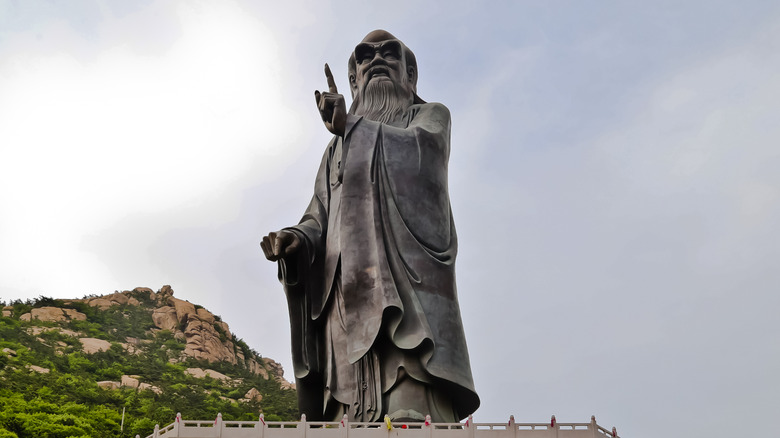
If you're searching for wisdom, look no further than Chinese Daoist philosopher Laozi. Also known as the "Old Master," it's believed that Laozi penned the "Daodejing," a crucial Daoist text. Scholars have subsequently concluded that Laozi might not have been a single philosopher, but rather a group of wise Chinese scribes who hailed from the 4th or 3rd century B.C.E. The text in question was widely popular throughout China during the 6th century B.C.E., and continues to be perused to this day.
Other than Laozi's country of origin, information about the philosopher(s) is scarce, but the "Daodejing" has appealed to the Western world for centuries. In fact, aside from the Bible, it's the text that has seen the most English translations to date. The vast wisdom contained in the pages of the "Daodejing" can be interpreted in many different ways, depending on the person who is reading it, which is what makes it so rich and relevant to this day. Another popular tome believed to be the writings of Laozi is the "Tao Te Ching," from which we've pulled today's chosen quote of the day.
Quote of the day by Laozi
One of Laozi's most popular quotes goes like this: "A violent wind does not outlast the morning; a squall of rain does not outlast the day. Such is the course of Nature." These wise words can be found in the "Tao Te Ching." Scholars are divided over when exactly this tome was penned, and as it stands, it's generally believed that the text originated sometime between the 8th and 3rd century B.C.E.
The goal behind these writings was reportedly an attempt to introduce concepts that encourage balance and peace. This quote specifically seems to serve as a reminder that nothing is permanent, and negative circumstances, in particular, are temporary.
Deeper meaning of Laozi's quote — the bad does not outlast the good
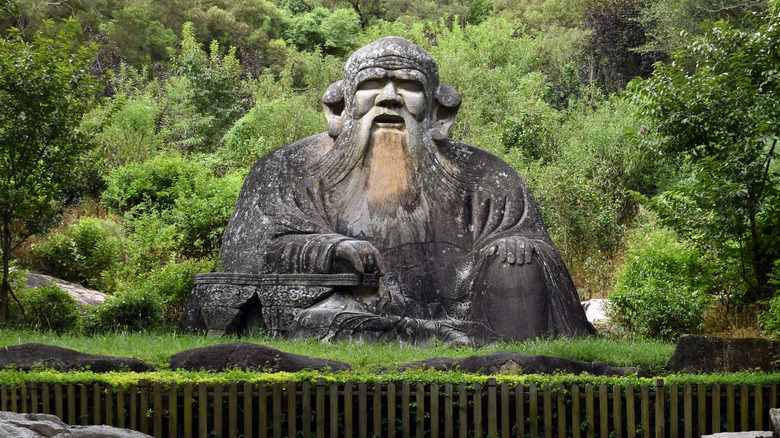
Bad things happen; that's just life. But Laozi's quote reminds us that, even when violent, terrible things occur, they cannot last forever. Nature demands balance, and therefore every storm will be followed by sun breaking through the clouds. The bad days aren't infinite, but neither are the good ones, so we need to appreciate the good and weather the bad, always while knowing that better days are ahead. Notably, this particular quote is very much in line with the rest of the "Tao Te Ching's" teachings about balance.
In Chinese culture, wisdom is believed to be a virtue, whereas in the Western world, we tend to believe that knowledge and understanding equals wisdom, according to a 2021 study published in Current Psychology. This quote reminds us that no amount of knowledge and understanding can help us control the uncontrollable. We have to accept that certain things are out of our control and must be endured until they pass.
More quotes from Laozi
-
"Nature does not hurry, yet everything is accomplished."
-
"Life is a series of natural and spontaneous changes. Don't resist them; that only creates sorrow."
-
"Those who know do not speak. Those who speak do not know."
-
"The truth is not always beautiful, nor beautiful words the truth."
-
"Time is a created thing. To say 'I don't have time,' is like saying, 'I don't want to.'"