

Quote Of The Day By Marcus Aurelius: 'Then What Should We Work For? Only This...'
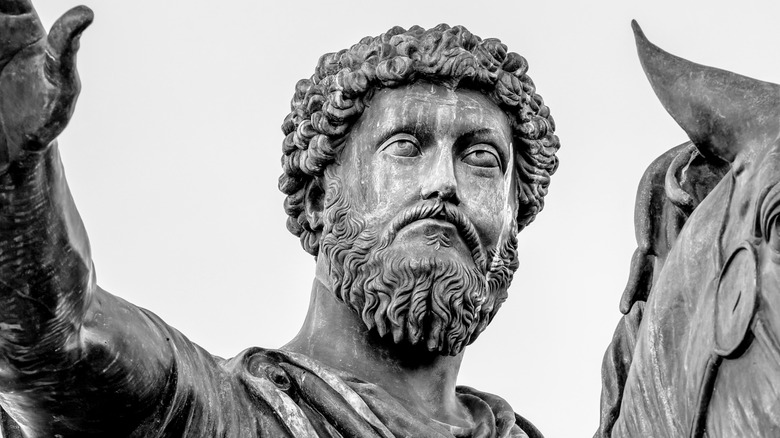
Marcus Aurelius, the philosopher-king whose "Meditations" has served as a primer on Stoicism and remained a bestseller that reads like the ultimate self-help handbook, was born in Rome on April 26, 121. In 161, he became emperor, taking over an empire that stretched from Britain to the Euphrates.
The reign that followed was marked by one conflict after another. The Parthian War lasted five years, and though Rome won, the returning legions carried with them a plague that devastated the realm. Then, there were the Marcomannic Wars, which Aurelius spent much of his remaining life fighting. The coup by Avidius Cassius, one of the emperor's trusted generals, also brought upheaval to an empire already stretched thin.
Yet despite all of this chaos — despite Aurelius spending the final decade of his life in army camps and between campaigns — he managed to fill a notebook with the accumulated wisdom of a lifetime. He could've used that notebook to document his own glory, but instead, he filled it with peaceful deliberations. That a man with as much power as Aurelius spent his nights reminding himself how little any of it mattered is exactly why he's the timeless purveyor of today's quote of the day.
Quote of the Day by Marcus Aurelius
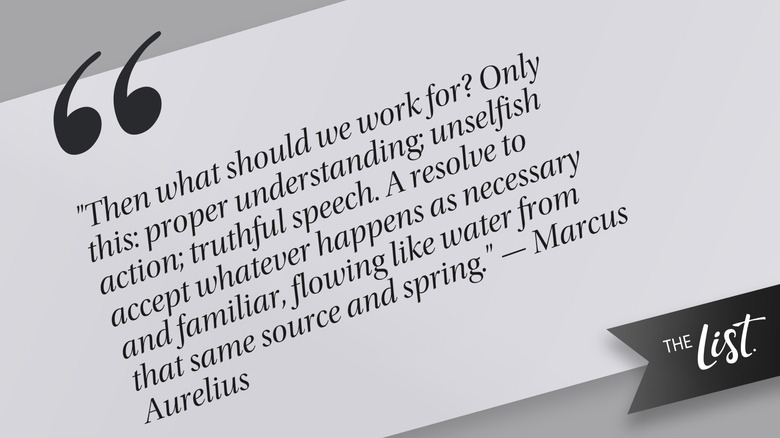
In Book IV of "Meditations," the 2002 translation by Gregory Hays, Marcus Aurelius wrote: "Then what should we work for? Only this: proper understanding; unselfish action; truthful speech. A resolve to accept whatever happens as necessary and familiar, flowing like water from that same source and spring."
Aurelius began Book IV by naming great Roman figures, then asked: if those men are slipping into legend already by his time, what is fame even worth? Aurelius then ascribes true value to selflessness, honesty, and the willingness to go along with the flow, whether it brings us happiness or tragedy.
Deeper Meaning of Marcus Aurelius' Quote — Only four things are worth the effort
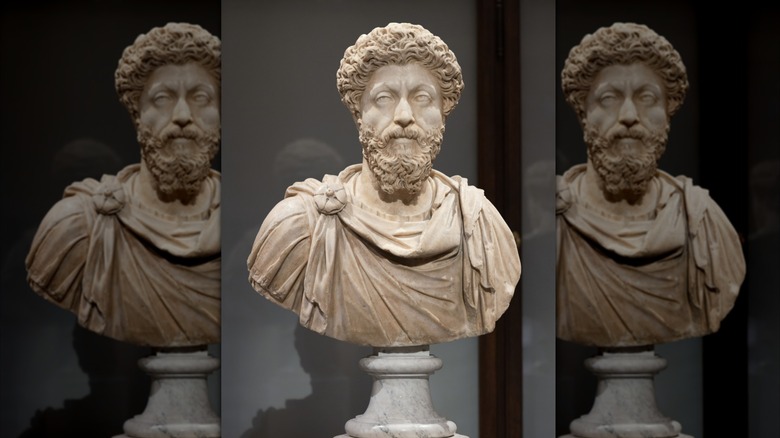
One of the great things about "Meditations" is that it reads like one person's notes and reminders to himself. There are no blocks of argument, built for an audience being addressed. If you take his quote at face value, it's a simple to-do list that lays out a way of life.
First, understand things as they really are. Act for other people, not just for yourself. Tell the truth, no matter what. And when something happens that you did not choose or plan for, treat it as part of the same current that moves you through life — and go along with it, rather than fighting that flow.
That last one is actually what Stoicism is all about. You can't control if you land the job, if the relationship lasts, if the test results point to something dire, or if people give you credit for your hard work. What you can control is whether or not you understand the situation. Then, you can decide to make the best of it. Focus your effort on that, Aurelius said, and allow the rest to simply fade away.
More Quotes from Marcus Aurelius
- "The impediment to action advances action. What stands in the way becomes the way."
- "To stop talking about what the good man is like, and just be one."
- "[B]e satisfied with even the smallest progress, and treat the outcome of it all as unimportant."
- "Your ability to control your thoughts — treat it with respect. It's all that protects your mind from false perceptions — false to your nature, and that of all rational beings."
- "Disgraceful: for the soul to give up when the body is still going strong."