

Quote Of The Day By Plato: 'Neither Family, Nor Privilege, Nor Wealth, Nor Anything But Love Can...'
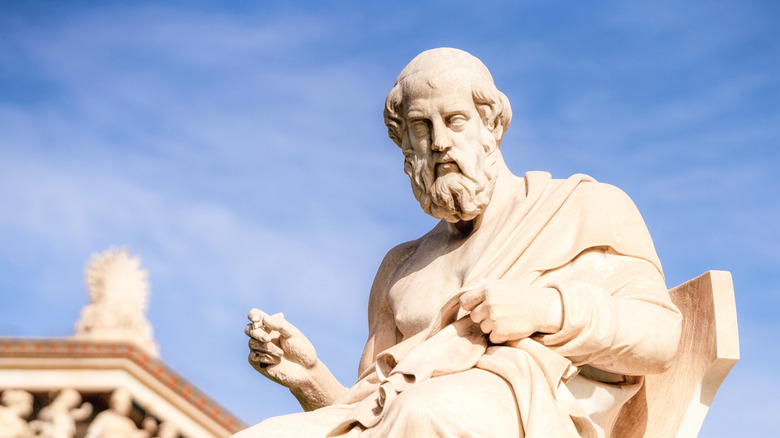
Plato, the ancient Greek philosopher and student of Socrates, left behind many works. British philosopher Alfred North Whitehead once described all of European philosophy as "a series of footnotes to Plato."
His date of birth is contested, but historians put it somewhere between 428 and 427 B.C., and some even make the case for 424 or 423. It's claimed that he inherited his grandfather's name, Aristocles, and that "Plato" began as a schoolyard tag for his broad build. Some reject that story, noting that Plato was as unremarkable a name in that ancient city as John is in ours. In 399 B.C., the reestablished democracy condemned Socrates, the man who'd taught him, and Plato left town. He went on to open his school on ground dedicated to a local hero named Academus — which is where English gets the word "academic."
Aristotle, Plato's student, studied there, and the school outlasted him by nearly nine centuries. Plato came from a family of considerable means and influence, and his uncle Charmides sat among the Thirty Tyrants who, in 404 B.C., had torn down the city's democracy. Bloodline and wealth were the two assets young Plato had in abundance, which is precisely why his quote about love, chosen as today's quote of the day, packs a punch.
Quote of the Day by Plato
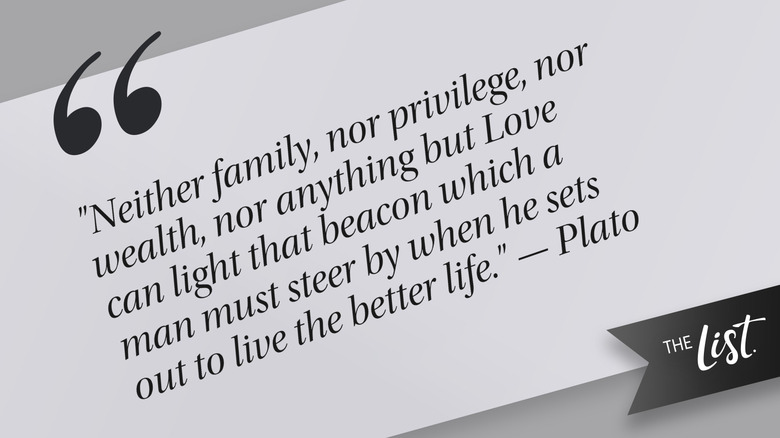
In his famous dialogue "Symposium," Plato wrote: "Neither family, nor privilege, nor wealth, nor anything but Love can light that beacon which a man must steer by when he sets out to live the better life."
The dialogue takes place in an Athenian drinking party where each guest takes a turn praising love. The words belong not to Socrates — a usual mouthpiece in Plato's works — but to a young man named Phaedrus. The phrasing is Michael Joyce's, originally published in 1935 as "Plato's Symposium or The Drinking Party." It spells out love as what instills a sense of honor and disgrace in us, which no amount of status or money can replicate.
Deeper Meaning of Plato's Quote — Love Is the Only Thing That Makes You Care How You Look
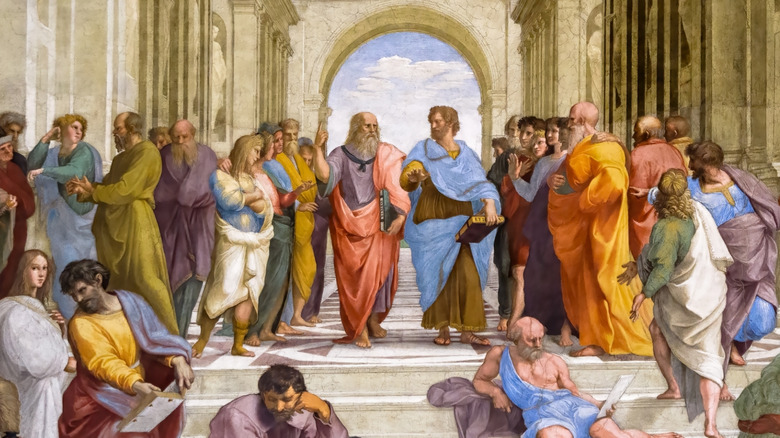
The choice of "beacon" is intriguing in that context. A beacon is a light you steer by in the dark. Plato isn't establishing love in the cliché sense that it gives you power to move through life. A beacon tells you which way you're facing and when you've drifted off course. In that context, love is the fixed point that allows you to navigate — the very gauge that allows you to know which way is worse and which way is better.
Then there are the things the quote rules out. Family, privilege, and wealth are things people cherish, but they're not things you necessarily earn. Most of the time, people are born into all three, so you can be born with these supposed prizes and still have no idea which direction to go, and what is right or wrong. Love is different because it can't be inherited or bought. It has to come from you, and therefore it is yours in the truest sense.
Plato, a man born into that kind of privilege, understands that "the better life" isn't issued at birth. You have to set out for it, and you can't set out in the dark without something to steer by — in this case, love. Phaedrus goes on to suggest a simple test: When you're unsure what the right thing to do is, picture the person you love most watching you decide, and judging you based on that decision.
More Quotes from Plato
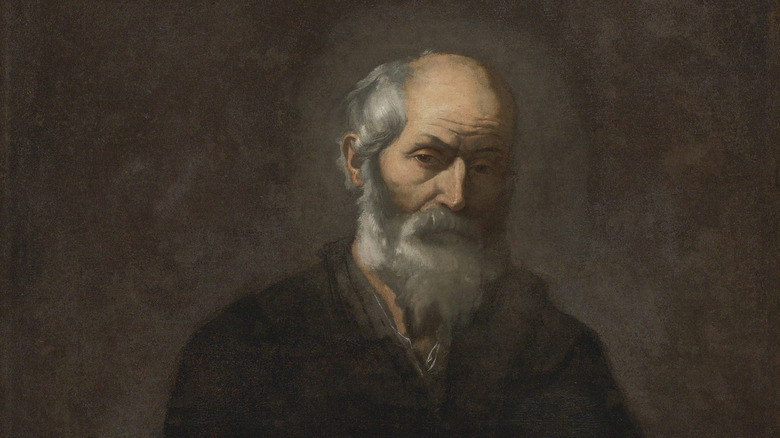
- "Love will make men dare to die for their beloved-love alone, and women as well as men."
- "Human nature was originally one, and we were a whole, and the desire and pursuit of the whole is called love."
- "Wealth, I said, and poverty; the one is the parent of luxury and indolence, and the other of meanness and viciousness, and both of discontent."
- "False words are not only evil in themselves, but they infect the soul with evil."
- "The direction in which education starts a man will determine his future life."