

Quote Of The Day By Aristotle: 'That Which Is Desirable On Its Own Account And For The Sake Of...'
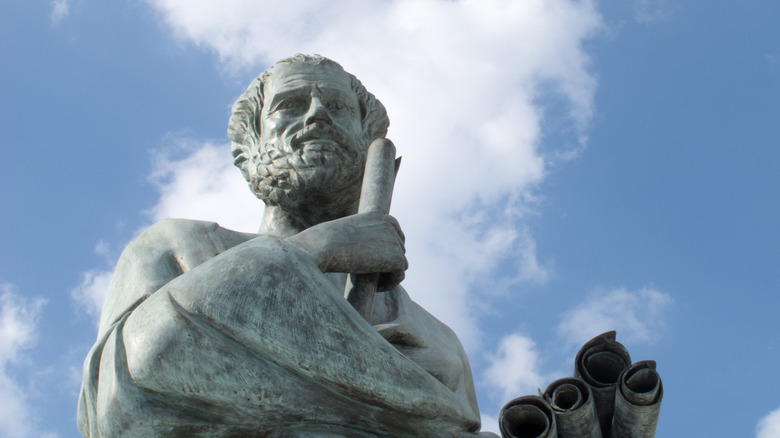
Few people in history have been curious about so many things at once. Aristotle — the renowned Greek thinker still quoted more than 2,000 years after his death — left a body of work spanning logic, biology, ethics, poetry, politics, and, of course, philosophical deliberations.
Aristotle was born in 384 B.C. in Stagira, a small town in northern Greece. His father, Nicomachus, was the personal doctor to the king of Macedonia. At 17, Aristotle went to Athens to join Plato's Academy and stayed there for roughly two decades. He then threw himself into marine biology for years, until King Philip II of Macedon summoned him in 343 B.C. to teach his 13-year-old son, the future Alexander the Great.
The philosopher eventually returned to Athens and started a school of his own, the Lyceum, whose members pursued a range of scientific studies. Aristotle wrote some 200 treatises by ancient counts, and only about 31 have reached us. That was enough to cement him as a towering figure in Western thought. His story didn't end quietly, either. When Alexander died in 323 B.C., Aristotle faced discrimination in Athens due to his royal connections. He fled to Chalcis, remarking, according to ancient accounts, that he wouldn't let Athens "sin twice against philosophy" after what the city did to Socrates. Aristotle lived a life of scientific pursuit and understood its true worth better than anyone, which is why we're turning to him for today's quote of the day.
Quote of the Day by Aristotle
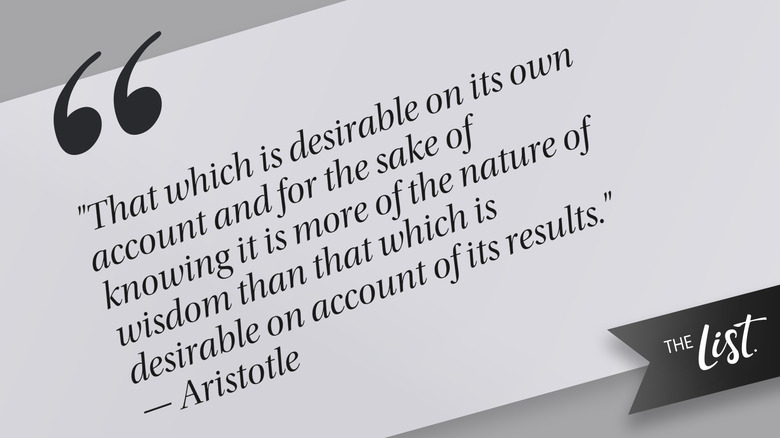
In Book I of "Metaphysics," Aristotle writes: "That which is desirable on its own account and for the sake of knowing it is more of the nature of wisdom than that which is desirable on account of its results."
In this passage, Aristotle separates a wise person from a merely skilled one. The wording is from W.D. Ross' translation, the version collected in "The Works of Aristotle." With it, Aristotle wants to convey that some things are worth knowing because of what they get you, but some things are worth knowing, period.
Deeper meaning of Aristotle's quote — Learning for its own sake
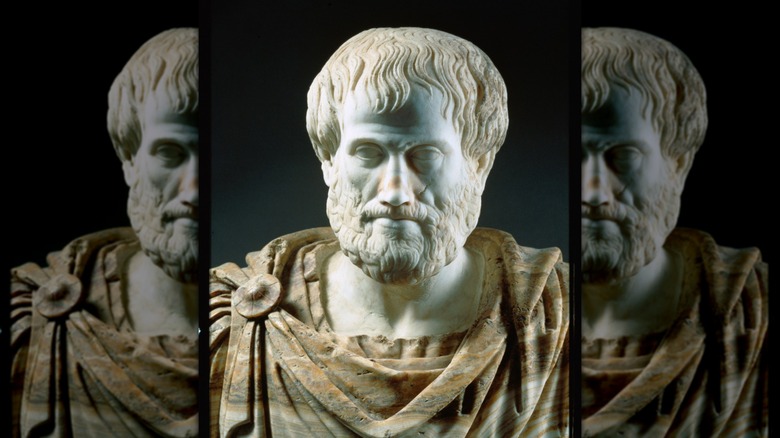
The antique phrasing might be a mouthful, but the idea is simple enough. Aristotle is sorting knowledge into two piles. The first is the useful kind. You learn it to earn, build, and fix, and it directly affects your day-to-day life. The other pile you pursue simply because you want to understand, even if it has no payoff. It's a somewhat unique avenue of thought, especially in a world that asks "what's this for?" about basically everything.
Aristotle claims that the knowledge you learn for the sake of it is closer to real wisdom. There's nothing wrong with useful knowledge, but wisdom pursued purely for results always serves some other master. Understanding for its own sake is full of wonder. After all, people initially started asking big questions not to get rich but to stop being puzzled. Aristotle and many of his contemporaries lived this idea to the fullest by dissecting every field of scientific inquiry they could get their hands on.
For the rest of us, the takeaway is that not everything you do or learn has to be a career move, or push you forward in life. Read the history book that has nothing to do with your profession. Learn the constellations and study poetry. Maybe pick up the language nobody around you speaks. As Aristotle reckons it, curiosity that expects no reward and is pursued because we want to know and understand better is closer to true wisdom than the alternatives.
More quotes from Aristotle
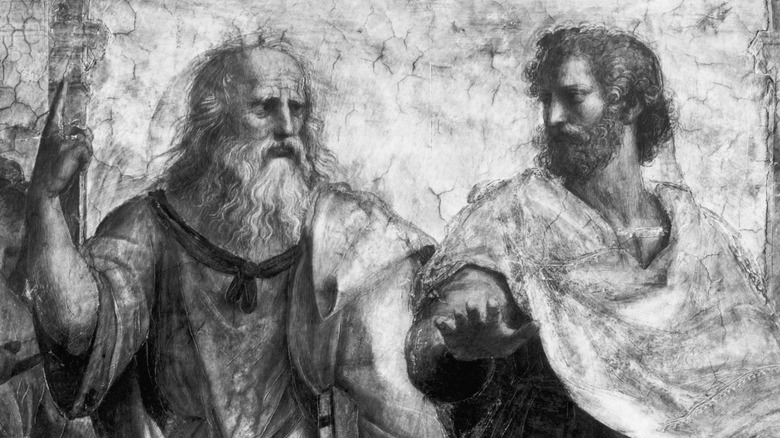
- "Yet it would perhaps be thought to be better, indeed to be our duty, for the sake of maintaining the truth even to destroy what touches us closely ... piety requires us to honour truth above our friends."
- "All men by nature desire to know."
- "Man is by nature a political animal."
- "For the things we have to learn before we can do them, we learn by doing them."
- "For one swallow does not make a summer, nor does one day; and so too one day, or a short time, does not make a man blessed and happy."