

Quote Of The Day By Robert Frost: 'In Three Words, I Can Sum Up Everything I've Learned...'
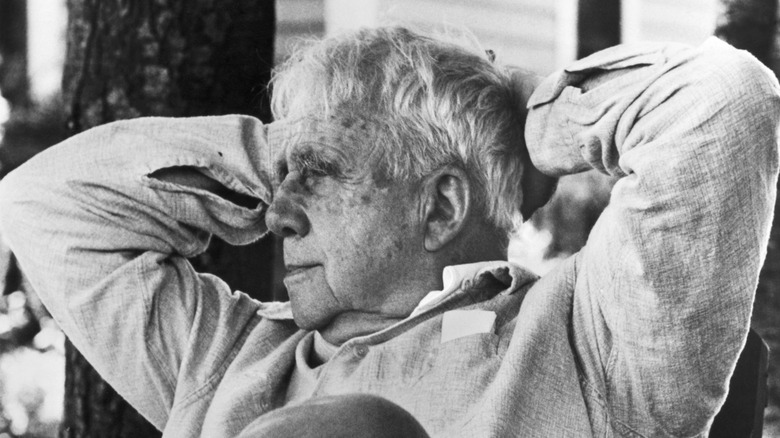
One of America's best poets is Robert Frost, known for his descriptive depictions of rural life in New England, accessible language, and thought-provoking ideas. While he is almost inextricably tied to New England, he was actually born in San Francisco in 1874. His family moved to Lawrence, Massachusetts, in 1884 after Frost's father died, and there he was the class poet and co-valedictorian at his high school.
Frost's first published poem was titled "My Butterfly." He was paid $15 for its publication in the New York Independent in 1894, two years after he graduated high school. Despite that early success, his professional writing career had a somewhat slow start; however, his work began to gain nationwide recognition by the mid-1910s. Frost received his first of four Pulitzer Prizes in 1924 for "New Hampshire: A Poem with Notes and Grace Notes." Along with his awards, Frost was the first-ever poet to speak at a presidential inauguration. In 1961, an 86-year-old Frost wrote a poem for John F. Kennedy's inauguration that he planned to read during the ceremony; however, it was too windy for him to read the new work. So he recited one of his classic poems, "The Gift Outright," from memory. He died just a couple of years after the inauguration at the age of 88.
Frost's genius was such that it was recognized by the U.S. Senate on his 75th birthday with an official resolution that said, "His poems have helped to guide American thought and humor and wisdom, setting forth to our minds a reliable representation of ourselves and of all men" (via Poetry Foundation). Frost's wealth of wisdom and way with words are why his words are today's quote of the day.
Quote of the Day by Robert Frost
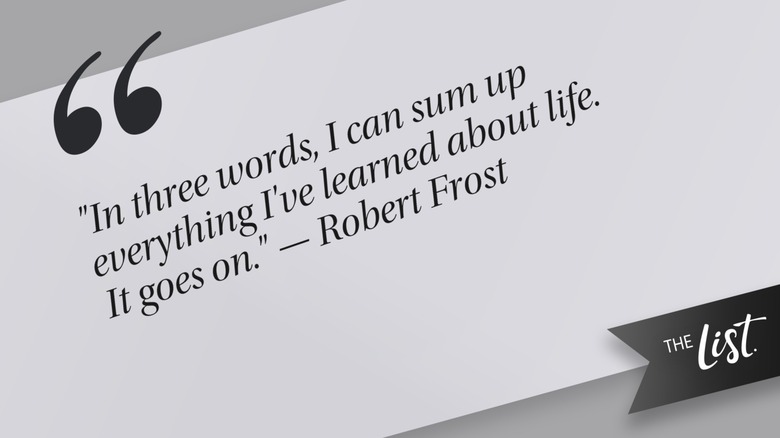
"In three words, I can sum up everything I've learned about life. It goes on," Robert Frost said at his 80th birthday celebration.
At this celebration held 1954, Robert Frost reportedly spoke to journalist Ray Josephs. That September, This Week Magazine ran a piece called "Robert Frost's Secret" by Josephs, which included Josephs' recollection of their exchange. He recounted asking Frost (via Quote Investigator), "In all your years and all your travels, what do you think is the most important thing you've learned about life?" The poet succinctly stated our Quote of the Day.
Frost's brief but powerful words are a clear acceptance of the inevitable passage of time. We shouldn't worry about being stuck in a moment or trying to reclaim something that is past.
Deeper meaning of Robert Frost's quote — Nothing lasts forever
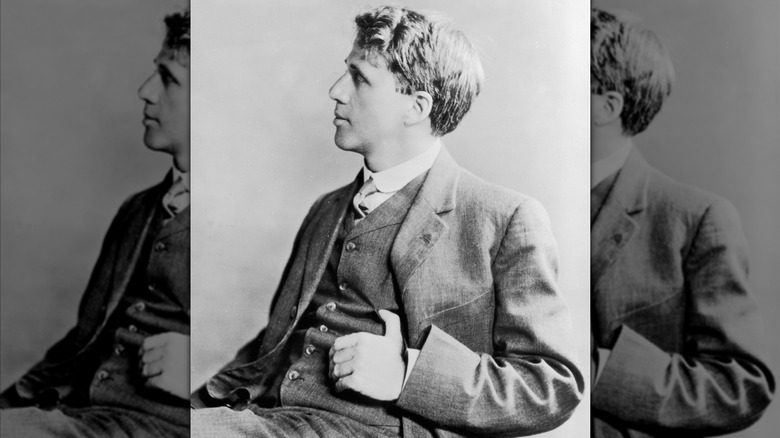
Robert Frost's summary of life — "it goes on" — seems particularly, perhaps almost overly, simple at first. However, within that simplicity, we can see an idea of hope. Things can seem bleak, and it may feel like you're stuck in a moment or a circumstance that is so overwhelming that it seems like it will never end or is impossible to get out of. But, as Frost notes, nothing is permanent or fixed. That bleak circumstance that you're in is not the end of life, and as hopeless as the world might seem at any given time, it will not be like that forever.
On the flip side, the sentiment should be applied to happy moments in life as well. Appreciate the beauty of life as it comes your way and know that you can't keep it forever; fighting against it won't do any good.
There are seasons to our lives, and life will move forward, no matter what hardship or high points we're experiencing. We have to learn to accept that continuous movement and the inevitable ups and downs of life.
More quotes from Robert Frost
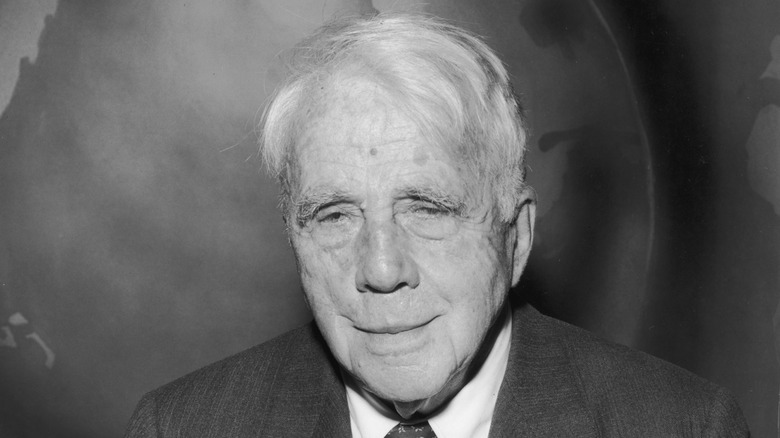
- "A poem begins in delight and ends in wisdom."
- "But I have promises to keep / And miles to go before I sleep."
- "Every artist must have two fears — the fear of God and the fear of man — fear of God that his creation will ultimately be found unworthy and the fear of man that he will be misunderstood by his fellows."
- "Two roads diverged in a wood, and I, / I took the one less traveled by, / And that has made all the difference."
- "If poetry isn't understanding all, the whole word, then it isn't worth anything. Young poets forget that poetry must include the mind as well as the emotions. Too many poets delude themselves by thinking the mind is dangerous and must be left out. Well, the mind is dangerous and must be left in."