

Quote Of The Day By Elizabeth Barrett Browning: 'If Thou Must Love Me, Let It Be For...'
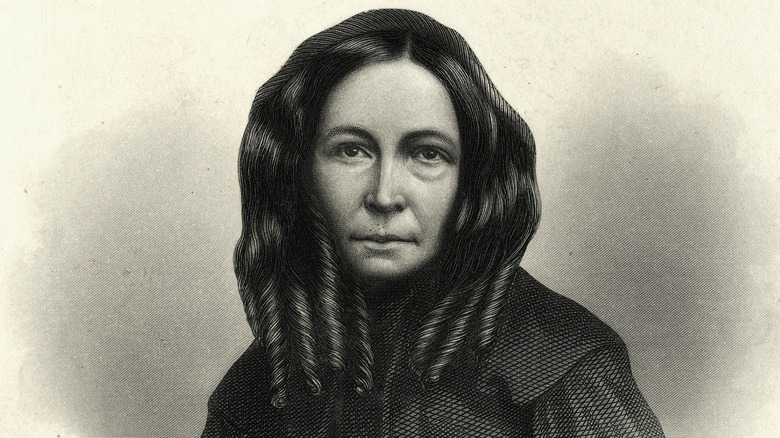
Elizabeth Barrett Browning wrote some of the most impactful love poetry in the English language, because having lived a life of illness, grief, and confinement, she knew exactly what it meant to stake everything on the one emotion that confounds every human being at some point in life.
Born March 6, 1806, at Coxhoe Hall in County Durham, England, Browning was the eldest of 12 children. She was reading Shakespeare and Milton before age 10, showing an aptitude for verse that would define her legacy. She wrote her first book of poetry by age 12, but at age 15, a mysterious illness cast a shadow on Browning's young life. The doctors treated her with laudanum, but the condition never released its grip. Scholars have suggested everything from anxiety to tuberculosis, but no single theory ever proved convincing.
When Browning's brother Edward drowned in 1840, she withdrew to a single room in her family's London home on Wimpole Street. From that room she kept writing, and her two-volume "Poems" of 1844 crossed the Atlantic and won her many admirers. The work prompted a letter from a younger poet named Robert Browning, who professed his adulation for her work. Some 500 letters later, the two wed in secret, then slipped away to Italy. Her father had forbidden his children to marry, so he disinherited her, and the break was never repaired. She gambled everything on love, so she knew a thing or two about its significance — which is why Elizabeth Barrett Browning is today's quote of the day.
Quote of the Day by Elizabeth Barrett Browning
Elizabeth Barrett Browning wrote, "If thou must love me, let it be for nought except for love's sake only."
The line opens Sonnet 14 of "Sonnets from the Portuguese," from the sequence the poet wrote between 1845 and 1846 while Robert Browning was courting her. She considered the poems too personal to publish, but Robert said they were rivaled only by William Shakespeare himself, and encouraged her to put them out.
"The Portuguese" was Elizabeth herself — apparently Robert's pet name for her. Its message is simple: a love built on reasons lasts only as long as the reasons do, so love for nothing in particular, and love for the sake of love itself.
Deeper meaning of Elizabeth Barrett Browning's quote — Love shouldn't be influenced by reason
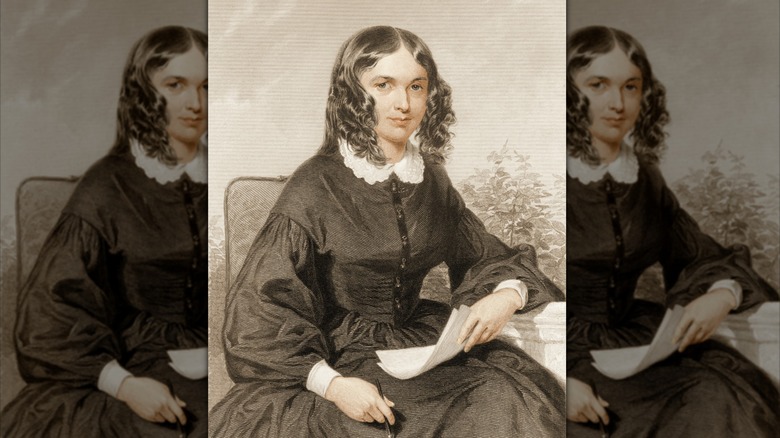
You may love a person for their smile, or their intellect, or their exterior beauty. You may find you love a quirk about them — maybe it's the way they talk, the way they laugh so freely, or the ease they bring to every conversation. Perhaps you pity them. But a smile will change as time puts its weight on the face that wears it, and pity will eventually run out. The only love that lasts, in Elizabeth Barrett Browning's view, is one that has no reason at all, given for the sake of love itself and nothing else.
As she puts it, "love, so wrought / May be unwrought so." Browning also touches on expectation and how it affects a relationship. A love without reason is one that can't be earned, and it certainly can't be lost. You can't earn it by being clever or lovable enough and you can't lose it when you inevitably change or fall short of the other person's expectations.
Love as a concept has engaged the thoughts of poets ever since language was first bent toward putting to word what the heart was feeling. So, the definition may change from poet to poet and age to age, but what Browning is saying here involves the reason behind love, not the emotion itself. It is Romanticism at its finest, and perhaps its most extreme, but it speaks to something in all of us. Enjoy being loved for your qualities, sure, but love for the sake of loving, and being loved. When you find you have no particular reason to love someone, maybe that love is all the more valuable for it.
More quotes from Elizabeth Barrett Browning
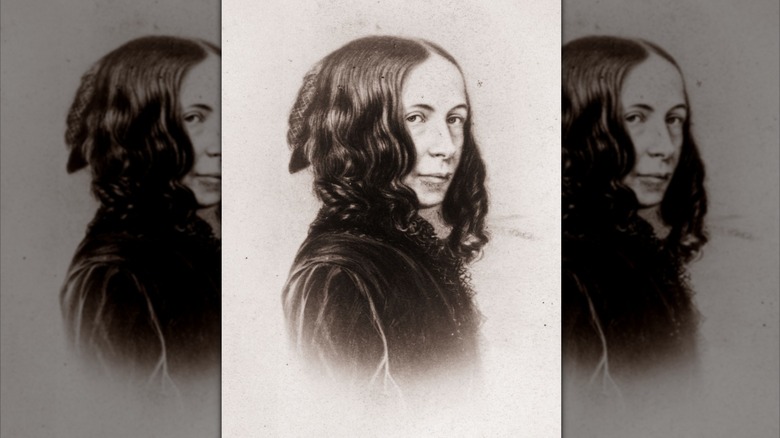
- "Whoso loves, believes the impossible."
- "How do I love thee? Let me count the ways. / I love thee to the depth and breadth and height / My soul can reach..."
- "What I do / And what I dream include thee, as the wine / Must taste of its own grapes. And when I sue / God for myself, He hears that name of thine, / And sees within my eyes the tears of two."
- "The face of all the world is changed, I think, / Since first I heard the footsteps of thy soul / Move still, oh, still, beside me..."
- "Earth's crammed with heaven / And every common bush afire with God: / But only he who sees, takes off his shoes."