
Quote Of The Day By T.S. Eliot: 'The Only Wisdom We Can Hope To Acquire Is The...'
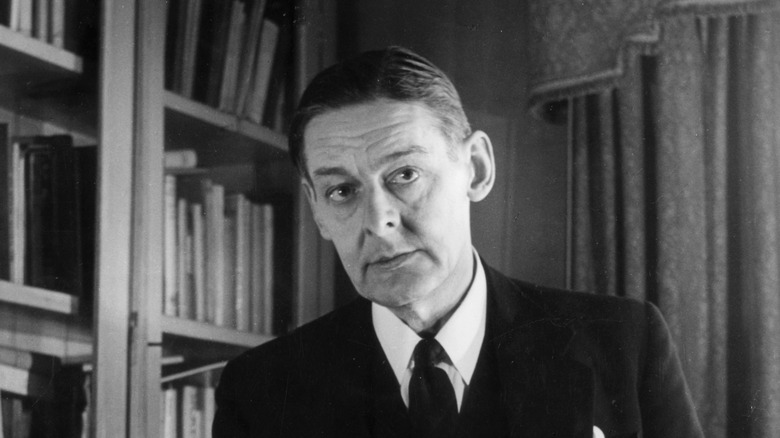
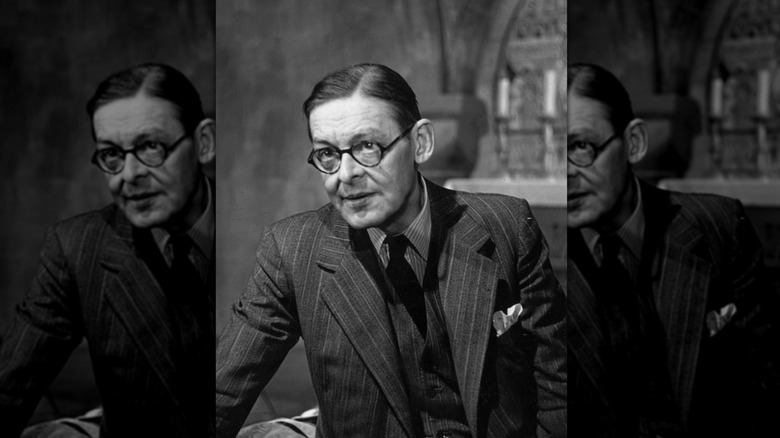
We know T.S. Eliot today as a poet who wove fragments of our past, be it history or philosophy or even the somber undertone of human existence itself, into a rich tapestry of verse. We also know he wasn't afraid to allow pessimism to occasionally bleed into those verses, especially if they reflected his perspective about the world around him. And yet, for all the enduring influence he left on poetry, the man was surprisingly self-doubting about it all, and he often questioned whether his work was any good.
Thomas Stearns Eliot was born September 26, 1888, in St. Louis, Missouri. He studied philosophy at Harvard, and moved to England in 1914, where he would stay for the rest of his life. In 1917, Eliot was working as a clerk at Lloyds Bank, and though the work made it hard to focus on his creative ventures, he used his free time to write the poems that would upend modern literature. Eliot achieved distinction through several honors, not least of which were the Nobel Prize in Literature, Britain's Order of Merit, and the U.S. Presidential Medal of Freedom.
In 1921, the pressure of Eliot's dysfunctional marriage as well as the war tipped him into a breakdown, and that sent him abroad to recover at a Swiss clinic. That's the figure behind today's quote of the day; not a philosopher dispensing maxims about life in the ancient world, but someone who knew ordinary struggle and weathered the world's hardships, discovering true wisdom along the way.
Quote of the Day by T.S. Eliot
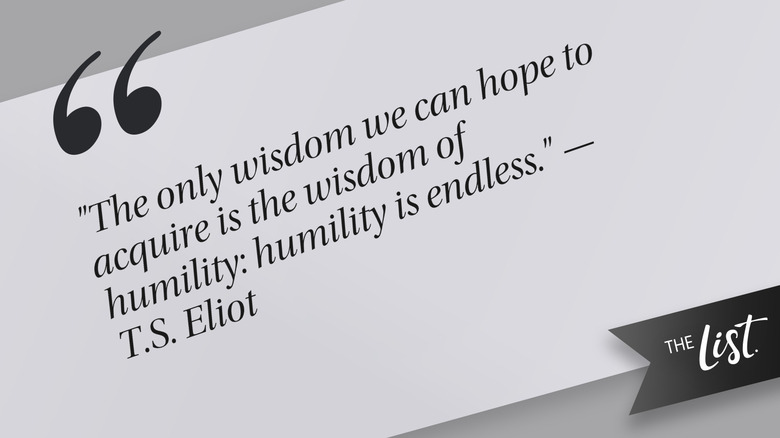
T.S. Eliot wrote, "The only wisdom we can hope to acquire / Is the wisdom of humility: humility is endless."
The lines come from "East Coker," which is the second poem in his "Four Quartets," published in 1940. This poem came around the time when Eliot was wondering if his aptitude for poetry had run dry, so "East Coker" functioned as a sort of test. The specific words making up the quotation are interesting, because with them, the future Nobel laureate essentially said that the most important thing he ever learned was how wisdom has nothing to do with certainty in traditional knowledge.
Deeper Meaning of T.S. Eliot's Quote — It's wise to admit that we don't know everything
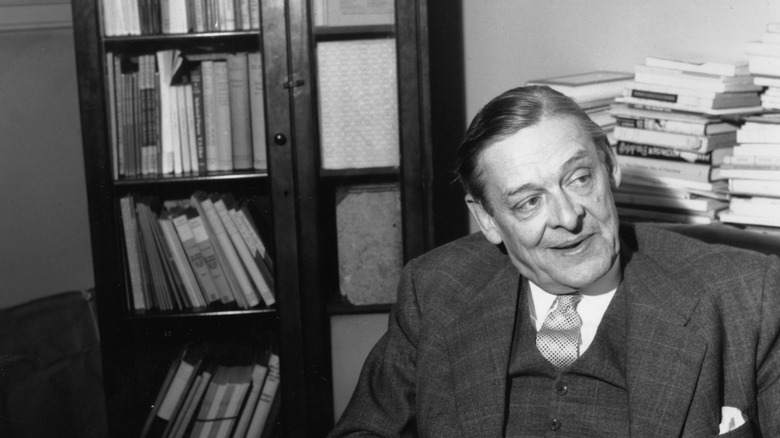
Humility can often manifest in the guise of polite self-deprecation. Admittedly, it's a graceful enough way to move through the world and put others at ease around you. What T.S. Eliot is touching on, though, runs deeper than how we respond to a compliment.
Here the conventional definition of wisdom — which we usually picture as a pile of things we've figured out about life — is flipped on its head. Notice that Eliot writes "the only wisdom" and, tellingly, "we can hope to acquire." The first phrase rules the entire pile out, implying that of all the things we consider wisdom, only one truly qualifies. Indeed, the one kind of wisdom actually within our reach is the slow realization, as we learn more and more, that we know very little. And "humility is endless," in the sense that the more you understand, the more you admit to yourself that you haven't got it all figured out.
This kind of humility is a trait worth cultivating because it keeps you reaching for more, whereas someone certain they know everything runs the risk of stopping — they may stop learning, stop improving, and stop changing or growing. That's why humility the only wisdom we can count on. That admission of ignorance and vulnerability is the ultimate lesson of life. So, the next time the world humbles you through a setback, try to see it as a lesson in how much there is left to learn, and the value of beginning again, the same way Eliot did when he feared his best work was behind him.
More Quotes From T.S. Eliot
- "This is the way the world ends / Not with a bang but a whimper."
- "April is the cruellest month, breeding / Lilacs out of the dead land, mixing / Memory and desire, stirring / Dull roots with spring rain."
- "Where is the Life we have lost in living? / Where is the wisdom we have lost in knowledge? / Where is the knowledge we have lost in information?"
- " ... human kind / Cannot bear very much reality."
- "The last temptation is the greatest treason: / To do the right deed for the wrong reason."