

Quote Of The Day By Emily Dickinson: 'If I Read A Book And It Makes My Whole Body So...'
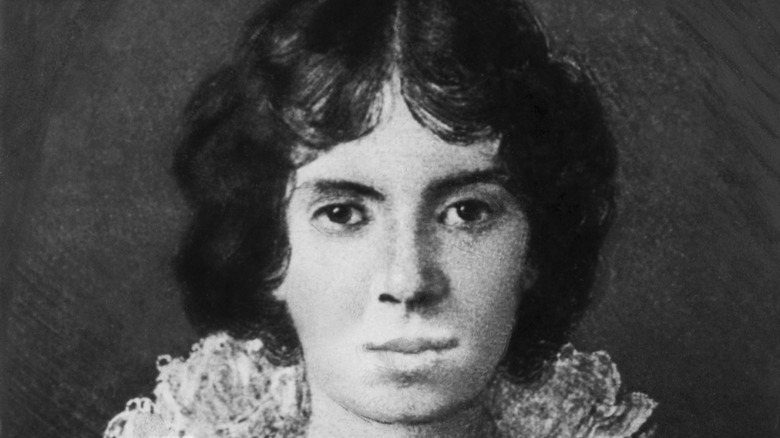
Most poets wonder if their work will ever be admired, but Emily Dickinson wanted to know if hers had a soul. In 1862, the 31-year-old mailed four poems to a well-known essayist for The Atlantic Monthly, and her note opened with this question: "Are you too deeply occupied to say if my Verse is alive?" A few lines later, she asked him whether her work "breathed" (per Boston Public Library).
Dickinson was born in Amherst, Massachusetts, on December 10, 1830. She came back after one year at Mount Holyoke Female Seminary and slowly pulled away from the town's social circuit to spend more time writing. By 1865, she had close to 1,100 poems, yet during her lifetime, she saw only a handful of them — indeed under a dozen — in print. The bulk of her work remained in small booklets that her family found after she died in 1886. Dickinson's first book of poems arrived in 1890, and it reached its 11th edition in under two years.
Dickinson's manuscripts didn't just show a poet fascinated with the power of words. She took the craft very seriously, and repeatedly drafted and revised her work, treating even the smallest changes in diction and syntax as something that could change the interpretation. She was a poet who judged verse by whether it had a pulse. And given her legacy in literature, being ranked among the finest poets America has ever produced, it's safe to say that her Verse was indeed alive, and is still breathing. That love and respect for poetry is why Emily Dickinson is today's quote of the day.
Quote of the Day by Emily Dickinson
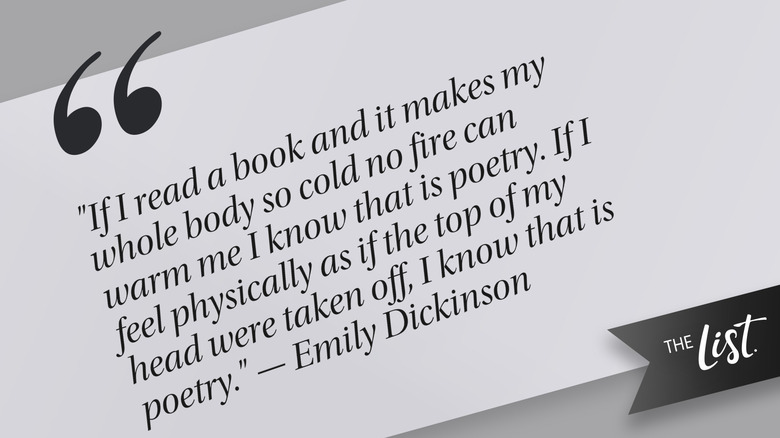
Emily Dickinson is quoted as saying, "If I read a book and it makes my whole body so cold no fire can warm me, I know that is poetry. If I feel physically as if the top of my head were taken off, I know that is poetry."
Despite the fact that she was a prolific writer, Dickinson never wrote these words down. It was Thomas Wentworth Higginson, that same Atlantic essayist, whom she met in August 1870 in the sitting room of her home. They talked at length that night, and Higginson jotted down some of her lines, which included this one. It may not sound like the most technical definition coming from a wordsmith, but anyone who's ever read a good line of poetry has probably felt those two things.
Deeper meaning of Emily Dickinson's quote — The best writing tends to hit you physically
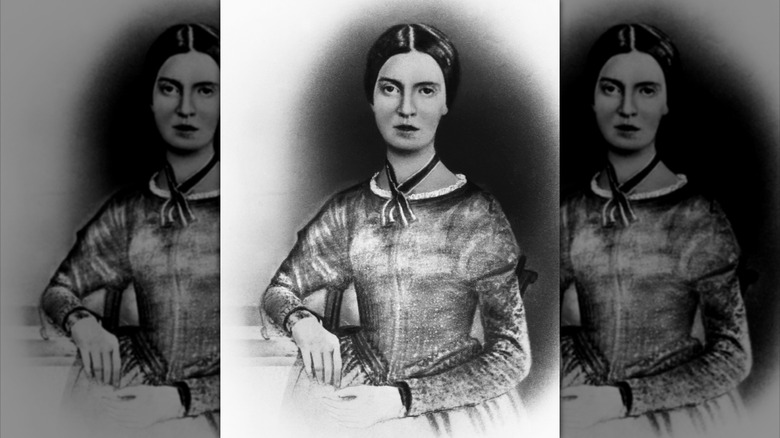
When you ask people what makes a piece of literature or poetry stand out, they'll start listing features like rhyme and rhythm, or perhaps line breaks and style. Some might even talk about genre, or setting, or word choice. Emily Dickinson proposes a different gauge: a real work of art and a truly poignant piece of verse is something you feel in your body, coursing through you as you grasp and relish it.
Do you remember the last time you were reading a book, fully immersed, and a line suddenly gave you chills? Or the last time a string of words raised the hair on your arms because it hit a little too close to home? In that scenario, sitting by the fire won't help, because the physical reaction comes from inside you, not prompted by anything outside. Dickinson draws our attention to this wondrous aspect of poetry, one that is a better judge of quality than any rhyme scheme or critic's review.
She also mentions a second sensation: the feeling that the top of your head has come off. That's when a big idea runs through your head, and you don't have enough room for it, so your mind expands. Then suddenly you feel like you need to stretch your limbs — only, they're the mental limbs in your brain. True poetry can show up in a novel, a song, or a single sentence. What matters is not the medium, but the reaction it provokes in you. The takeaway, ultimately, is to trust those reactions. When a sentence stops you cold, read it again and try to figure out what about it made you pause.
More quotes from Emily Dickinson
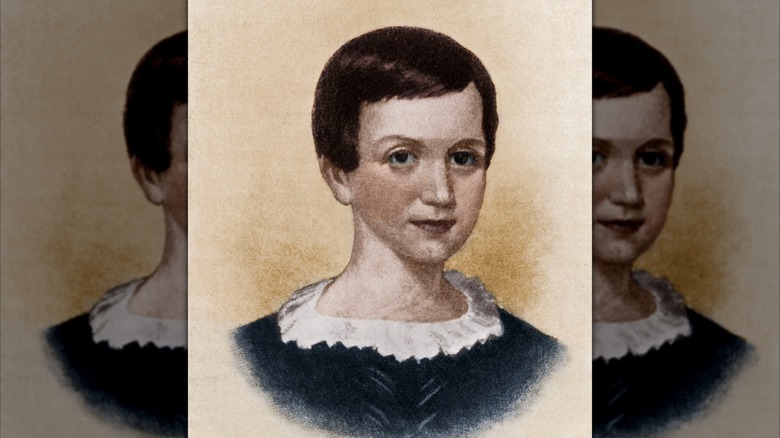
- "That it will never come again / Is what makes Life so sweet. / Believing what we don't believe / Does not exhilarate."
- "How do most people live without any thoughts?"
- "There is no Frigate like a Book / To take us Lands away / Nor any Coursers like a Page / Of prancing Poetry / This Traverse may the poorest take / Without oppress of Toll / How frugal is the Chariot / That bears the Human Soul."
- "Much Madness is divinest Sense / To a discerning Eye / Much Sense — the starkest Madness / 'Tis the Majority."
- "Publication — is the Auction / Of the Mind of Man."