

Quote Of The Day By Carl Jung: 'Knowing Your Own Darkness Is The Best Method For Dealing With...'
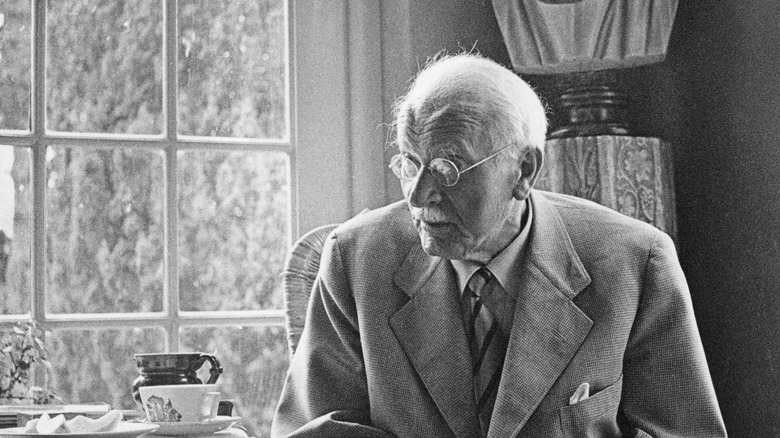
Much of Carl Jung's analytical psychology revolved around the deepest layer of the human psyche containing, in his words, such things as archetypes, and the so-called shadow; the part of ourselves we don't want to acknowledge, even if keeping it buried means it will continue to exert power over us. Now, a century later, that work is still relevant if one wishes to understand the twists and turns of the human mind. Carl Gustav Jung was born on July 26, 1875, in Kesswil, Switzerland. He was a pastor's son, and even as a boy, Jung's mind sought to discern the truth of things. He ended up as a successful psychiatrist, working at the University of Zurich's psychiatric clinic from 1900 to 1909.
In 1907, he met Sigmund Freud, and for a few years the two were friends and intellectual colleagues. That all ended in 1912, and afterward, Jung began having frightening visions. He didn't try to shut them out though, instead penning down details and painting the shapes. Over the next decade plus, the psychiatrist turned that record into a red leather volume of handwritten pages known as the Red Book. Jung described that period as his "confrontation with the unconscious," per the Library of Congress.
Today, anyone who calls themselves an introvert or an extravert or talks about archetypes or ideas like the anima and animus is borrowing from the work he accomplished during those years. Jung founded analytical psychology and taught it as a professor in Zurich and Basel before his death in Küsnacht on June 6, 1961. So, when he tells a young pastor to look at his own darkness, in today's quote of the day, he is describing something he did himself.
Quote of the Day by Carl Jung
As Carl Jung advised, "Knowing your own darkness is the best method for dealing with the darknesses of other people." It's worth noting that these words weren't actually meant for public consumption; they appeared in a letter the Swiss psychiatrist sent to Kendig B. Cully, a 23-year-old minister, dated September 25, 1937. At the time, Cully was leading a small-town congregation in Southwick, Massachusetts. You have to admit it's quite something to tell a newly-ordained pastor that before you worry about anyone else's soul, you should take a hard look at your own first.
Deeper meaning of Carl Jung's quote — To know people's struggles, you first have to know your own
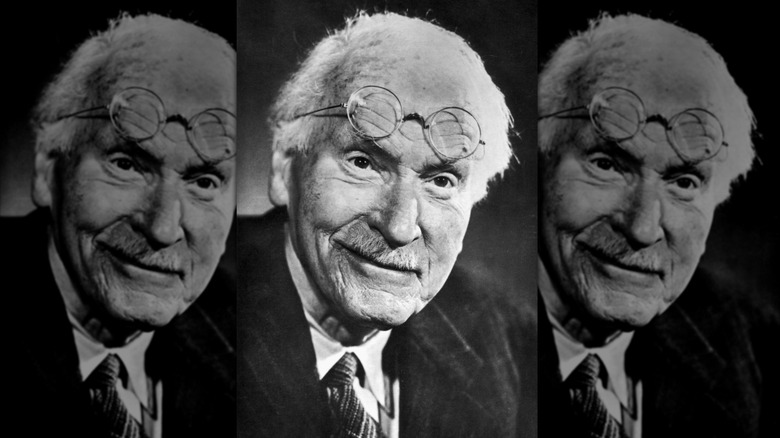
The word "darkness" sounds a tad dramatic, but the psychotherapist isn't necessarily referring to villains or even troublemakers. The darkness can be something as trifling as envy, or a bad temper, or the need to be right. Carl Jung called this hidden side the shadow, warning people that the less someone admits to a shadow, the darker it gets. And it's not about who you are as a person, because everybody has a shadow. Knowing your own flaws helps you deal with other people better since one can only recognize what one has already confronted. To know about the struggles of others — and truly know them, not just in name but in spirit too — you have to understand them first, and the key to understanding a less-than-proper inclination is to admit that you could harbor it inside you too.
If you're convinced that you would never do such a thing, all you see is a rude person, a jealous person, a cowardly person, and the natural response is to snap back or keep your distance. Jung offers an alternative. Think about the colleague who seems so full of themselves, or the relative who is so meddlesome. Sometimes they really are that at their core, but sometimes, they're just holding up a mirror. How could one tell the difference without first confronting their own version of the "darkness?" Perhaps the next time someone gets under your skin, you'll pause and wonder if you've ever done some version of it. This doesn't necessarily decide your reaction, but it'll at least allow you to see a person in front of you, not a monster, and that usually tends to go better for both sides.
More quotes from Carl Jung
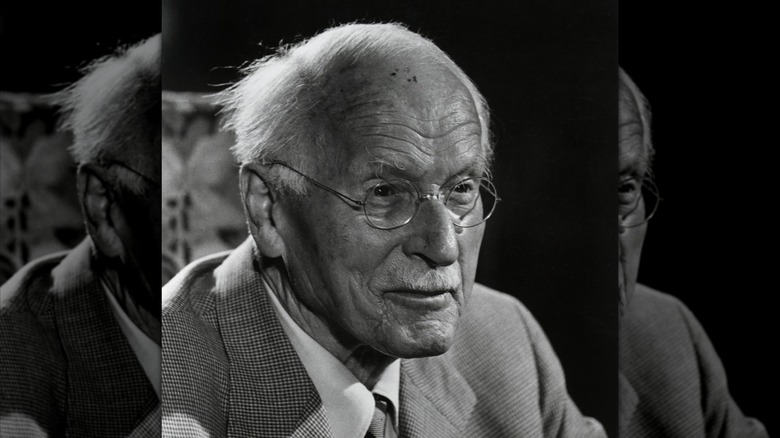
- "Everything that irritates us about others can lead us to an understanding of ourselves."
- "Who looks outside, dreams; who looks inside, awakes."
- "Man needs difficulties; they are necessary for health."
- "There is no birth of consciousness without pain."
- "Every one carries a shadow, and the less it is embodied in the individual's conscious life, the blacker and denser it is. If an inferiority is conscious, one has always a chance to correct it."