

Robert & Elizabeth Barrett Browning's Real-Life Love Story Was Better Than A Fairy Tale
We may receive a commission on purchases made from links.
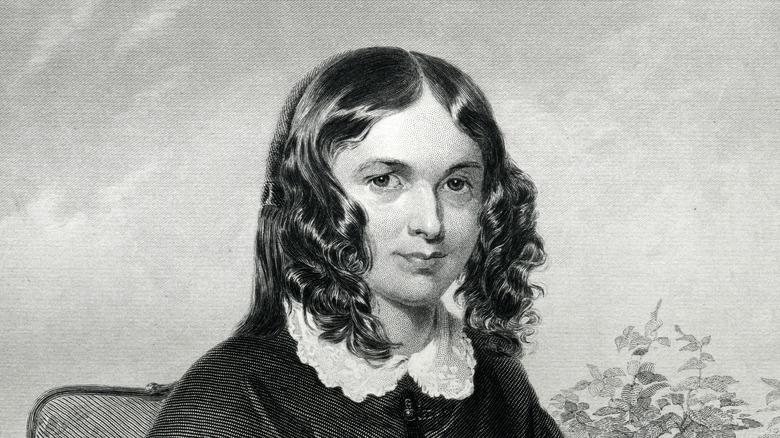
Some of Elizabeth Barrett Browning's best, and most beloved, verses centered on love. In sequences like "Sonnets from the Portuguese," she tried to measure a feeling that appeared to be boundless, the kind of love with no limits, that never ran out, outlasting everything. Notably, her own real-life love story lived up to everything she put on the page, and then some. Six days before her secret wedding to Robert Browning, then-Elizabeth Barrett, a 40-year-old poet whom long-term illness had kept to one room for years, rode by cab into Whitechapel, a rough East End district, to confront the gang holding her spaniel, Flush, for ransom. Elizabeth's father had banned a deal with the thieves, and Robert was laid up sick. Elizabeth stayed in the cab beside her terrified maid and told the dognapper's wife that she expected him back that day. By evening, Flush was home again.
The story is significant because too often, the couple's tale is reduced to a sickly woman (due to Elizabeth's chronic condition) locked in a tower, and a poet who carries her off. The real version flips this narrative, starting with which one of them was really the star of the story. It all began in 1844, when Elizabeth's "Poems" made her famous in both Britain and America. Robert, six years her junior, was still living under his parents' roof. On January 10, 1845, he sent her a letter, professing his love for both Elizabeth's poems and the lady herself. She held him off for months, sadly calling herself "nothing but a root, fit for the ground & the dark," (per English Heritage) Robert's first visit finally came on May 20, 1845, and by his own tally, their calls numbered 91 before they decided to elope.
A secret wedding followed by 15 years of happily ever after
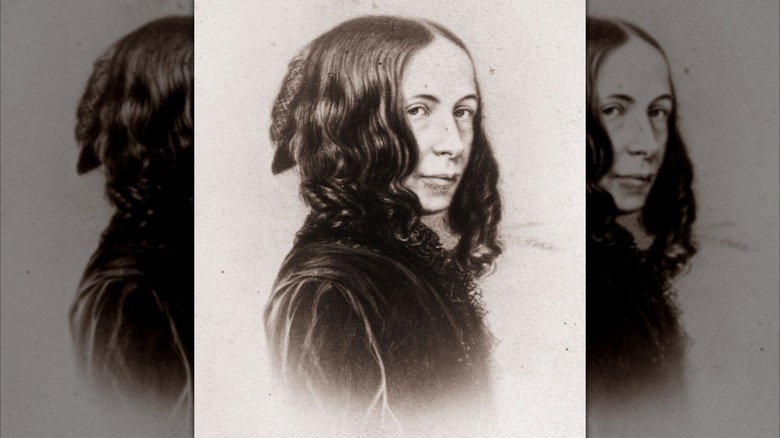
Elizabeth Barrett Browning's father, Edward Moulton-Barrett, forbade his children to get married, even threatening disinheritance for any who defied him. But harsh words and prohibitions were never an obstacle for a poet who once described love as belonging to someone "past every opposition, out of sight of every will of man," (via The Brownings' Correspondence) On September 12, 1846, Elizabeth quietly slipped out to St. Marylebone Parish Church and married Robert Browning, and then she went home, saying nothing for seven days. "I did hate so, to have to take off the ring!" Elizabeth wrote her new husband the following day. She also thanked him for rescuing her, gushing, "What could be better than lifting me from the ground & carrying me into life & the sunshine?"
On September 19, exactly one week after the wedding, while everybody in the house ate dinner, Elizabeth walked out with her maid and Flush, met Robert, and the happy couple headed off to Italy. Her father sent back her letters unread, and the two never reconciled. Italy gave the poet what London never could. Elizabeth's health rallied, and in 1849, she became a mother. That same year, she finally showed Robert the love sonnets she had quietly written about him during their initial courtship, including the famous one that opens, "How do I love thee? Let me count the ways."
He pushed for their release, and they came out in 1850 as "Sonnets from the Portuguese." The title was a private joke referring to the nickname he'd given her. She died on June 29, 1861, in their Florence home, with Robert holding her. She'd already written their ending, though, in that same sonnet: "I shall but love thee better after death."