

Quote Of The Day By Dale Carnegie: 'Any Fool Can Criticize, Condemn And Complain—And Most Fools Do. But...'

We may receive a commission on purchases made from links.
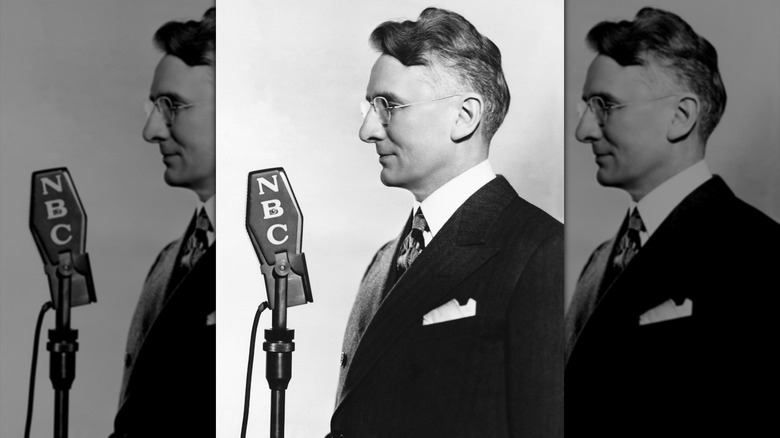
Dale Carnegie spent much of his creative energy on the ostensibly simple concept that people should go easy on one another, and he was actually in a good position to make that point. The American writer, among the first to make a career out of self-improvement, was born on November 24, 1888, in Maryville, Missouri, into a farming family with little money. When he was 16, Carnegie moved with his parents to Warrensburg, and attended the State Normal School, which charged no tuition. Room and board cost more than the family had, so he commuted on horseback. The other students preferred to steer clear of the odd farm kid whose clothes didn't fit, but Carnegie's fortunes improved when he discovered his aptitude for holding a room enthralled with the power of his voice.
Carnegie won debate prizes in school, but Latin was his undoing, and in 1908 he left with no diploma. He sold correspondence courses, then Armour meat products, and even tried acting in New York City, to little avail. Fortunately, the ambitious young man held a public speaking class in 1912 at the 125th Street YMCA and it soon spread to other cities. Finally, he'd made something of himself, but the knocks kept coming — he wrote a novel only to be told it was terrible. Carnegie's 1921 marriage to Lolita Baucaire also ended in divorce in 1931. He eventually published "How to Win Friends and Influence People" in 1936, and its run on The New York Times bestseller list lasted a decade. Carnegie knew what being picked apart does to a person, which is why he's our quote of the day.
Quote of the Day by Dale Carnegie
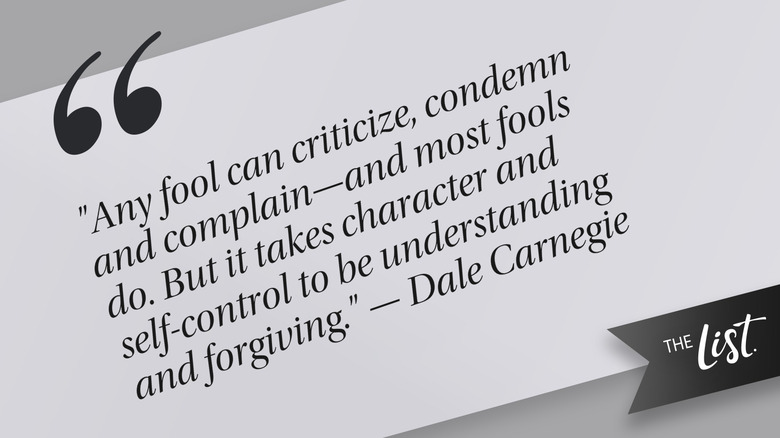
Carnegie wrote, "Any fool can criticize, condemn and complain — and most fools do. But it takes character and self-control to be understanding and forgiving." The stark line is found in the opening chapter of "How to Win Friends and Influence People," which is titled: "If You Want to Gather Honey, Don't Kick Over the Beehive."
The book itself began purely as classroom talk. Leon Shimkin, a Simon & Schuster editor who attended Carnegie's class, had a stenographer take down the lectures, and the two subsequently shaped it into a book. You have to admit, outright calling people fools in Chapter 1 is a bold way to open a book about making friends!
Deeper meaning of Dale Carnegie's quote — Finding fault is the easy part

Dale Carnegie puts his point across very bluntly, some might even say rudely, but that's because he wants it to be hard to ignore. He calls fault-finding a fool's game because it doesn't ask anything of you. Anybody can see that the soup is cold, or the report was late, or the performance was not as good as it could have been. Noticing what's wrong doesn't require much patience or effort, and it pays a small reward for the person doing it: For a moment, they get to feel smarter or superior than somebody else. Seen in that light, the three verbs Carnegie stacks together — criticize, condemn, and complain — become emblematic of a deeper problem.
To criticize is to go after what a person did, while to condemn is to go after who they are. To complain is to grumble at the world in general. In every case the issue sits somewhere outside of you, which is admittedly a large part of the appeal. That's not to say that we should never engage with these three. Genuine criticism is sometimes the difference between a mistake made once and one made repeatedly with no recourse. They have their place, but Carnegie targets the reflex.
Likewise, it always takes more effort to understand, to stop and wonder why a sensible person might have done the thing that annoyed you. Forgiving, meanwhile, is about giving up the pleasure of having been right and trying to see that, at the end of the day, we're all human and we're all probably doing our best. Sometimes, it's worth it to go over that complaint or insult and see if saying it out loud will cause more harm than good.
More quotes from Dale Carnegie
- "The bravest know fear, but they do not yield to it."
- "The only way to get the best of an argument is to avoid it."
- "Make the other person feel important — and do it sincerely."
- "You are something new in this world. Be glad of it."
- "Remember that unjust criticism is often a disguised compliment."