

Quote Of The Day By Confucius: 'The Superior Man Is Distressed By His Want Of Ability. He Is Not...'
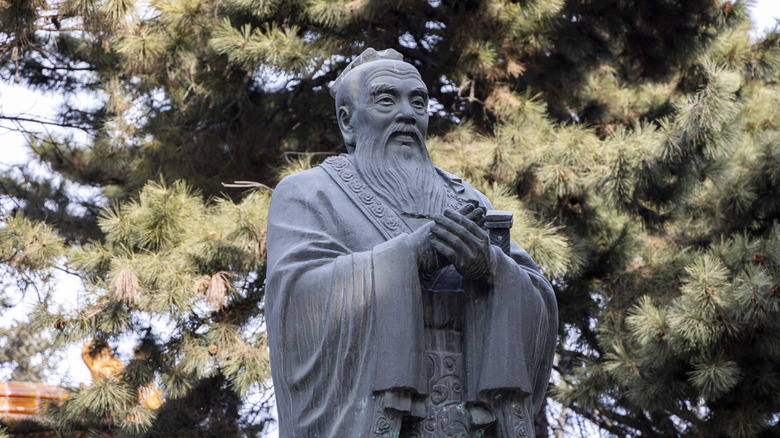
Improving your character is the defining characteristic of Confucius' philosophy, yet for a man who would one day have temples in every corner of China, he had a really hard time getting people in power to listen to him when he was alive. Born around 551 B.C. in what is now China's Shandong province, Confucius was a small boy when he lost his father.
Money was tight in his youth, and for his first jobs, he reportedly worked as a bookkeeper tallying grain in storehouses and tracking herds out at pasture. His social standing rose, and some ancient chronicles name him director of corrections in the state of Lu. Then Confucius began to travel, and the stories he left in his wake put him in many courts, including Wei, Song, Chen, Cai, and Chu. But the number of stops is a giveaway of Confucius' difficulties getting work, at least according to one of his first biographers, Sima Qian. In Qian's writings, it's portrayed as a scene of a ruler meeting a wise counselor and failing to see it over and over again.
Confucius is believed to have died in 479 B.C., and a first-century scholar later called him the "uncrowned king" (via Stanford Encyclopedia of Philosophy). "The Analects," his most famous work, discusses that struggle with recognition. In one passage, the philosopher laments it outright: "Alas! there is no one that knows me" (per UCLA International Institute). Though he is known today as one of the most influential philosophers in East Asian history, Confucius went most of his own life without that recognition. Ultimately, he seemed to realize it was no thing to lose any sleep over, which brings us to today's quote of the day.
Quote of the Day by Confucius
Confucius once wrote, "The superior man is distressed by his want of ability. He is not distressed by men's not knowing him."
The line sits in Book 15 of Confucius' "The Analects," translated by James Legge, a 19th-century Scottish missionary. The "superior man" here refers to a person of high moral standing and character, and Confucius thinks that person shouldn't be preoccupied with his own reputation. It is easy enough to agree with the advice in principle, but it's surprisingly hard to live by.
Deeper Meaning of Confucius' Quote — Worry about being good, not about your good being noticed
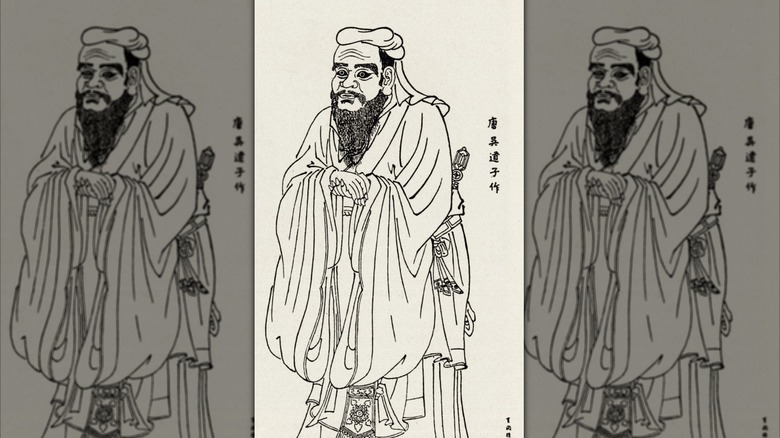
Confucius is sorting through two worries. One is "Am I actually good at this?" and it happens often as you wonder whether you're skilled at anything you're engaged in. The other is "Do people know I'm good at this?" and that's a whole different matter. You can be excellent at something and still have nobody notice. All of us carry both, but on a bad day, the second can get louder. Confucius' advice is basically to keep the first and put the second down.
It's not just the inherent merit and nobility of the sentiment. When you fret over your ability, at least it sends you back to practice, or allows you to take an honest look at where you are and what you're doing right or wrong. But fretting over recognition? There isn't much you can do in that department, because it usually isn't in your hands. Recognition gets decided inside other people's heads, and people are more often than not distracted and thinking about themselves.
In fact, one could do everything right and still be overlooked or ignored. That being said, even if you know not to let it carry too much weight, being ignored will hurt. But the sting is more manageable when you have work to get back to. So take the philosopher at his word. Learn the thing because you want to understand it and be good at it. An audience may show up or it may not. The only thing you can control is whether the people who do come to know you find something worth knowing.
More Quotes From Confucius
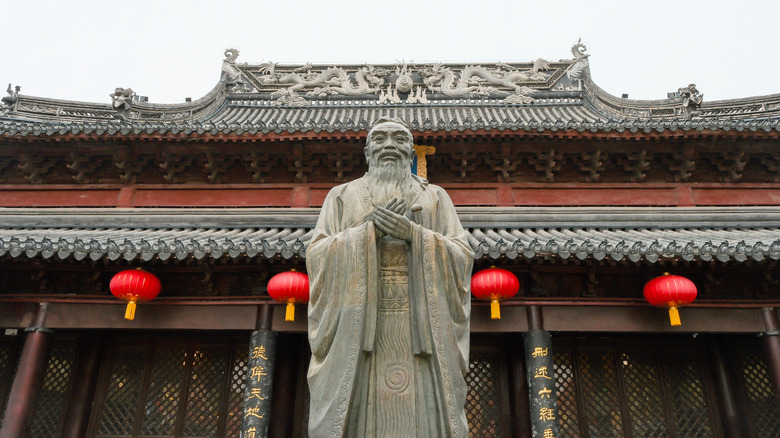
- "When we see men of worth, we should think of equaling them; when we see men of a contrary character, we should turn inwards and examine ourselves."
- "Virtue is not left to stand alone. He who practices it will have neighbors."
- "In ancient times, men learned with a view to their own improvement. Nowadays, men learn with a view to the approbation of others."
- "If a man take no thought about what is distant, he will find sorrow near at hand."
- "He who requires much from himself and little from others, will keep himself from being the object of resentment."