

Quote Of The Day By Leo Tolstoy: 'All Happy Families Are Alike; Each Unhappy Family Is...'
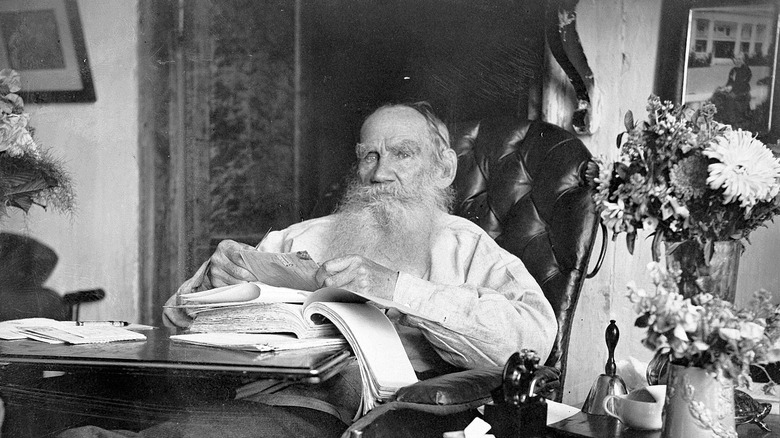
Leo Tolstoy, the Russian author behind some of the greatest novels in history, like "War and Peace" and "Anna Karenina," spent much of his career writing about families and turning their private moments into gripping literary drama. Looking at his life, few writers were poised to understand that subject better. Tolstoy was born on September 9, 1828, on Yasnaya Polyana, his family's country estate. He had lost both parents by age 9, leaving their relatives to raise the young Tolstoy siblings. As a young man, Tolstoy served in the artillery during the siege of Sevastopol in the Crimean War, and his accounts of the fighting helped make his name.
Tolstoy married at 34, to 18-year-old Sophia Behrs. Their love story involved him declaring his feelings by writing the first letter of each word of his declarations onto a table using chalk, a moment he later wrote into both "Anna Karenina" and "War and Peace." Behrs bore 13 children and copied out "War and Peace" by hand many times over. Tolstoy garnered widespread acclaim for his work, and he was put forward for the Nobel Prize more than a dozen times. But, at home, things gradually soured. Compounding the couple's interpersonal issues, Tolstoy had a spiritual crisis, culminating with him seeing his wealth as a moral stain.
He wanted to do away with the comforts of his class, which was among the reasons Behrs, who had a large household to run, clashed with him. In 1910, at 82, he left home to escape all that turmoil, ultimately dying of pneumonia on November 20. Tolstoy spent his life writing about families and ended it inside one that was unhappy in a way all its own, which is why he's the voice behind today's quote of the day.
Quote of the Day by Leo Tolstoy
Leo Tolstoy wrote, "All happy families are alike; each unhappy family is unhappy in its own way." The sentence actually opens "Anna Karenina," with the author immediately going on to describe all the drama and hardship that beleaguers the Oblonsky household. Anyone who's ever compared their family to someone else's will recognize the stark truth in this opening statement. Being happy in a family takes getting everything right, but even a small problem might be all that's required to ruin things.
Deeper meaning of Leo Tolstoy's quote — Happiness takes everything and misery requires just one thing
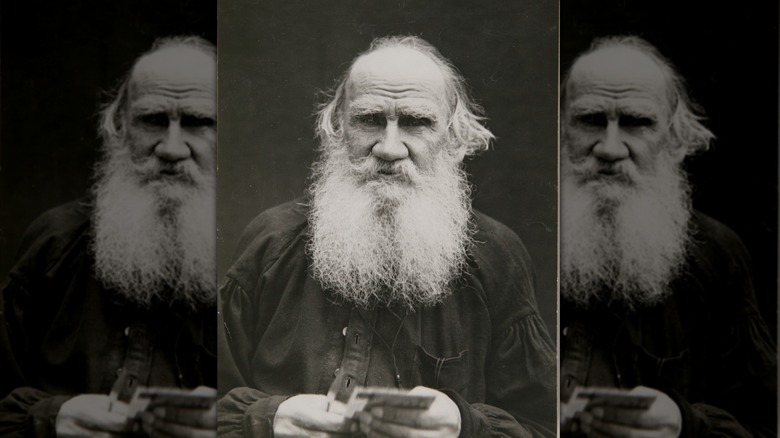
When you picture a happy family, you only see the calm surface. But imagine all the things that need to work together to support that image. A happy family requires honesty, safety, and a measure of material comfort, good health, and respect between people who actually enjoy each other's company. Take any of these elements away and the picture will warp. The unhappy families we know all look different because there are countless reasons for it all to go wrong. Sometimes it's a cheating spouse, or financial difficulties. It could even be something as silly as an old grudge nobody will name outright. There's a term for it in the scientific world. Biologist Jared Diamond referred to this phenomenon as the "Anna Karenina principle" in "Guns, Germs, and Steel," using the analogy to show why everything must be right, and the reason so few wild animals were domesticated.
The second layer is more profound. Leo Tolstoy implies that happiness, from the outside, is a smooth surface. When you get into the particulars, only then can you see what is boiling underneath the calm. And every family is facing their own challenges, so that leaves no room for comparison. Yet we can't help but compare and feel inadequate. A key takeaway here is that the families you envy are probably fighting battles you'll never see. We should stop measuring our homes against those that look perfect, because we're only glimpsing the surface level. When something goes wrong, try to avoid the one-size-fits-all approach and the comparisons that come with it, and instead look for what your family needs to feel more complete — even if you don't see it in anybody else's living room.
More Quotes from Leo Tolstoy
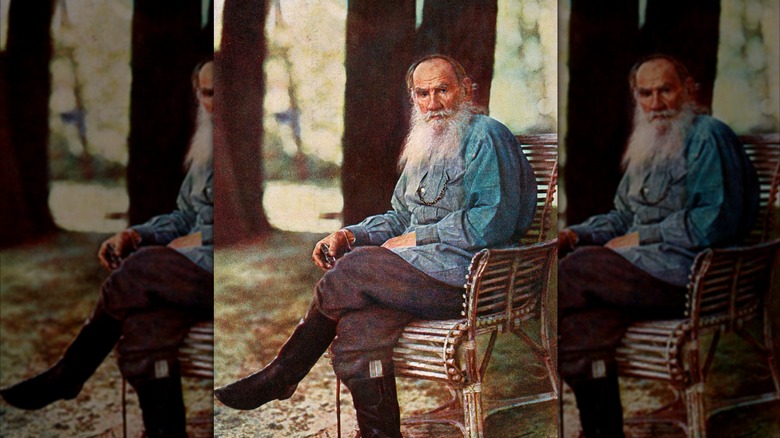
- "But believe me, my dear boy, there is nothing stronger than those two: Patience and time, they will do it all."
- "For us with the standard of good and evil given us by Christ, no human actions are incommensurable. And there is no greatness where simplicity, goodness, and truth are absent."
- "Ivan Ilych's life had been most simple and most ordinary and therefore most terrible."
- "And yet in our world everybody thinks of changing humanity, and nobody thinks of changing himself."
- "Faith is the strength of life. If a man lives he believes in something. If he did not believe that one must live for something, he would not live."