

Quote Of The Day By Philosopher Friedrich Nietzsche: 'We Feel More Pain, For Instance, When One Of Our...'
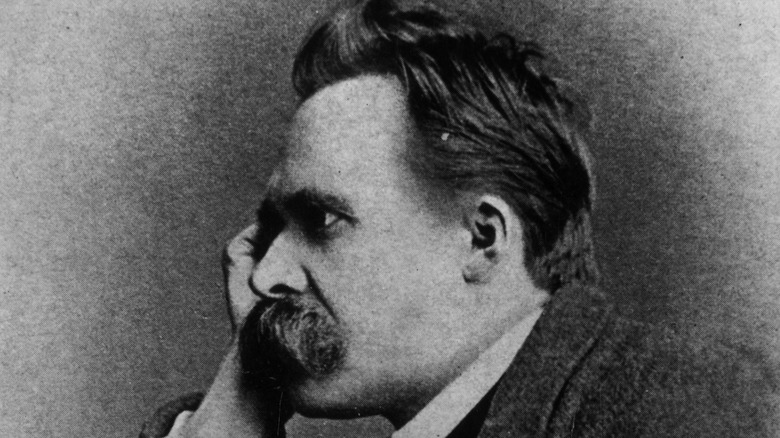
Friedrich Nietzsche is the German philosopher behind one of the most famous dictums in history. "God is dead" he proclaimed, but his thinking was far more layered than this oft-quoted phrase shows, taking aim at moral codes and our very understanding of right and wrong.
Nietzsche was born on October 15, 1844, in Röcken, a village outside Leipzig. The village's Lutheran pastor was Nietzsche's father, who took ill and died when the would-be philosopher was only 4. Half a year later, his 2-year-old brother died too. In 1869, the University of Basel made him a professor of classical philology at 24, younger than anyone to ever hold that kind of chair. Nietzsche's closest associates repeatedly hurt him, starting with Richard Wagner, a composer born the same year as his late father. Nietzsche ranked that friendship as the greatest thing he had accomplished in life, but the bond eventually fell apart, and as the philosopher came to see it, Christianity had poisoned the mind of his old hero.
His sister, Elisabeth, and her husband, Bernhard Förster, were another source of disappointment when they moved to Paraguay to build a settlement meant to keep out Jews. His sister's antisemitism pained Nietzsche deeply. His own failing body forced him out of Basel in 1879, but the rootless years that followed produced the books he's remembered for, including "The Gay Science," "Thus Spoke Zarathustra," and "Beyond Good and Evil." Recognition was slow to come, however, and Nietzsche died in 1900, never knowing his ideas would go on to shape the great thinkers of the age from Sigmund Freud to Albert Camus. The philosopher knew how much it hurts when someone you love lets you down, which is the reason he's behind today's quote of the day.
Quote of the Day by Friedrich Nietzsche
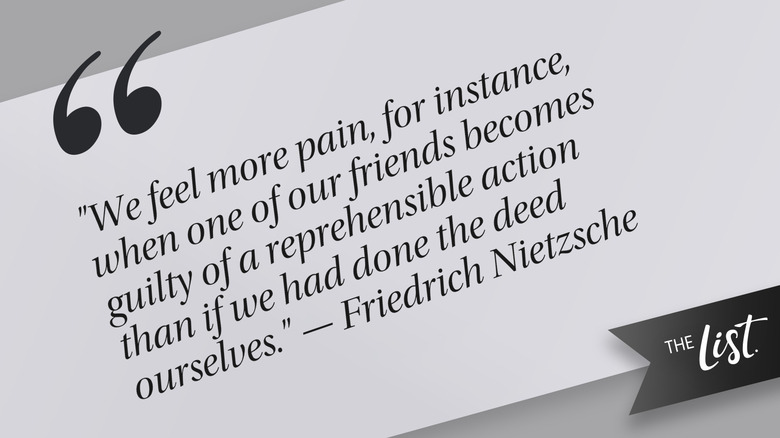
Friedrich Nietzsche wrote, "We feel more pain, for instance, when one of our friends becomes guilty of a reprehensible action than if we had done the deed ourselves."
The line is from "Human, All Too Human: A Book for Free Spirits," which the German philosopher published in 1878. It is aphorism 46, in the chapter on the history of moral feelings, and the wording is Alexander Harvey's 1908 translation. The heading of the chapter is "Sympathy Greater than Suffering," referring to our trust in what we notice about a friend's goodness, which is stronger than the friend's own. That's why we are hurt more when they betray that trust.
Deeper meaning of Friedrich Nietzsche's quote — Why a friend's wrong can hurt more than our own
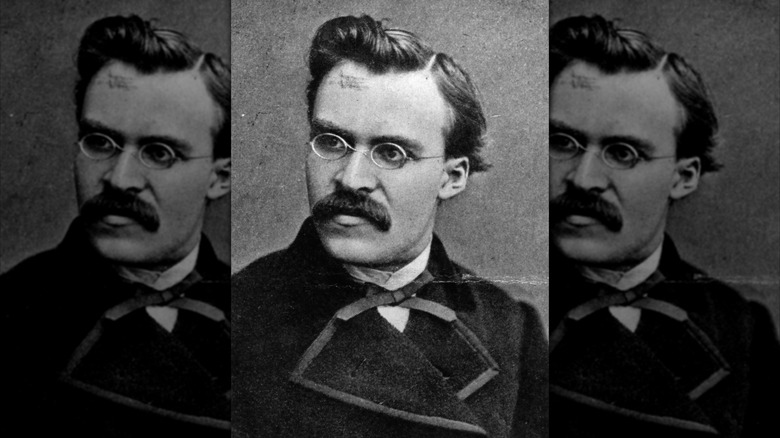
At first, it might seem backward. When you do something wrong, you're the one who carries the guilt on your conscience and the consequences that may follow. Nietzsche grants as much, but his point is that the price we pay has no bearing on the pain we feel. And in the case of someone we love and trust, that can be more painful than facing our own wrongs.
After all, we know way more about ourselves than others. We were there for every excuse and every bad mood and every corner we felt like we had to cut. When the slip happens, it hurts, but it barely surprises us. We can hardly say the same about the people we love. For one thing, we don't watch their worst moments from the inside, so we tend to fill the gap with the best version of them. Nietzsche claims we believe in a friend's ability to be a better person more than they do, so when they do something shameful, we contend with the act itself and its implications, losing the mental picture of who we thought they were. That grief cuts deeper than guilt.
The pain is about us, our faith, our investment, and ultimately, our pride in who we've picked. It's not cynical. It's an inevitable part of genuinely caring about someone. The next time you feel this hurt, ask yourself this simple question: Is it what they did, or the perfect picture of them they ruined? Give them some of the context you give yourself, and try to go easy on the ache. If nothing else, it's proof of how much you believed in someone, and that belief was worth it for all the good moments.
More quotes from Friedrich Nietzsche
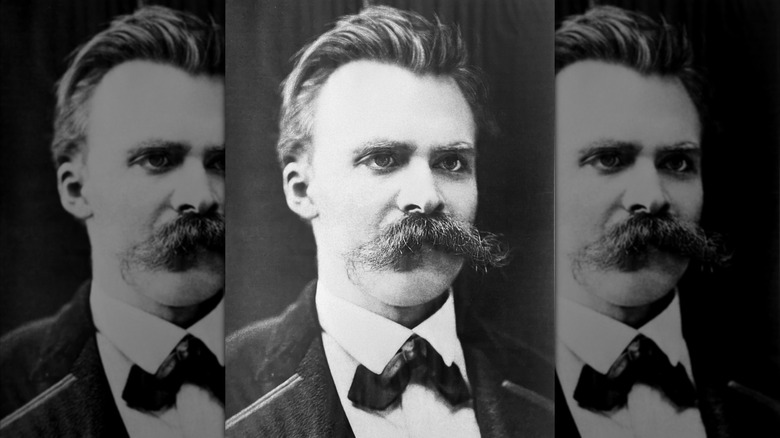
- "In one's friend one shall have one's best enemy."
- "That which does not kill me, makes me stronger."
- "Without music life would be a mistake."
- "Actions can be promised, but not feelings, for these are involuntary. Whoever promises somebody to love him always, or to hate him always, or to be ever true to him, promises something that it is out of his power to bestow."
- "One must have a strong imagination in order to feel sympathy."