

Quote Of The Day By Philosopher Friedrich Nietzsche: 'Love Brings To Light The Noble And Hidden Qualities Of A...'
We may receive a commission on purchases made from links.
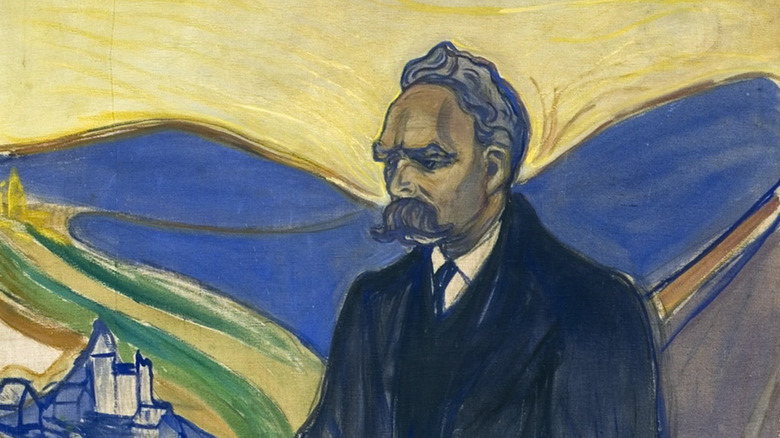
In 1882, esteemed German thinker Friedrich Nietzsche asked a woman to marry him three times in less than a month, twice by sending a friend to handle the request for him. The lucky lady in question was Lou Salomé, a general's daughter from St. Petersburg, and she rejected him each time. Nietzsche was born on October 15, 1844, in Röcken bei Lützen, a rural German village. He became a professor in Basel at the age 24, a major testament to his intellectual gifts. But as illness wore Nietzsche down a decade later, the writer quit and became a wanderer, chasing more comfortable weather for his ailing body.
Sometimes it was the mountain village of Sils Maria, others it was the picturesque coasts of Italy and France. As for Nietzsche's love for Salomé, notably, she came into his life through close pal Paul Rée. The trio planned to live and study together, but it all fell apart in Summer 1882. Rée and Salomé settled in Berlin as a couple and Nietzsche sank into a dark mood. In early 1883, however, he produced the opening section of "Thus Spoke Zarathustra" in about 10 days. The years that followed were his most productive yet, resulting in works like "Beyond Good and Evil" and "On the Genealogy of Morals."
Nietzsche wrote five books in 1888 alone, taking aim at religion and the moral rules we never question. That same year, an academic gave a lecture on his work at the University of Copenhagen, but sadly Nietzsche wasn't around to enjoy the fame that followed. He broke down in Turin in early 1889 and died in 1900. As one of the greatest thinkers in history, he knew firsthand the bitter heartaches of love, hence our quote of the day.
Quote of the Day by Friedrich Nietzsche
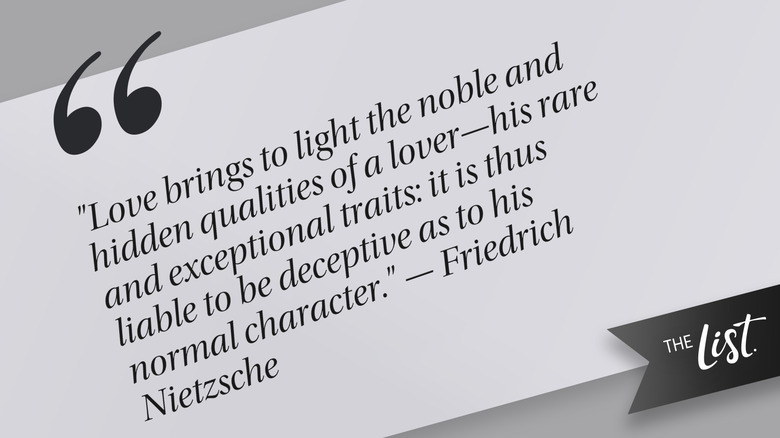
Friedrich Nietzsche wrote, "Love brings to light the noble and hidden qualities of a lover — his rare and exceptional traits: It is thus liable to be deceptive as to his normal character." The line is an aphorism from "Beyond Good and Evil," which was released in 1886. The German philosopher covered the cost of printing it himself, and the English was courtesy of Helen Zimmern, a translator who actually knew Nietzsche personally. Written just four years after that fateful summer with Lou Salomé, it's a blunt message to all romantics to not judge a person through rose-colored glasses, or by how they act when they fall in love.
Deeper meaning of Friedrich Nietzsche's quote — Love tends to show us someone at their best
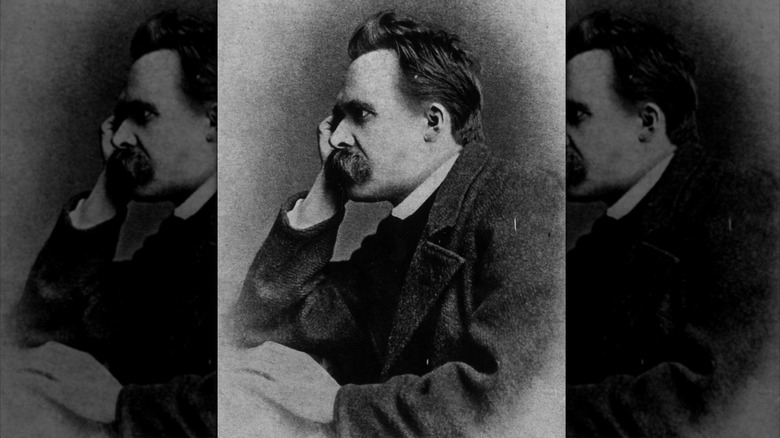
It's often said that love brings out the best in us, and we've probably watched it happen to friends many times. Someone falls for a person and suddenly they turn into a much better version of themselves. They try harder in life, and appear kinder and more self-sacrificing, especially towards the person they love. The guy who forgets everybody's birthdays now remembers his date's favorite song, or the traumatic experience they had as a child. In the right circumstances, people can be patient and generous, even brave. Friedrich Nietzsche isn't necessarily cynical about this phenomenon. He doesn't posit that love invents these qualities, but rather it "brings to light" what was already there. At the same time, though, it's worth bearing in mind that love shows us someone at their peak, not their baseline.
Character is defined by what a person does on an ordinary Tuesday, when they're tired and bored and there's no one in their vicinity they wish to impress. Someone falling in love is running on a kind of high that everyday life can't sustain for long. The person being loved, meanwhile, meets that best version and mistakes it as the default. When the glow fades and the monotony of everyday life comes back, both can feel let down. So, before making any big decisions, give it time to see someone through a few dull, stressful episodes. And more specifically, watch how they treat the people they aren't trying to win over. But there's another lesson here too: Your best self that love brings forth can be convinced to stay, at least to some extent, in your daily life. And isn't that a wonderful baseline to aim for?
More quotes from Friedrich Nietzsche
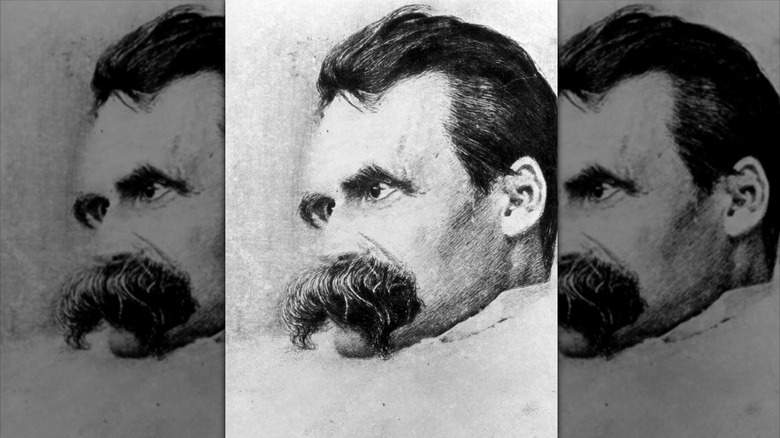
- "What is done out of love always takes place beyond good and evil."
- "Sensuality often forces the growth of love too much, so that its root remains weak, and is easily torn up."
- "One loves ultimately one's desires, not the thing desired."
- "I should only believe in a God that would know how to dance."
- "He who fights with monsters should be careful lest he thereby become a monster. And if thou gaze long into an abyss, the abyss will also gaze into thee."