

Quote Of The Day By Socrates: 'Either Death Is A State Of Nothingness And Utter Unconsciousness, Or...'
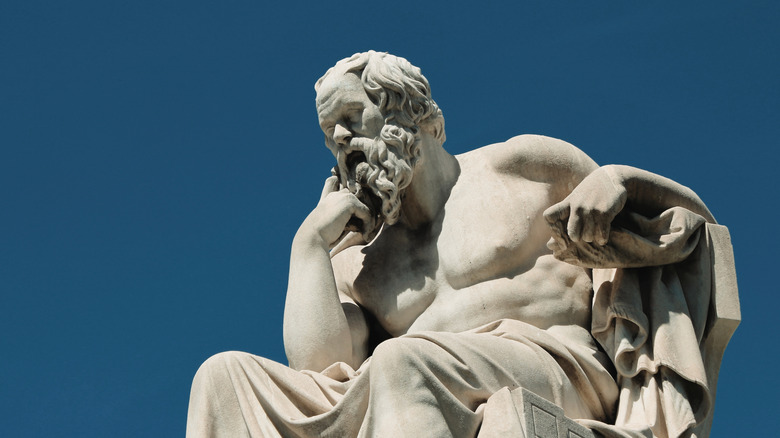
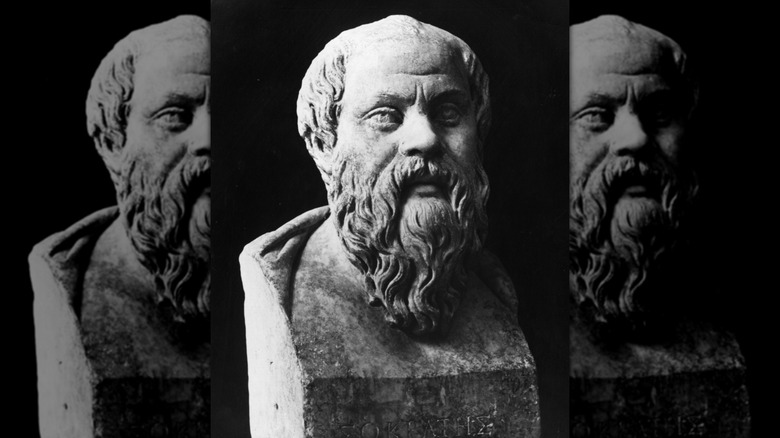
Socrates was one of the first thinkers in recorded history to question the status quo, for which he's gone down as both philosophy's founding hero and free speech's first martyr. The son of a midwife named Phaenarete and a stonemason named Sophroniscus, Socrates was a native Athenian, born there in 469 B.C. By ancient accounts, he had a homely visage, with a pug nose and protruding eyes. He is said to have usually skipped shoes and baths alike. He could fight, though, and when Alcibiades, the future military commander and Socrates' friend, was injured in northern Greece in 432 B.C., he got him out alive and kept his gear out of enemy hands. Socrates also saw battle at both Delium and Amphipolis. Back in Athens, he became notorious for stopping people on the street and quizzing them until they realized they knew less than they believed.
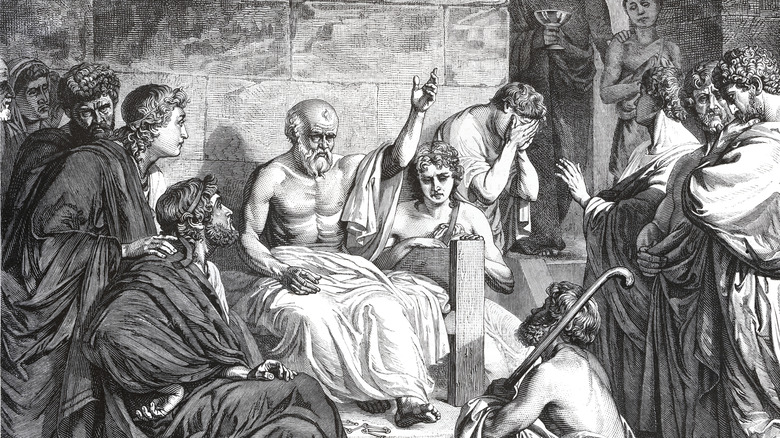
Plenty of Athenians reportedly found Socrates completely exhausting, until at last, in 399 B.C., three accusers hauled the then-70-year-old into court for impiety and for being a bad influence. In that infamous trial, the philosopher lost by so few votes that, by Socrates' own reckoning, a swing of 30 would have saved his life. He was invited to suggest his own punishment, and he first asked for free meals at public expense. The jury sentenced him to death, and his last moments before drinking hemlock while surrounded by friends were steady and calm, and thus immortalized his name. Few people have stared down their own execution as calmly as he did, which is why Socrates is behind today's quote of the day.
Quote of the Day by Socrates
According to his student Plato, Socrates reasoned, "Either death is a state of nothingness and utter unconsciousness, or, as men say, there is a change and migration of the soul from this world to another." The Greek philosopher didn't write anything down, and what wisdom he left came courtesy of his most famous student, who incorporated these dialogues into his own work. Socrates says these lines in the closing minutes of Plato's "Apology," which recreates the speech he gave at his trial. With the verdict already in, the free speech martyr looks out on the crowd and lays out his reasons for why death is nothing to be afraid of. To this day, it might be the most relaxed speech ever given by a man who'd just been condemned to die.
Deeper meaning of Socrates' quote — Don't let fear of the unknown cloud your judgment
Many philosophers have pondered the mystery of death, but Socrates wasn't necessarily interested in what happens when we pass on. His reasoning is pragmatic and comes in clutch in our real lives, even now. The legendary thinker analyzes the two answers people usually give when asked whether there's an afterlife, checking them for something worth dreading. If death returns you to a state of nothingness, then it's the deepest, quietest sleep there is, with no pain and no worry. Why should we dread an experience that we can't even rightly describe? And if the afterlife is a threshold you pass through to another world, why would you dread an experience you know nothing about? For all Socrates knew, the afterlife offered him the chance to speak to the greatest minds who ever lived.
He can't find anything frightening in either scenario, so he isn't afraid. That fits what the philosopher told the jury earlier in his defense. To fear death, he said, is "The pretense of wisdom, and not real wisdom," since no one really knows what happens when we die. To fear the unknown is folly, because ignorance can cloud your judgment. There's admittedly a third option, where something awful is waiting on the other side, but again, we can never be sure of that. Fear tends to treat the scariest possibility as fact, so the outspoken Athenian offers a better path forward. Most of us will never face a jury, or stare death in the eye and rob it of its power to frighten us, but we should list what's likely to happen instead of just settling on fear. More often than not, the worst outcome is one possibility among many.
More Quotes From Socrates
- "The unexamined life is not worth living."
- "We shall be better and braver and less helpless if we think that we ought to enquire, than we should have been if we indulged in the idle fancy that there was no knowing and no use in seeking to know what we do not know."
- "The difficulty, my friends, is not to avoid death, but to avoid unrighteousness; for that runs faster than death."
- "Not life, but a good life, is to be chiefly valued."
- "Until philosophers are kings, or the kings and princes of this world have the spirit and power of philosophy... cities will never have rest from their evils."