

Quote Of The Day By Philosopher Marcus Aurelius: 'Life Is Short, And The One Fruit Of It In This World Is...'
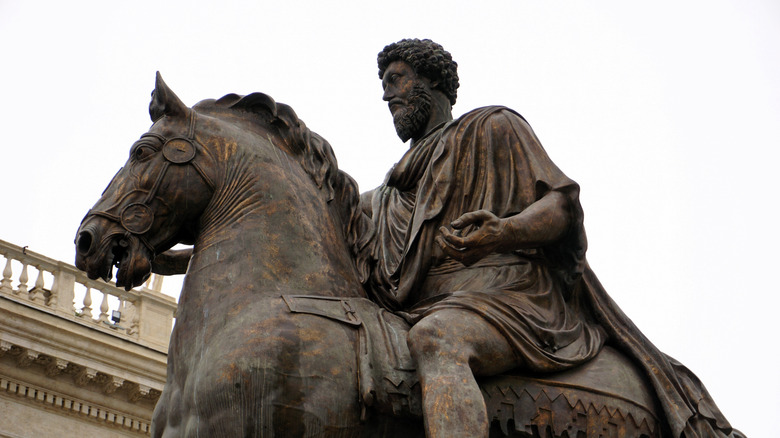
When a teenage Marcus Aurelius learned that he was to become the emperor of Rome, he took it as bad news. Despite Aurelius' misgivings, he went down in history as a revered ruler, celebrated for his wisdom and for giving Stoicism one of its most defining texts, "Meditations" — a collection of personal reflections far more enduring than any imperial decree. In his final year, Emperor Hadrian was looking for a successor when he judged that Aurelius, born on April 26, 121 AD, then 16, was too young to take over. So, he made the older Antoninus Pius his heir, on the understanding that Antoninus would adopt the young boy and prepare him to rule next.
According to the "Historia Augusta," a collection of imperial biographies, Aurelius didn't want to leave his mother's house for Hadrian's. When people asked what was wrong, in a very on-brand way for the philosopher, he ran through every downside of absolute power. Despite Aurelius' objections, though, he was made Caesar and moved into a palace. The young man lived under Antoninus' roof for 23 years, and in all that time, spent just two nights apart from him. After Antoninus' death in 161, Aurelius became emperor alongside his adoptive brother Lucius Verus.
Aurelius found Rome beleaguered by trouble and enemies on all sides, so much of his rule was spent on the front lines of different campaigns. It was during that time Aurelius also likely wrote his world-famous "Meditations." The Stoic philosopher treated the perks of being emperor as expendable, even selling palace treasures to pay for his long wars instead of imposing more taxes on provinces. Aurelius spent his life trying to hold power without letting it change him for the worse, hence why we've turned to him for our quote of the day.
Quote of the Day by Marcus Aurelius
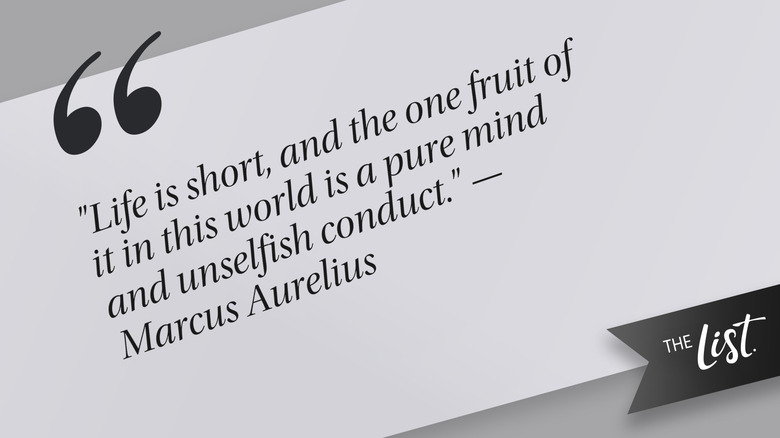
Marcus Aurelius wrote, "Life is short, and the one fruit of it in this world is a pure mind and unselfish conduct." This memorable line can be found in Book 6 of "Meditations," in a section the Roman emperor opens with a warning to himself not to succumb to the sweet temptations of power. The wording is George W. Chrystal's, a young Oxford scholar who later became a British public official. He published his version in 1902, based on an English translation originally printed in 1742. Aurelius was the ruler of large swaths of the ancient world, and his power and influence stretched from the coast of Spain to North Africa and the Middle East. And yet, he summed up life in two things: A clear mind and kind deeds.
Deeper meaning of Marcus Aurelius' quote — The only achievement worth pursuing is in one's self
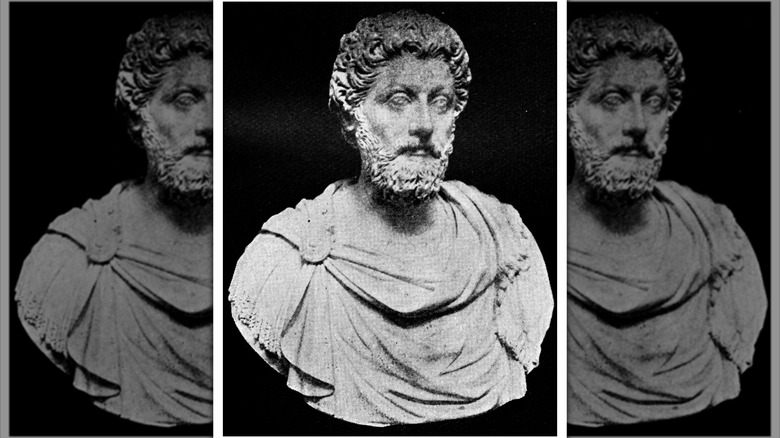
To have lived such an eventful life and still call it short is truly fascinating. Often, we fail to register the slow but sure march of time until we reach a definitive milestone in our lives. And at the zenith of this journey, one might wonder if it all meant anything. In Marcus Aurelius' estimation, when you look back on your life, only two things really count. One is whether you kept your wits about you and grew intellectually. The other is if you treated other people well. Everything else — the job, the money, the status — comes and goes and none of it is a true measure of a man's worth, much less his life. Indeed almost everything else we have in life is on loan. Titles change hands; wealth can dry up; and happenstance will take away your treasured possessions.
Even a good name can be undone by a single rumor, never to be restored again. Many relationships come with an expiration date too. Most of what we interact with in our daily lives happens outside of us, and is therefore out of our reach. Our thoughts and our deeds are the only things that are truly our own, and these are the two aspects of being Aurelius valued above all else. At the same time, a pure mind isn't a vacant place, but rather a place where values like wisdom, justice, courage, and self-control (the core virtues Aurelius himself named) are cultivated. The Stoicist reminds us that a mind that has been cleared of vanity and arrogance and nourished on kind, unselfish deeds is the only truly valuable achievement in life — especially in hindsight.
More quotes From Marcus Aurelius
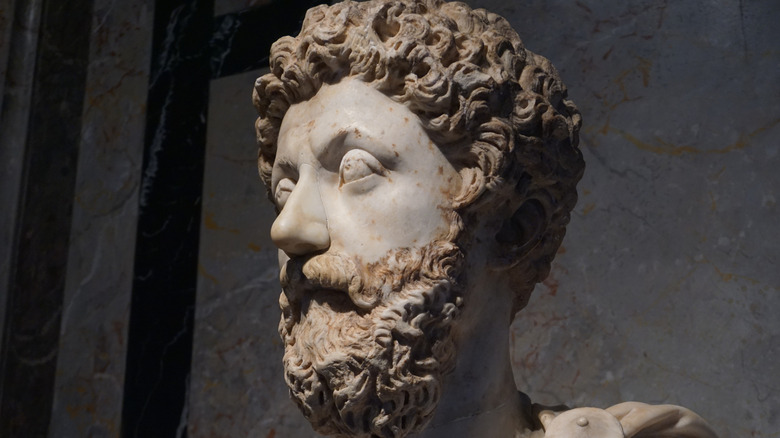
- "Nowhere can a man find any retreat more quiet and more full of leisure than in his own soul."
- "Be like a promontory against which the waves are always breaking. It stands fast, and stills the waters that rage around it."
- "Nothing rejoices the heart so much as instances, the more the better, of goodness manifested in the characters of those around us."
- "Let any one say or do what he pleases, I must be a good man."
- "Dwell not on what you lack so much as on what you have already."