

Quote Of The Day By Abraham Lincoln: 'In This Sad World Of Ours, Sorrow Comes To All; And, To...'

Abraham Lincoln is described by historians as one of the United States' quintessential leaders. Born on February 12, 1809, in Hodgenville, Kentucky, Lincoln's beginnings were relatively humble, with the future politician spending his childhood in a small log cabin. Lincoln was only nine when his mother died, and he and his sister, Sarah, were tasked with keeping the household running. She took over the mom's duties, while Lincoln and his dad worked the land. Despite his tough upbringing, Lincoln managed to build a good life for himself. He became a lawyer, and ventured into politics amid the Mexican-American War.
He won a House seat in 1846, but his opposition to the war was unpopular, and he didn't manage to clinch a second term. His loss saw Lincoln return to his law practice, but as slavery became an overwhelming problem in America, he dove into politics again. He ran for Senate, but lost. His performance on the debate stage was impressive, however, and it earned him the presidential nomination from the Republican Party regardless. Lincoln won the election in 1860, becoming the 16th U.S. president. His term saw Lincoln braving the slavery issue, weathering the Civil War, and facing multiple death threats.
It was a time of turmoil and change. He was reelected in 1864, and the Civil War ended in April 1965. Lincoln, who had worked arduously towards this goal, paid a visit to Ford's Theater on April 14 to celebrate. Sadly, it was there that a Confederate supporter shot and killed him. Still, Lincoln's impressive legacy lived on, and he was remembered for his humanity. He notably penned letters to those who lost loved ones in the war, and it is from a missive to the 22-year-old daughter of a fallen soldier that we pulled today's quote.
Quote of the Day by Abraham Lincoln
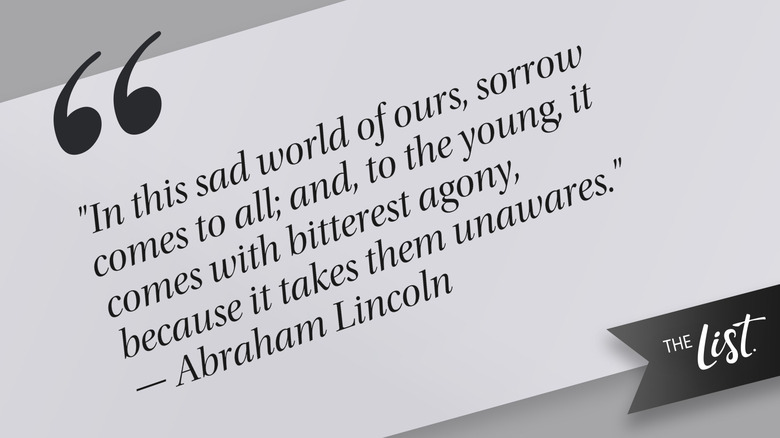
"In this sad world of ours, sorrow comes to all; and, to the young, it comes with bitterest agony, because it takes them unawares." This is what Abraham Lincoln wrote to 22-year-old Fanny McCullough after her father died in the Civil War in 1862. The president's deep empathy is clear in his words, and that might, in part, have been because his own son, Willie, had died only 10 months prior. Needless to say, Lincoln knew a thing or two about grief. With these words, he attempted to console McCullough by reassuring her that it was totally normal to feel as if her whole world had ended, because losing a loved one so young is all the more painful chiefly because it's so unexpected.
Deeper Meaning of Lincoln's quote — Death's sting is sharpest when you're young
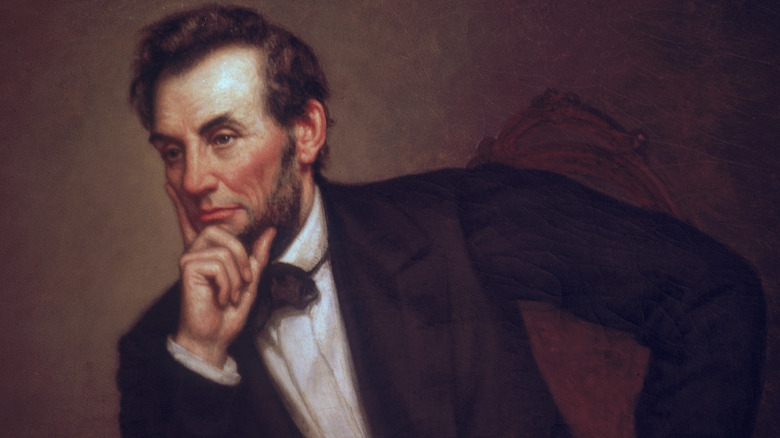
In a world of uncertainty, one thing is promised: We will all experience loss and grief in our lifetimes. There is no such thing as a pain-free existence, but when you're young and still seeing the world through rose-colored glasses, the death of a loved one shatters the very foundation of your life. This is what Abraham Lincoln articulated in his letter. Older people have lived enough life to understand that loss is inevitable. The younger generation still exist in blissful ignorance of death's sting. Until they don't, and it changes them forever. But Lincoln also offered a message of hope, noting that, with time, the same memories that bring immense pain turn it into "a sad sweet feeling in your heart."
While grief can pull the rug out from under you, future happiness is still possible. Lincoln sure knew what he was talking about, having lost his mother when he was only nine years old, alongside his youngest brother, who died when he was just a baby. The politician's sister, too, also passed away when she was 21 after complications during childbirth. His letter, written over a century ago, reminds us that grief is universal, and it's okay to hurt. We just need to remember in the midst of the pain that better days are ahead, and all is not lost, even or perhaps especially when it feels like the opposite is true.
More quotes by Lincoln
-
"A house divided against itself cannot stand. I believe this government cannot endure, permanently half slave and half free."
-
"Let us have faith that right makes might, and in that faith, let us, to the end, dare to do our duty as we understand it."
-
"It is an old maxim and a very sound one, that he that dances should always pay the fiddler."
-
"No one has needed favors more than I, and generally, few have been less unwilling to accept them."
-
"Every man is said to have his peculiar ambition. Whether it be true or not, I can say for one that I have no other so great as that of being truly esteemed of my fellow men."