

Quote Of The Day By Michel De Montaigne: 'I Care Not So Much What I Am In The Opinions Of...'
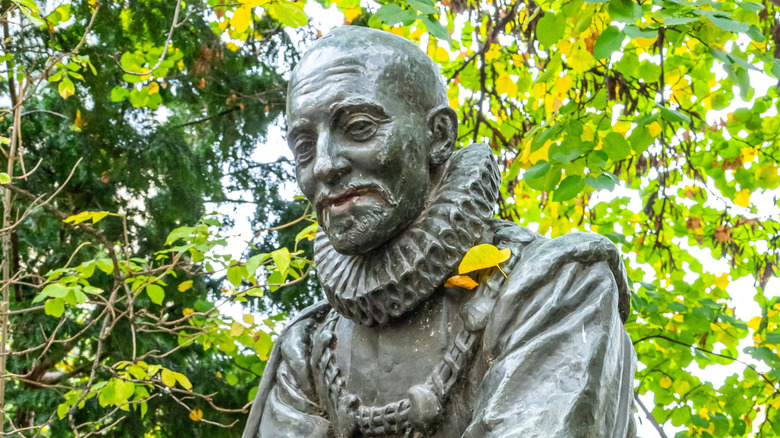
Literary essayists in the modern world can thank Michel de Montaigne for coming up with the form as well as its name. Born in France in 1533, Montaigne wrote to better understand himself in a collection of writings that he published in a book called "Essais," which means "a trial" or "an attempt" in French. He wrote out and wrestled with his thoughts, no matter how mundane, embarrassing, or lofty. In doing so, he was attempting to better understand himself and establishing himself as one of the era's foremost writers and philosophers.
Montaigne was born into an aristocratic family. He only spoke Latin until he was six, and his father hired a musician to play music to gently wake him up every morning. He studied law and worked as a magistrate for a time. At the age of 24, he met and became close friends with Étienne de La Boétie, who tragically died six years after the two men met. There are theories that Montaigne took to writing as a way to find meaning in the wake of his friend's sudden death.
At 38, he secluded himself in a tower at his family estate to write. His first edition of "Essais" was published in 1580, and he added to it multiple times before his death in 1592. Montaigne wrote about nearly everything around him at the time — thumbs and their functionality, kidney stones, how to greet royalty, coming to terms with the inevitability of death, and more. American author Ralph Waldo Emerson described Montaigne as "the frankest and honestest of all writers," according to the National Endowment for the Humanities. It is Montaigne's frank and honest perspectives on life that make him our choice for quote of the day.
Quote of the Day by Michel de Montaigne
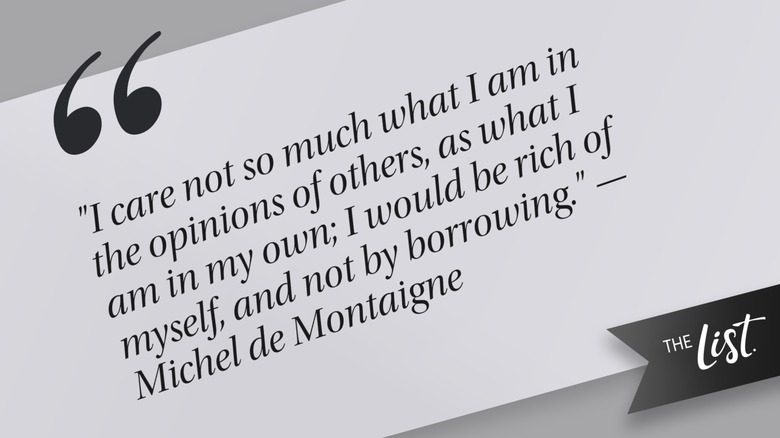
Michel de Montaigne's writings were all about self-reflection and examination, as well as references to other great thinkers who came before him, like Plato and Cicero. Each chapter of "Essais" focused on a different theme. Book II, Chapter 16 was "Of Glory," and in it, he wrote, "I care not so much what I am in the opinions of others, as what I am in my own; I would be rich of myself, and not by borrowing."
He'd been writing about how it was easy to like hearing compliments and praise from others, as well as the hypocrisy of those who act a certain way in front of others, instead of showing who they really were. But he warned people to not rely solely on external validation for our self-worth. Instead, it must come from within.
Deeper meaning of Michel de Montaigne's quote — Be true to yourself and don't worry about others
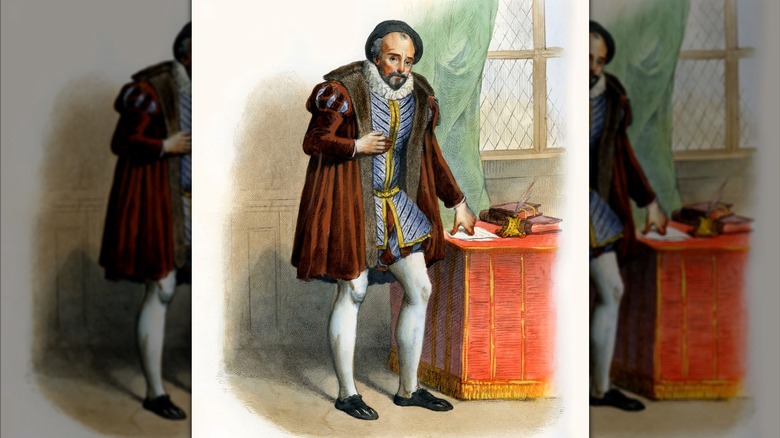
Michel de Montaigne is asking himself what all of us should consider — be the person that you want to be and who you're proud to be. Don't worry about what others think of you, and don't let your worth be determined by others. It can be a hard thing to do, particularly in today's modern world. Just think of social media, where we can get nearly instant validation from other people through likes and comments, which can be one of the reasons it's so hard to quit social media.
However, what others think of us can be fickle, and the only constant that we have is how we feel and think about ourselves. So instead of acting in ways to try and please others, we should act in a way that shows us as our truest and best selves. That doesn't mean you should eschew compliments or ignore other people. Praise from others should be appreciated, of course; however, it shouldn't become the all-consuming thing we chase. We should also not ignore how our actions impact others. And to live a good life, we should focus on living with integrity in the ways that only we can see, which is a form of self-care.
There's no need to act a certain way to try and seek validation from others. Being true to yourself and what you like and who you are is what's most important, and that is the untold truth of self- confidence.
More quotes from Michel de Montaigne
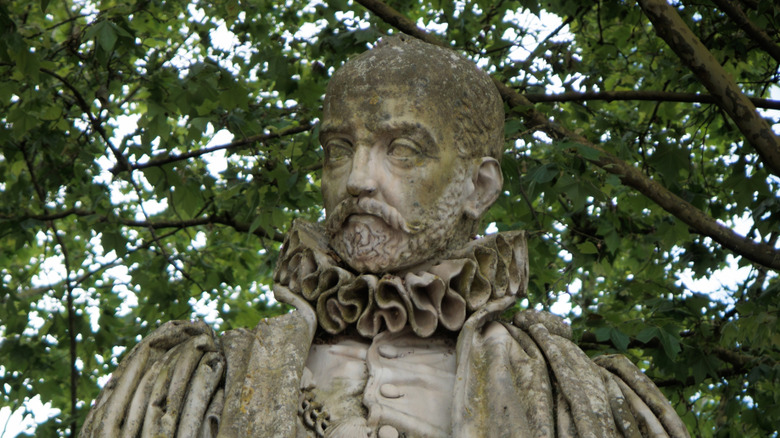
- "If someone were to ask me why I loved him, I feel that it could not be expressed, except by answering 'Because it was him; because it was me.'"
- "Each man bears the entire form of a man's estate."
- "I am one of those who are most sensible of the power of imagination: every one is jostled by it, but some are overthrown by it."
- "The greatest thing in the world is for a man to know that he is his own."
- "We ought to hold with all our force, both of hands and teeth, the use of the pleasures of life that our years, one after another, snatch away from us."