

Quote Of The Day By Friedrich Nietzsche: 'But In The Smallest And Greatest Happiness There Is...'
We may receive a commission on purchases made from links.
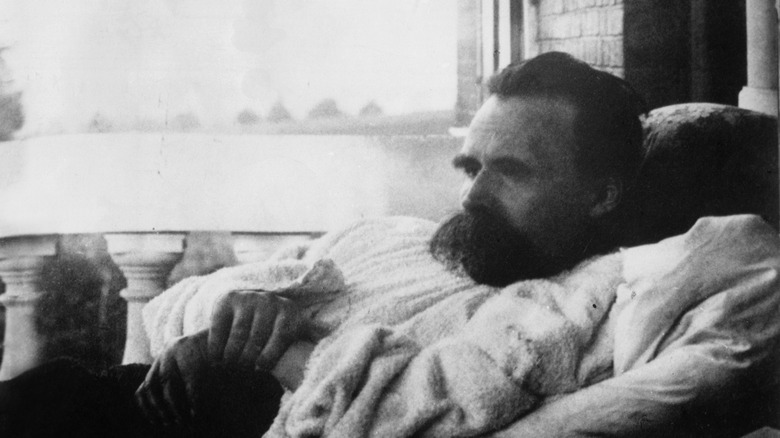
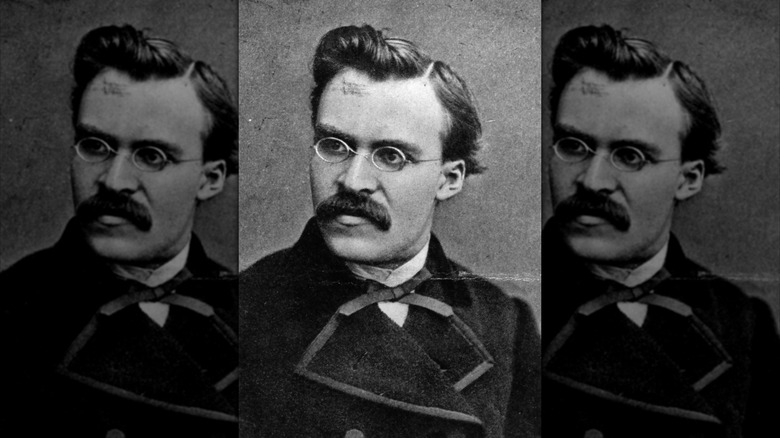
Few philosophers in history have cast a shadow quite as long as Friedrich Nietzsche's. Born in 1844 in Röcken, a village outside Leipzig, in Germany, he trained in classical philology and showed such promise that Basel made Nietzsche a professor in 1869, before he'd even started his doctoral dissertation. A year later, he went to the Franco-Prussian War as a medic, returning home when he got sick. Nietzsche's first book, "The Birth of Tragedy," was published in January 1872. The classicist Ulrich von Wilamowitz-Moellendorff tore into it, decrying the author as a "disgrace" (via ResearchGate) to Schulpforta, the boarding school they both attended. This dimmed Nietzsche's prospects of fame.
Illness forced him out of academia in June 1879, but the decade that followed gave the world most of the books the German philosopher is known for, including "Thus Spoke Zarathustra," "Beyond Good and Evil," and "On the Genealogy of Morals." In 1888 alone he finished "Twilight of the Idols," "The Antichrist," and "Ecce Homo." Readers were slow to catch up to the profundity of his ideas. The reaction to his essay on history was lukewarm when it came out, and he actually had to cover the printing cost of "Beyond Good and Evil" himself. He clashed with his family, was turned down by the woman he hoped to marry, and battled poor health throughout his adult life. His mind ultimately gave way in Turin in January 1889, ending his writing life. He died the next year on August 25, 1900.
Nietzsche knew something about what it was like to work and function with the ghosts of a tragic past haunting your present, and that's why he's behind today's quote of the day.
Quote of the Day by Friedrich Nietzsche
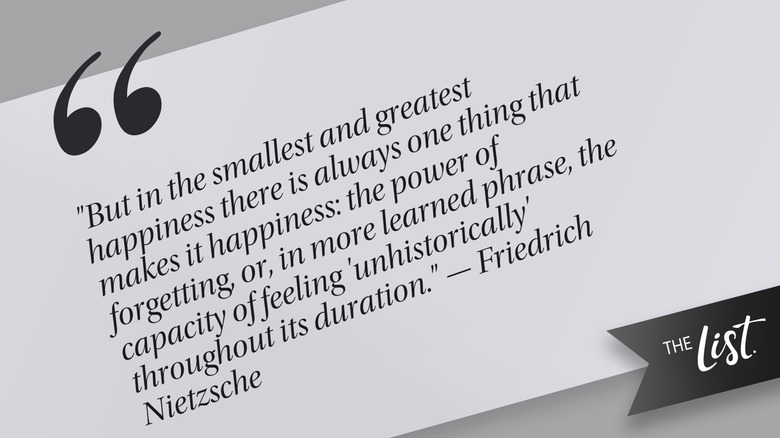
As Friedrich Nietzsche once opined, "But in the smallest and greatest happiness there is always one thing that makes it happiness: the power of forgetting, or, in more learned phrase, the capacity of feeling 'unhistorically' throughout its duration." The line is taken from "On the Use and Abuse of History," the second of the so-called "Thoughts Out of Season" or "Untimely Meditations" as it is otherwise known. The German philosopher finished writing it during the New Year holidays in 1874, and it came out later that year, when he was 29. This quote sits in the essay's opening pages, after a scene of cattle grazing. A man asks one of the animals why it never tells him about its own happiness, but the cow, despite meaning to answer, always forgets how and fails to do so. With this idea, Nietzsche implies that the creature that can't remember is also the one that seems most content.
Deeper meaning of Friedrich Nietzsche's quote — Why happiness requires a little forgetfulness
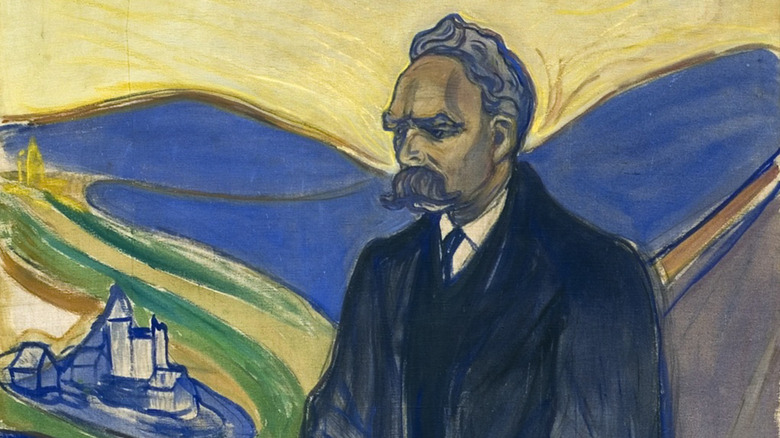
People treat memory as something precious, backing it up with photos and repeating the old adage that those who forget history are doomed to relive it. But Friedrich Nietzsche asserted that in order to be truly happy, we should forget. There's an important distinction here; the German philosopher isn't saying we should be heedless of the details of our lives and what happens around us, but rather that when we experience happiness, we should, for "its duration," try to feel "unhistorically" towards it. In other words, focus on letting the moment be the only thing happening, and stop measuring it against what came before or what might happen after. Later in the same section, Nietzsche admits that a healthy person needs both the historical and the unhistorical, yet it's important to remember that memory and happiness have a hard time coexisting.
Think about what spoils a good evening — it's usually not the experience itself, but a voice pulling you out of it. Maybe last year's trip was better than this year's. Maybe this feeling of joy won't last. Perhaps you don't really deserve it. Each thought is dragging the past or the future into the present. That destructive habit is one of the real reasons you're not happy, and Nietzsche posits that feeling "unhistorically" is the cure to combating it once and for all. The other extreme is someone who can't forget anything, and most of us get a taste of that at 2 a.m., replaying the footage of our lives and overthinking every little thing we said and did. So, the next time you catch yourself stepping outside something good just to judge it, stop, and refocus on the moment at hand.
More quotes from Friedrich Nietzsche
- "I tell you: one must still have chaos in one, to give birth to a dancing star."
- "Insanity in individuals is something rare—but in groups, parties, nations, and epochs it is the rule."
- "Forgetfulness is a property of all action; just as not only light but darkness is bound up with the life of every organism. One who wished to feel everything historically, would be like a man forcing himself to refrain from sleep."
- "The man of knowledge must be able not only to love his enemies, but also to hate his friends."
- "There can exist no happiness, no gladness, no hope, no pride, no real present, without forgetfulness."