

Quote Of The Day By Michel De Montaigne: 'The Greatest Thing In The World Is For A...'
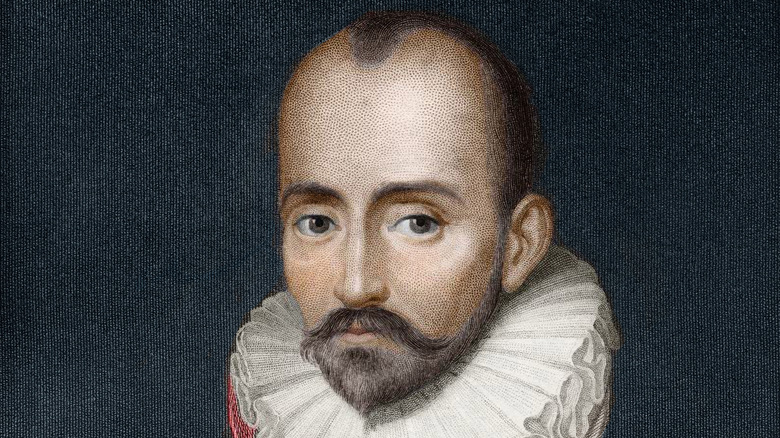
Michel de Montaigne was a 16th-century French writer whose philosophy wasn't about building a system or offering a grand answer to life's biggest questions. Rather, the man looked at his own life and wrote essays that essentially read like he was thinking out loud. For that reason, he's among the most relatable and influential thinkers of the Renaissance, so much so that his ideas inspired everyone from William Shakespeare to Friedrich Nietzsche.
Montaigne was born on February 28, 1533, at his family's estate outside Bordeaux. His father had unusual ideas about raising him; that meant waking up to music and living in a home where nobody spoke to him in anything but Latin. That classical start led to the law and a seat in the Bordeaux Parlement, where he met his closest friend, the French writer Étienne de La Boétie. When La Boétie died in 1563, Montaigne was absolutely crushed. More tragedy followed a few years later, when his father died in 1568. Of his six children, only a daughter, Lèonor, aged beyond infancy.
In 1571, on his 38th birthday, Montaigne walked away from public life in dramatic fashion. He put up a Latin inscription in his tower calling himself "long weary of the servitude of the court and of public employments." It was in that tower that he began to write to assuage his dark moods. and his name for those pieces of writing, "essais," or "attempts," gave us the word "essay." He published two books in 1580. Retirement didn't last very long, though, as the king pressured him to accept the post of being Bordeaux's mayor. Montaigne knew how hard it is to hold on to yourself and your freedom when the world keeps asking for more, which is why he's the voice behind today's quote of the day.
Quote of the Day by Michel de Montaigne
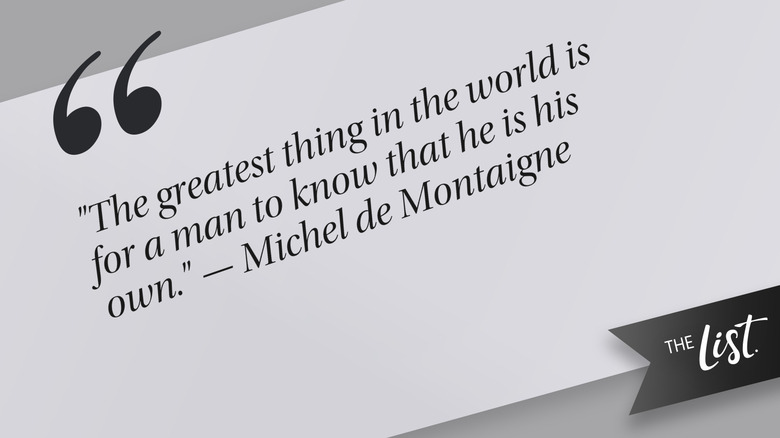
Michel de Montaigne wrote, "The greatest thing in this world is for a man to know that he is his own."
The line is from "Of Solitude," an essay in Book 1 of Montaigne's "Essays." It's great advice for anyone stepping back from a busy life. Montaigne refers to freedom as the greatest thing one can achieve and maintain in this life, and it's important to note the French original carries an extra detail. Montaigne wrote, "C'est de sçavoir ester à soy," using "savoir" in the sense of knowing how, describing a skill you cultivate, not something inherent.
Deeper meaning of Michel de Montaigne's quote — Hold onto your freedom and keep a part for yourself that no one owns
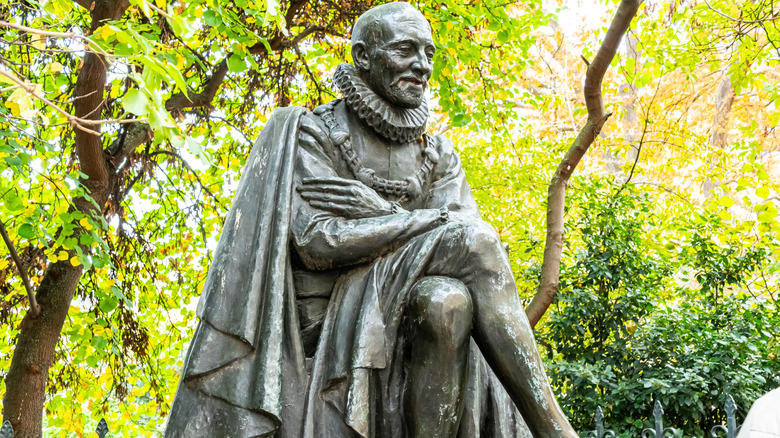
There are many aspects that factor into our lives and our sense of self. Part of us belongs to our job, and part of us belongs to our partner, our friends, and our family. This is natural in and of itself, and life is inseparable from it. Michel de Montaigne then wants people to posit whether there'd still be a you left if any of those people were taken away. In fact, you could try a simple mental test right now. Picture losing the thing you lean on the most— whether it be your job or your relationships — and look at the emptiness it would leave behind. If you wouldn't know who you were anymore without it, then perhaps that aspect owns a part of you it shouldn't.
This matters more in the context of society's expectations. Montaigne notes that part of you should always belong to yourself. Your life, your thoughts, your decisions, and your values all belong to you, and the less society and other people's expectations shape them, the better you'll know who you are. It's the greatest thing one can achieve, according to Montaigne's view, and it's a skill, which is why "knowing how" is important. People who belong to someone or something else wholly pay a heavy price when that thing is taken away for whatever reason. So, build rooms in your mind that belong to you, and keep one thing in your week that's no one else's —whether it's a walk or a notebook or an hour with a novel. Belonging to yourself is the one freedom you should never allow to be taken away, least of all by yourself.
More quotes from Michel de Montaigne
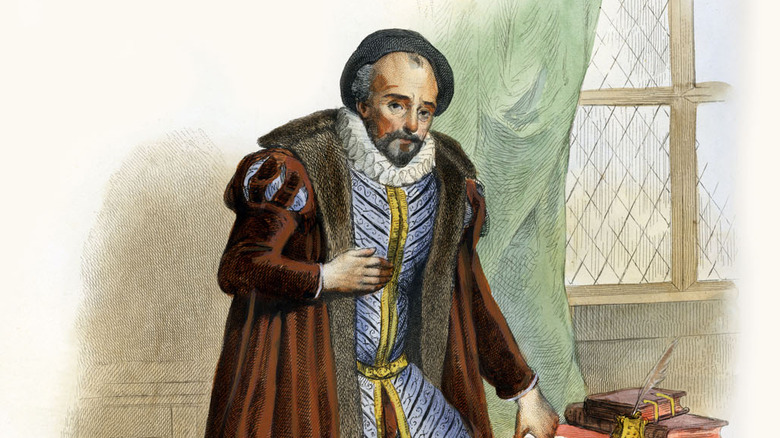
- "The premeditation of death is the premeditation of liberty; he who has learned to die has unlearned to serve."
- "The most manifest sign of wisdom is a continual cheerfulness."
- "No wind serves him who addresses his voyage to no certain point."
- "Fortune does us neither good nor hurt; she only presents us the matter and the seed, which our soul, more powerful than she, turns and applies as she best pleases."
- "'Tis to much purpose to go upon stilts, for, when upon stilts, we must yet walk with our legs; and when seated upon the most elevated throne in the world, we are but seated upon our breech."