

Quote Of The Day By Epicurus: 'Death Is Nothing To Us; For The Body, When...'

We may receive a commission on purchases made from links.
When someone is extremely fond of fine food and other luxuries, we say they have "epicurean tastes," which is thanks to the ancient Greek philosopher Epicurus. Born in 341 B.C. to a teacher and his wife, Epicurus was already studying philosophy by the tender age of 14. After serving a required two years in the military, he continued his studies, eventually becoming a teacher himself. Epicurus and his followers established a school in Athens called The Garden, which, unlike other institutions of the time, allowed women to attend. Many of Epicurus' writings have long since been lost to time, but some of his letters remain, including several that contain his thoughts about life.
The Greek philosopher was particularly intrigued by the nature of pleasure, which he defined as the absence of pain and anxiety. Living moderately and doing justly, Epicurus argued, is the real key to happiness, while chasing after empty desires, like wealth and power, only leads to dissatisfaction and discontent (contrary to our current definition of "epicurean," he kept to a very simple diet too). The philosopher also taught that friendship is a blessing, and he maintained close relationships with his core followers. In these days of uncertainty, Epicurus' wise words about living well ring truer than ever. We've chosen one of his takes on an anxiety-producing topic as our quote of the day.
Quote of the Day by Epicurus
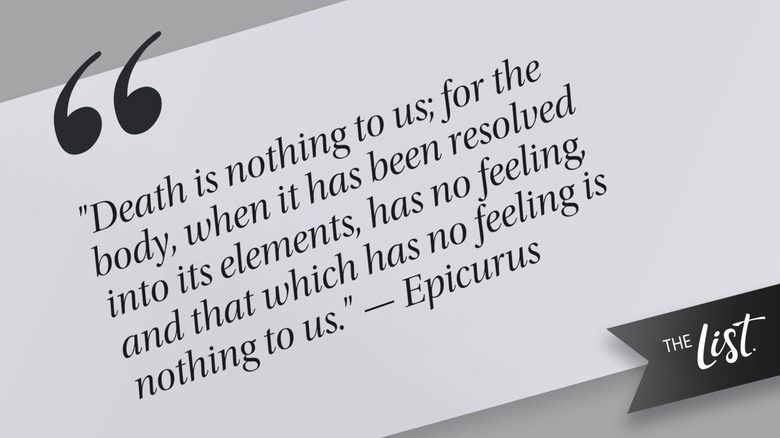
Epicurus' philosophy included the belief that happiness and pleasure are the ultimate goals of mankind, with pain, in contrast, being the greatest evil. With that in mind, in "The Principal Doctrines," he mused on mortality: "Death is nothing to us; for the body, when it has been resolved into its elements, has no feeling, and that which has no feeling is nothing to us." The Greek philosopher sought to help others relieve their mental anxieties in order to achieve a happier existence. The fear of death, he recognized, is tied into our worries over a painful end or an unpleasant afterlife. But burdening ourselves with thoughts of what might happen keeps us from living a fulfilling life in the here and now.
Deeper meaning of Epicurus' quote — Death is nothing to fear
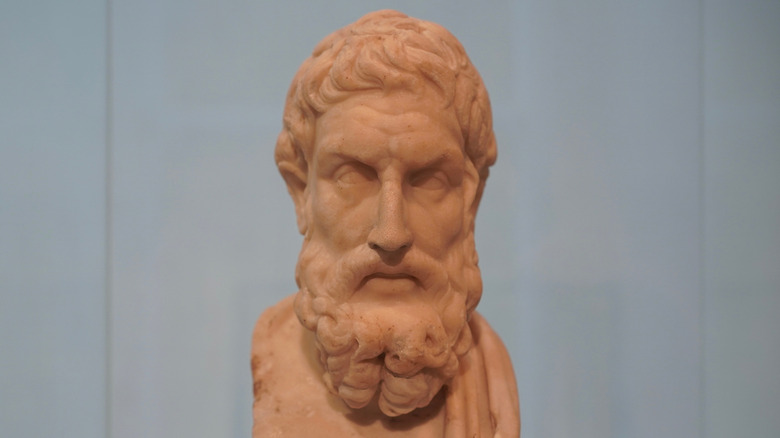
Unlike other great thinkers of his age, Epicurus argued that it was pointless to worship a god who either willingly allowed evil to exist or who was powerless to stop it. By the same token, the Greek philosopher also dismissed the concept of an afterlife. The body and soul are made up of atoms, he reasoned, and after death, they simply scatter into the void rather than traveling to a celestial kingdom. Death also puts an end to any physical sensations, including pain. Why, then, Epicurus posited, should we be afraid of death, since it comes with no discomfort and leads to no punishment? This belief system also influenced the philosopher's insights on life more generally too. Since this is the only existence we know, pursuing pleasure is our natural goal, or at least it should be.
Though he encouraged enjoyment of the finer things in life, Epicurus cautioned against overindulgence and urged others to be content with their blessings. It's a philosophy we would all do well to follow. Although not everyone will agree with Epicurus' views on God and Heaven, his advice to make the most of our life on Earth is as true as it was centuries ago — particularly given how easily accessible everything is to us now. Taking a step back and practising gratitude is crucial. Sadly, Epicurus' own last days were far from peaceful. He suffered from complications of an infected prostate, which caused him extreme pain. Yet even in the midst of his suffering, he took the time to make out his will, which included instructions to provide for his school and free his slaves. Taking his own advice, Epicurus remained calm and unbothered even in the face of impending death.
More Quotes from Epicurus

- "He who is not satisfied with a little is satisfied with nothing."
- "Friendship goes dancing 'round the world, announcing to all of us to wake up to happiness."
- "Do not spoil what you have by desiring what you have not; remember that what you now have was once among the things you only hoped for."
- "The greater the difficulty, the more the glory in surmounting it."
- "Let no one be slow to seek wisdom when he is young nor weary in the search of it when he has grown old. For no age is too early or too late for the health of the soul."