

Quote Of The Day By Aristotle: 'For One Swallow Does Not Make A Summer, Nor...'
We may receive a commission on purchases made from links.
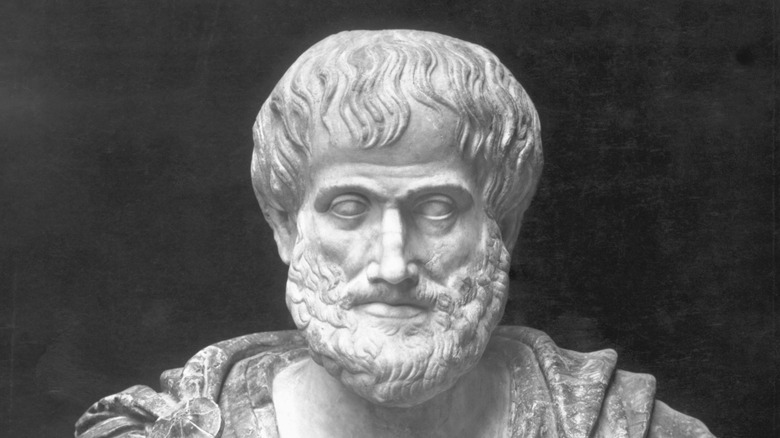
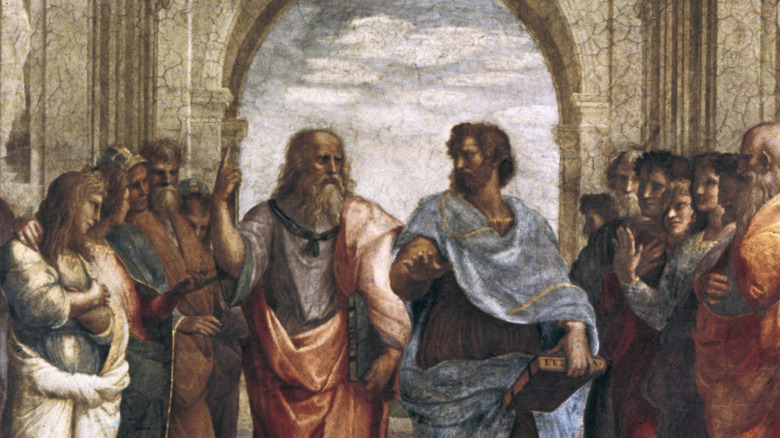
Aristotle is known today as one of the most influential philosophers in history, but his intellectual reach went far beyond philosophy, encompassing many other fields of study. Aristotle's own life was also full of twists and turns, and if you were to point at any moment from it, you'd come away with a completely different story. The Greek philosopher was born in Stagira in 384 B.C., and he was sent to Athens at about 17 to study under Plato in his famous Academy. He didn't leave until his teacher's death in 347. Control of the school went to Plato's nephew, Speusippus, and one theory claims that Aristotle may never have even been in the running, since a foreigner living in Athens couldn't be considered for leadership. The wandering years that followed took him to Assos and then to Lesbos, until in 343, King Philip of Macedon brought Aristotle in to tutor his teenage son, Alexander.
By 335, Aristotle was back in Athens running a school of his own, the Lyceum. Alexander the Great's death in 323 made Athens a risky place for anyone with Macedonian ties, so Aristotle headed for Chalcis. He died there the following year. It is thought that much of the stuff he polished for the public, writings that Cicero likened to a golden river, is almost entirely lost to time, and what survives was essentially teaching material for his students. Even so, it offers modern scholars a glimpse into a mind that had extraordinary depth and frequently attempted to make sense of the human experience and its myriad dimensions. Among the many questions Aristotle took on was what makes a life a happy one, and his answer is as relevant today as it was 2,000 years ago, which is why he's our quote of the day.
Quote of the Day by Aristotle
Aristotle wrote, "For one swallow does not make a summer, nor does one day; and so too one day, or a short time, does not make a man blessed and happy." The sentence can be found in Book 1, Chapter 7 of "Nicomachean Ethics," which is arguably Aristotle's most important work. The Greek philosopher is pointing to an old proverb borrowed from the comic poet Cratinus. The implication is that a life cannot be measured by a single good day or a fleeting moment of pleasure. A happy existence is built on many different seasons, if not a lifetime of choices and actions.
Deeper meaning of Aristotle's quote — A good life can't be judged by one good day
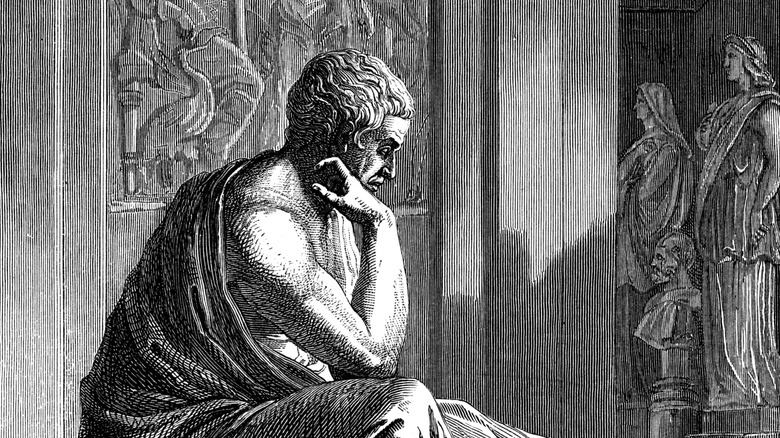
A swallow showing up is a hint that warmer months are on the way, but Aristotle points out that a sign of a thing isn't the thing itself. The same is true of our emotions and reactions to what happens to us every day. Part of the trouble are the words we ascribe to these kinds of phenomena; are you "happy" in life? Or are you "sad" and miserable? Such feelings come and go within a day or even an hour depending on their severity, and an entire life couldn't possibly be determined by any one event or emotion — nor should it be. In Aristotle's estimation, a life well-lived is the net result of all the choices we make and the days we live.
Seen that way, a day can't make you happy or miserable for the same reason one kind favor doesn't make you a good person. So, don't confuse a great day with a great life and don't mistake a terrible day, where everything goes wrong, with a ruined one. A raise or a perfect first date or any other big win can make you feel like you've finally made it, but that sensation is dangerous for the simple reason that more challenging days are almost certainly ahead. It doesn't mean that you should be afraid to cherish your life, but rather that you should hesitate to render judgment on it based on a single good or bad day.
One honest way to tell if you're really happy is to look at the pattern of your life, rather than focusing solely on its highs and lows. And extend the same patience to other people too, since one bad moment doesn't define them.
More Quotes from Aristotle
- "For without friends no one would choose to live, though he had all other goods."
- "Those who quickly show the marks of friendship to each other wish to be friends, but are not friends unless they both are lovable and know the fact; for a wish for friendship may arise quickly, but friendship does not."
- "He who is unable to live in society, or who has no need because he is sufficient for himself, must be either a beast or a god."
- "Neither by nature, then, nor contrary to nature do the virtues arise in us; rather we are adapted by nature to receive them, and are made perfect by habit."
- "It is the mark of an educated man to look for precision in each class of things just so far as the nature of the subject admits."