

Quote Of The Day By Gabriel García Márquez: 'Life Is Not What One Live, But...'
We may receive a commission on purchases made from links.
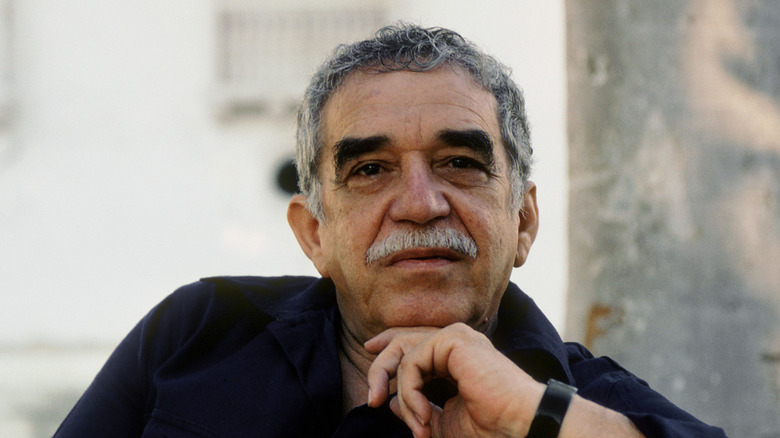
Even if you've never read anything written by Nobel Prize-winning author Gabriel García Márquez, you've surely heard of at least one of his famous, enduring works. After all, Márquez has become one of the most prolific writers of the 20th century. He was born in 1927 in Aracataca, Colombia and grew up both there and later in the city of Barranquilla. When Márquez was older, he studied law before becoming a journalist in Paris. After that, the author moved around frequently, returning to Colombia, then relocating to New York City, Mexico City, and finally settling in Spain.
Márquez published his debut novel "La hojarasca" in 1955, followed by his second, "La mala hora," in 1962. A novella and several short stories were released in later years too. In 1967, one of his most famous works, "One Hundred Years of Solitude," was published and became widely known and beloved for its use of magical realism. In the ensuing decades, Márquez produced more and more writing, including another of his most well-known books, 1985's "Love in the Time of Cholera." In 1982, he became the fourth Latin American writer in history to earn the Nobel Prize for Literature. Hence why one of Márquez's many thought-provoking quotes is our quote of the day.
Quote of the day by Gabriel García Márquez
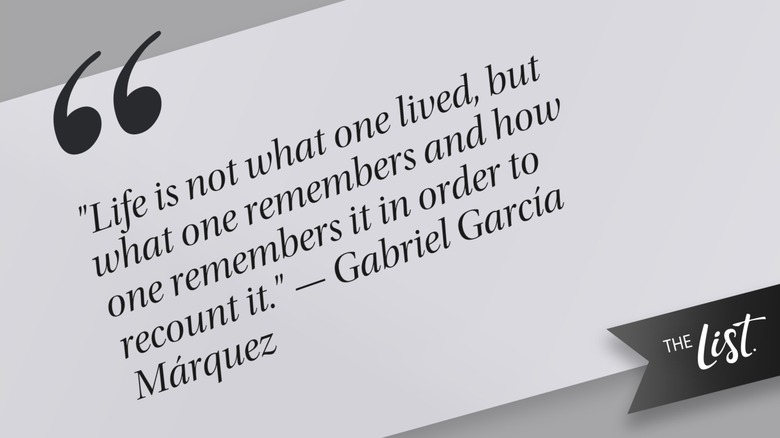
Gabriel García Márquez warned, "Life is not what one lived, but what one remembers and how one remembers it in order to recount it." This quote comes from his autobiography "Living to Tell the Tale," which the celebrated author penned in 2002. It reminds us just how much power and control our mind has over our own story, and why we should be more cognizant of how our thoughts affect how we feel and act day to day.
Deeper meaning of Gabriel García Márquez's quote — Memory alters our perception of life more than we realize
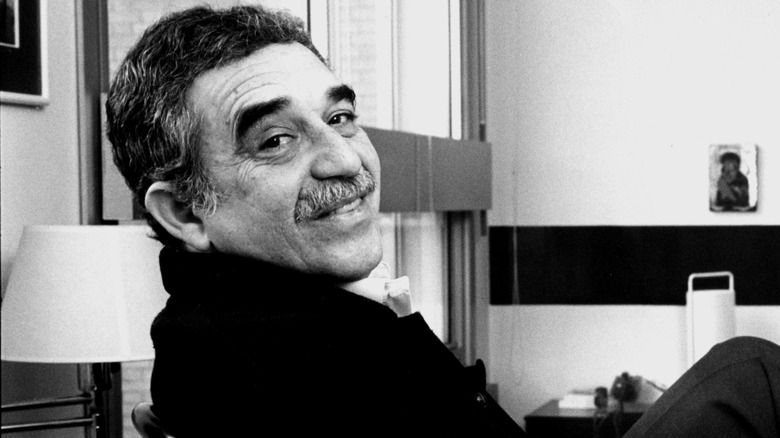
We often forget just how much our own beliefs, biases, and memories affect our perception of who we are, and the kind of life we lead. Gabriel García Márquez's quote points out that our perception of how things have transpired in our lives is shaped by our memory and the narrative we, often subconsciously, apply to them. Memory is notoriously unreliable. It's affected by mood, our own internal biases, and how we reacted to and felt about certain events. This alters our greater understanding of our lives and experiences, which can be dangerous for our interpersonal relationships.
For instance, we may remember an event entirely differently to how someone else recalls it. This often leads to disagreements. But fortunately, keeping this in mind can liberate us. Particularly in the days of social media, it's all too easy to fall into the trap of wanting to micromanage how others view us. And yet, remembering that everyone's memory affects their perception makes it clear that we only really have control over our own view of our own narrative. While we can't change others' memories, we can change how we look at our past and experiences. And sometimes, looking at our lives through a different lens is all we need to start fresh with a brand new narrative.
More quotes from Gabriel García Márquez
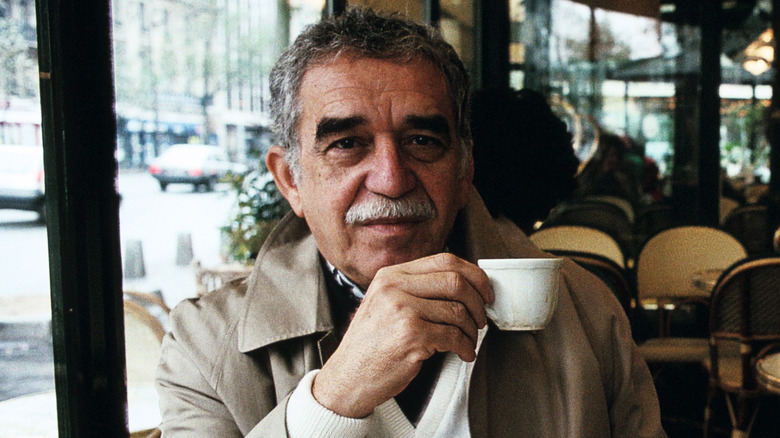
- "He allowed himself to be swayed by his conviction that human beings are not born once and for all on the day their mothers give birth to them, but that life obliges them over and over again to give birth to themselves."
- "He was still too young to know that the heart's memory eliminates the bad and magnifies the good, and that thanks to this artifice we manage to endure the burden of the past."
- "Wisdom comes to us when it can no longer do any good."
- "Fiction was invented the day Jonah arrived home and told his wife that he was three days late because he had been swallowed by a whale."
- "Age has no reality except in the physical world. The essence of a human being is resistant to the passage of time. Our inner lives are eternal, which is to say that our spirits remain as youthful and vigorous as when we were in full bloom. Think of love as a state of grace, not the means to anything, but the alpha and omega. An end in itself."