

Tragic Details About Caroline Kennedy's Daughter, Tatiana, Are Heartbreaking
We may receive a commission on purchases made from links.
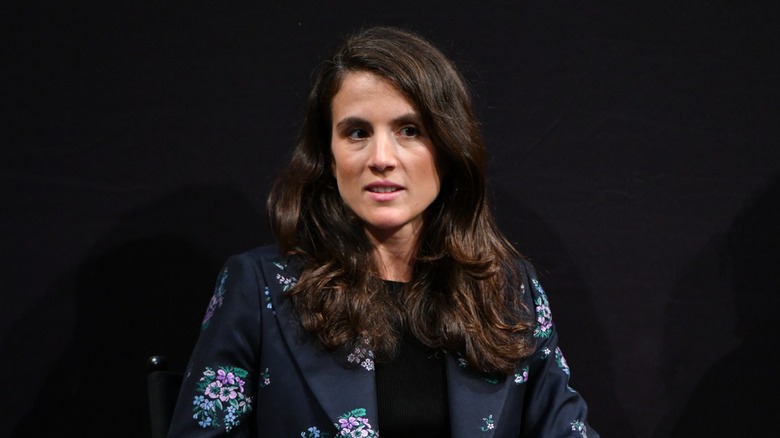
"When you are dying, at least in my limited experience, you start remembering everything. Images come in flashes — people and places and stray conversations — and refuse to stop." This is how Tatiana Schlossberg begins an essay she penned for The New Yorker — "A Battle with My Blood" — that lets the world know she doesn't have much time left to live. At just 34 years old, the granddaughter of John F. Kennedy and Jacqueline Kennedy Onassis shared her terminal cancer diagnosis.
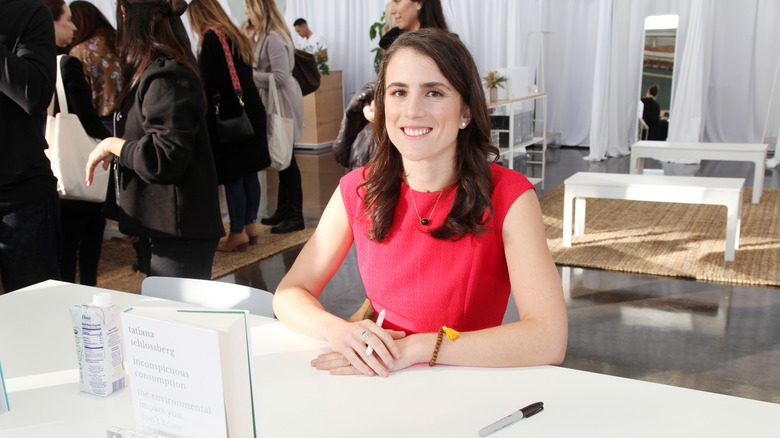
But it's crucial that everyone knows that Schlossberg is far more than a patient facing a poor prognosis. Born into a family often described as American royalty, she could have easily chosen to live a life that relies solely on her clan's name and legacy. Instead, just like her mother, Caroline Kennedy — who was absolutely cherished by her father — Schlossberg carved out a life she could be proud to call her own. Not only did she pursue her education at world-renowned institutes like Yale University and the University of Oxford, but she also built a burgeoning career as an environmental journalist and became a published author. Her work has appeared in major publications, and her book, "Inconspicuous Consumption: The Environmental Impact You Don't Know You Have," won the 2020 Rachel Carson Environment Book Award. And of course, Schlossberg has garnered a fulfilling life full of connections with her loved ones, but there is truly no life without challenges. While her story is filled with milestones, love, and joy, she's also faced many personal losses and hardships that have shaped who she is today.
She experienced deep loss before she was even 10
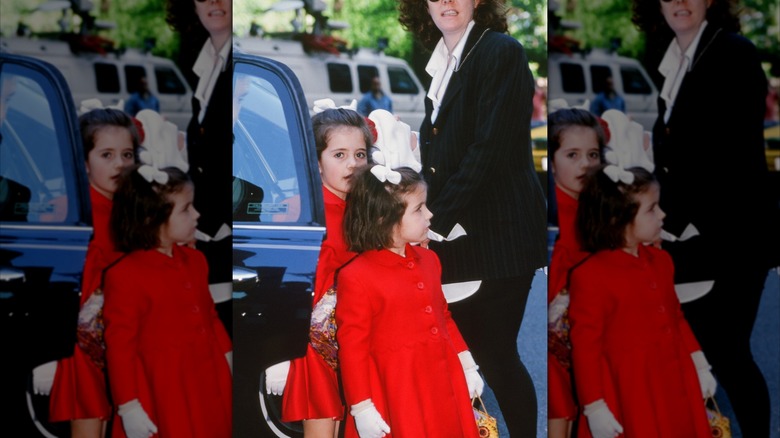
From an outsider's perspective, Tatiana Schlossberg's life may seem enviable for the privileged circumstances she grew up in simply by being born a Kennedy. But her reality is far more complex, and it's one no amount of fortune could shield her from. Schlossberg didn't just grow up without the chance to meet her maternal grandfather, often remembered as one of America's most beloved presidents — she also endured heartbreaking losses before she was even 10 years old.
Although she got to meet and get to know her maternal grandmother — the iconic Jacqueline Kennedy Onassis, who was never the same after the death of her husband — their time together was heartbreakingly short. Her grandmother died after a terminal cancer diagnosis when Schlossberg was just 4 years old. Unfortunately, this wasn't the only tragic loss in her family. Just five years later, Schlossberg lost her only surviving maternal uncle, John F. Kennedy Jr., to a plane crash.
While Schlossberg has never spoken publicly about how these tragedies affected her and her family, it's clear that traumatic loss and grief have long been part of life as a Kennedy. In 2021, her mother, Caroline Kennedy, sat down for a chat with Betsy Wurzel on an episode of "Chatting With Betsy" and openly acknowledged the difficulties and emotional toll of being raised in the spotlight as a Kennedy. Caroline's candid interview reinforced just how complex life inside such a famous family can be.
She was in New York City on 9/11
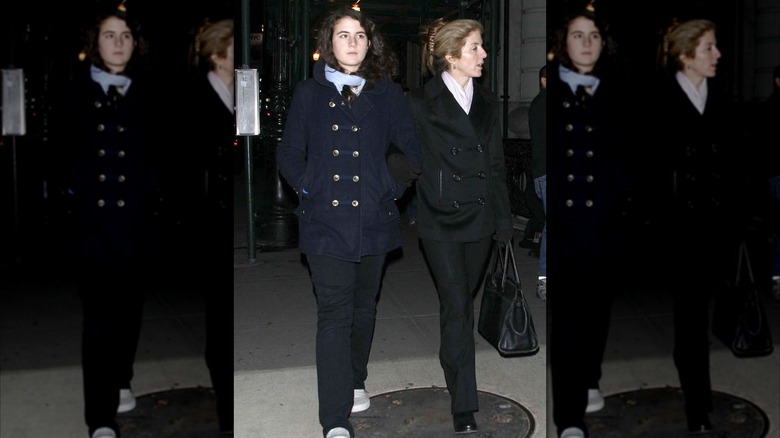
As if the family name didn't carry enough pressure and weight for young Tatiana Schlossberg, she was born and raised in New York City. Growing up in the heart of Manhattan, especially the Upper East Side, sounds luxe, lavish, and very "Gossip Girl"-esque, but it wasn't always idyllic. In 2001, Schlossberg's childhood was marked by yet another tragedy — this time, a national one.
Schlossberg was a sixth grader living in New York City on 9/11, one of the nation's greatest tragedies to date, and this was one of those times in which a family's last name didn't matter. Whoever you were, wherever you came from, everyone in the United States — especially those in the city — was unified by the unshakable fear and uncertainty that consumed the nation. To be in such close proximity to the towers meant witnessing firsthand a city in shock. In fact, Columbia University conducted a city-wide assessment of thousands of school-aged children within the year of the attacks and found that many reported some type of emotional distress in the months that followed. This illustrated just how deeply a tragedy of such magnitude can impact the youth of an entire city.
Although Schlossberg has never spoken publicly about 9/11, its presence clearly lingered throughout the native New Yorker's life. In her 2025 essay that revealed her cancer diagnosis, she wrote, "Every doctor I saw asked me if I had spent a lot of time at Ground Zero, given how common blood cancers are among first responders." And that question is a haunting reminder of just how much 9/11 shaped New York and its people.
She received a terminal cancer diagnosis at 34 years old
In 2024, Tatiana Schlossberg experienced another tragedy, this time regarding her own health. Just after giving birth to her daughter, she was diagnosed with acute myeloid leukemia with a rare mutation. The essay she wrote for The New Yorker is raw and heartbreaking, and it captures the fear, anticipatory grief, and uncertainty that came with her terminal diagnosis.
Being a member of a famous family meant people were going to treat even her most vulnerable moment as a narrative rather than her own story. Major publications rushed to connect her diagnosis to the "Kennedy curse," overshadowing the human moment she shared with the world. Rather than focusing on Schlossberg's words and experience, the conversation quickly drifted toward a bunch of myth-making and reduced her life to nothing more than a headline. As a loving daughter, mother, wife, and successful journalist, Schlossberg deserves to be seen for who she is, not as another entry in a so-called family curse.
Her essay shows how much she wants to live and how much she wanted to make an impact as an environmental journalist. She wrote about how she had hoped to write a book on ocean destruction and how she will never find out "if we were able to harness the power of the oceans, or if we let them boil and turn into a garbage dump." So, if you have the time, her full essay is achingly poignant and worth reading in her very own words.
Tatiana Schlossberg, the daughter of Caroline Kennedy, had just given birth when she was diagnosed with a rare form of leukemia. She writes about her fear of adding another tragedy to her family's life. https://t.co/GR1vSZYmsW pic.twitter.com/NdTNuS0Acl
— The New Yorker (@NewYorker) November 23, 2025
Tatiana is holding close to the people she loves most while she still can
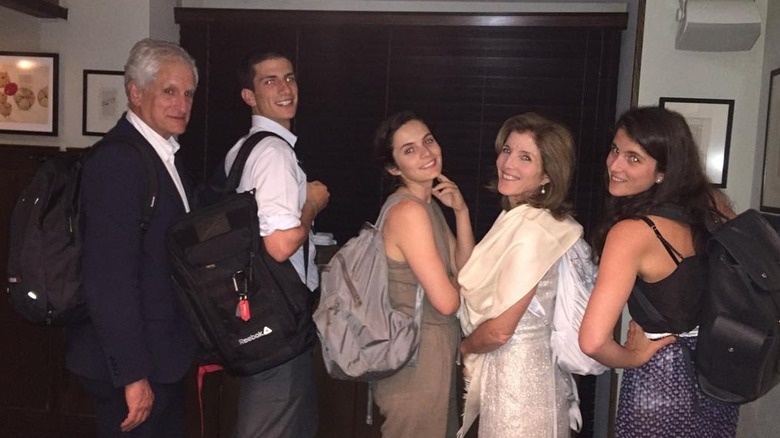
In her essay, Tatiana Schlossberg didn't just write about her illness but also about the people she loves most and the life she's terrified she'll miss out on. She mentions just how much her husband, George Moran, showed up for her throughout her stays in the hospital. Schlossberg describes him as being "perfect" and expressed how she felt "so cheated and so sad" to not "get to keep living the wonderful life" she had built with him.
And her parents and siblings were just as steadfast. Schlossberg reflected on how they surrounded her with the utmost care: Taking care of her children, keeping her company during her hospital stays, and just being present for her whenever they could. "They have held my hand unflinchingly while I have suffered, trying not to show their pain and sadness in order to protect me from it," she wrote. Schlossberg explained how she always wanted to be nothing but a good child for her parents, especially her mother, but has "added a new tragedy to her life, to our family's life, and there's nothing I can do to stop it."
When it came to talking about her kids, the grief in her writing deepened. The first thought that came to her mind was her children when she was told she may have a year to live. Her biggest fear was whether or not they'd even remember her at all.
She felt undermined by a member of her own family
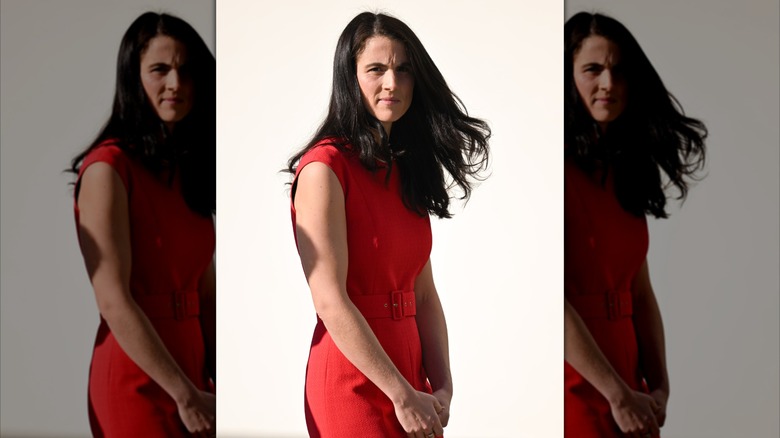
Being a member of the Kennedy clan, Tatiana Schlossberg is related to many public figures like Maria Shriver, Ted Kennedy, and, of course, the controversial Robert F. Kennedy Jr. And in a time when all she should have had to focus on was her cancer, she admitted in her essay that she found herself facing a painful reality — one in which a member of her own family was threatening the care and the jobs of medical professionals her life was dependent on. This issue mattered so deeply to her that she addressed it directly in her piece and made one thing crystal clear: She and her immediate family find RFK Jr. to be an "embarrassment" to the family name. "I watched from my hospital bed as Bobby, in the face of logic and common sense, was confirmed for the position, despite never having worked in medicine, public health, or the government," she wrote.
Schlossberg watched him cut funding, threaten the advancement of further scientific research, and make attacks on the very institutions that were keeping her alive. For her, this went far beyond familial disagreements about politics — it was a genuine threat to her survival. In her essay, Schlossberg made clear that she will always choose and stand by science, the medical professionals, and researchers fighting every single day to save lives like hers over any expectation of family loyalty that goes against her values and beliefs.