

Why Ex-Prince Andrew Didn't Have The Same Tragic Childhood As King Charles
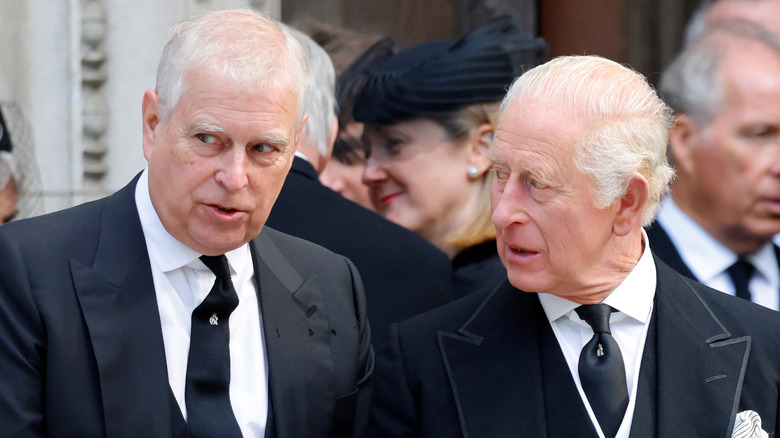
The differences between the late Queen Elizabeth II's older sons couldn't be more obvious, and they were brought out in full force after the shocking birthday arrest of the former Prince Andrew. Having previously yanked away all his royal titles, big brother King Charles III proceeded to give Andrew the middle finger by going about his business and issuing a statement making it clear he wouldn't be trying to defend or protect his disgraced bro. How could two princes raised in the same privileged household turn out so differently? Likely because their upbringings were less similar than you might think.
There was no such thing as helicopter, gentle, or FIFO parenting when the queen and Prince Philip welcomed their oldest child and heir in 1948. Children, especially royal ones, weren't expected to spend quality time with their parents or be engaged in constant activity. Like little royals of generations past, Charles and his siblings were raised primarily by nannies. One of them, Mabel Anderson, was a special favorite; he called her "Mipsy" and adored her so much that he paid a personal visit to her on her 100th birthday in February 2026.
Yet by the time Andrew was born, Her Majesty had adopted a more modern approach and was more involved in the rearing of her youngest sons. Royal biographer Catherine Mayer once noted (via The New York Times), "Charles and Anne got very different parenting styles to Andrew and Edward. It was almost like they had different parents." Andrew's outgoing and athletic personality was also thought to be more compatible with his royal mum and dad, who seemed to relate to him more than to Charles.
Did King Charles resent Andrew's relationship with their mother?
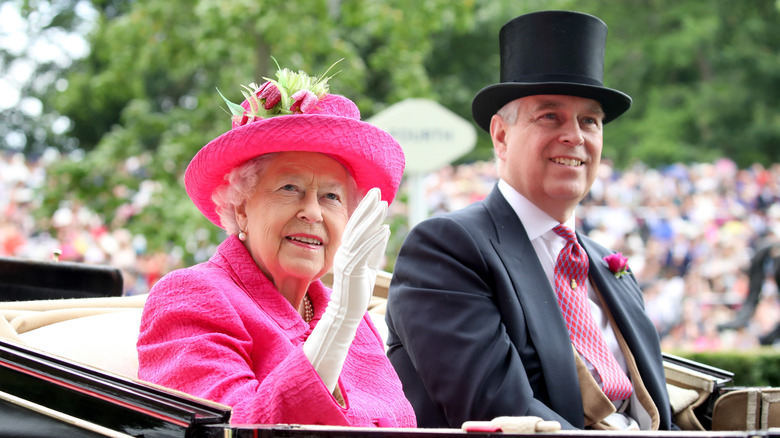
King Charles III's relationship with his brother Andrew Mountbatten-Windsor has always been considered rather fragile. From birth, the two were destined for different paths, and so Charles spent much of his life being trained in the ways of the monarchy. He attended boarding school — a rigid life he loathed — while his baby brother got the quality time with their mother that he was denied. It was the beginning of a sibling divide that continues to this day.
Freer to pursue his own interests, take more risks, and even marry whom he pleased, Andrew was considered "coddled" by the mother who seemed to think he could do no wrong. Meanwhile, the former Prince of Wales had to toe the line both in conduct and in his choice of a future queen consort, and faced the wrath of his mother after his first marriage proved disastrous. Charles and Princess Diana's divorce was spurred on by the queen, who was scrambling to do damage control to the monarchy following the couple's infidelities.
Yet even after Andrew's connections to Jeffrey Epstein became clear, Queen Elizabeth protected him as long as she could, stripping him of his military titles only when Virginia Giuffre's sexual abuse lawsuit against him became tabloid fodder. Even then, she stopped short of taking away his birthright title of Prince, as if trying to keep that one precious connection between them. Only after the queen was gone did Charles deliver the final blow and sever his brother from The Firm for good. It may have been his way of saying, "You may have been Mum's favorite, but I'll always outrank you."