

Judy Garland's Tragic Struggle With Addiction Began During Childhood
We may receive a commission on purchases made from links.
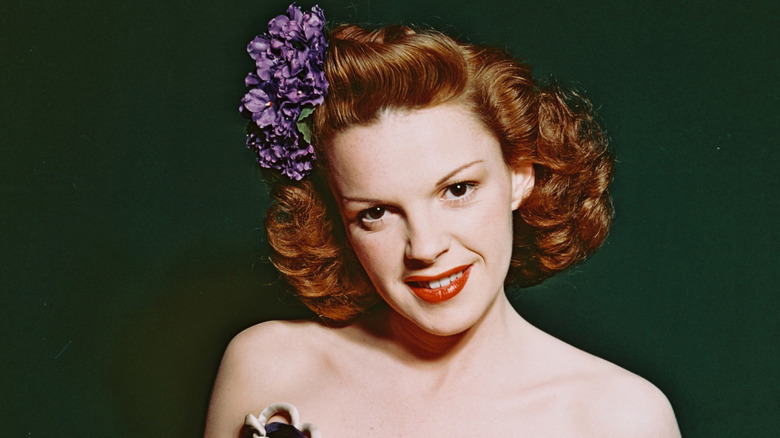
Born Frances Ethel Gumm, Judy Garland was one of the brightest stars in Hollywood's golden age. She got her start at just 2 years old, performing with her sisters. At 7, Garland made her big screen debut as a member of the Gumm Sisters in "The Big Revue." To top it off, she was just 17 when her most iconic film, "The Wizard of Oz," hit screens in 1939. But tragically, she died of an accidental barbiturate overdose at just 47 years old. Perhaps most heartbreaking is that her use of the drugs that took her life started when she was a child.
Gerald Clarke's biography, "Get Happy: The Life of Judy Garland," delves into the actor's life and explains that Garland's mother was already giving her pills when she was 10 to keep her active when she needed to be, and ready to sleep when they wanted her to. The studio Garland worked for continued to push her to use pills, and when she was 14, MGM Studios head Louis B. Mayer demanded that Garland lose weight, putting her on a diet that included cigarettes and pills to control her appetite.
Garland explained in the few pages she wrote for her intended memoir, "Judy Garland on Judy Garland: Interviews and Encounters," saying, "They'd give us pep pills. Then they'd take us to the studio hospital and knock us cold with sleeping pills. After four hours, they'd wake us up and give us the pep pills again."
Judy Garland could never escape her addictions
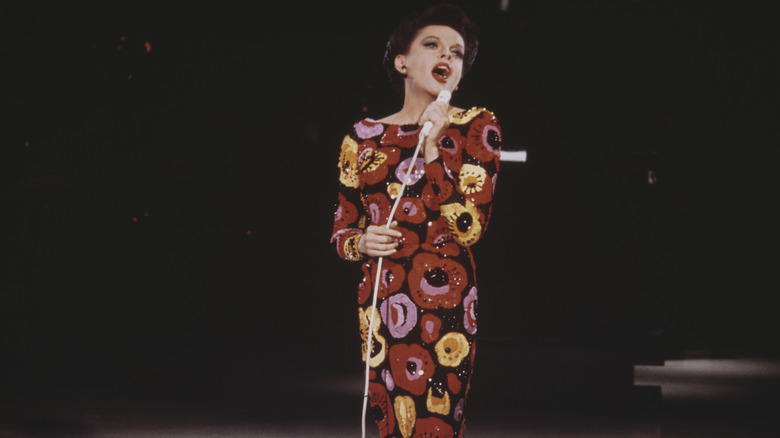
Judy Garland continued to work for MGM throughout the 1940s, but substance abuse affected her work, and she gained a reputation for being difficult to deal with. MGM fired her after she continuously showed up late to film "Annie Get Your Gun." For a time, it looked like Garland's career was over, but she began to make regular appearances on popular radio shows, which led to a sold-out tour that earned her a Tony Award in 1952.
In 1954, Garland returned to the cinema with "A Star is Born," and subsequently earned a nomination for Best Actress. Sadly, several illnesses, addictions, and past on-set behavior made it difficult for film studios to take a chance on her. But the start of a new decade saw Garland rise again. Her 1961 performance at Carnegie Hall was turned into the Grammy-winning album, "Judy at Carnegie," and that same year, she appeared in "Judgement at Nuremberg," for which she received another Oscar nomination. Garland continued performing throughout the '60s, sometimes with daughter Liza Minnelli, and also saw her divorce her third husband, Sidney Luft, and get married two more times. It was her fifth husband who found her unresponsive in their home on June 22, 1969, from an accidental overdose of the same pills her mother had given her as a child.
If you or anyone you know needs help with addiction issues, help is available. Visit the Substance Abuse and Mental Health Services Administration website or contact SAMHSA's National Helpline at 1-800-662-HELP (4357).