

Shows From The 1970s That Have Been Forgotten
From The Beatles splitting up to "Star Wars" becoming an instant film spectacle, it's not much of a surprise as to why the '70s had such a sustained cultural impact. Such an impact, in fact, that Fox even headed the 1998 release of a sitcom dedicated to that decade in the form of, you guessed it, "That '70s Show". Similarly, the '70s marked a change in its social dialogue on television, introducing more engaging topics ranging from real-world conflicts to some early forms of LGBTQ representation. Some of which were present in series like "Three's Company," "The Jeffersons," "M*A*S*H," and more.
As a result, every network tried its hand at creating its own episodic series, hoping to achieve similar success to its contemporaries at the time. While we unanimously remembered shows like "All in the Family" and "The Mary Tyler Moore Show," there were some '70s shows that fell by the wayside. It may be normal for TV pilots to be short-lived if they didn't garner enough attention at first. However, in these cases, you'd find that even with high viewership, it just wasn't enough to keep these shows alive past the '70s. Whether it be unsustainable schedules, a lack of network reruns, or simply controversial storylines, these forgotten shows 1970s have been lost to memory.
Here's Lucy was a successful spinoff that somehow didn't stand the test of time
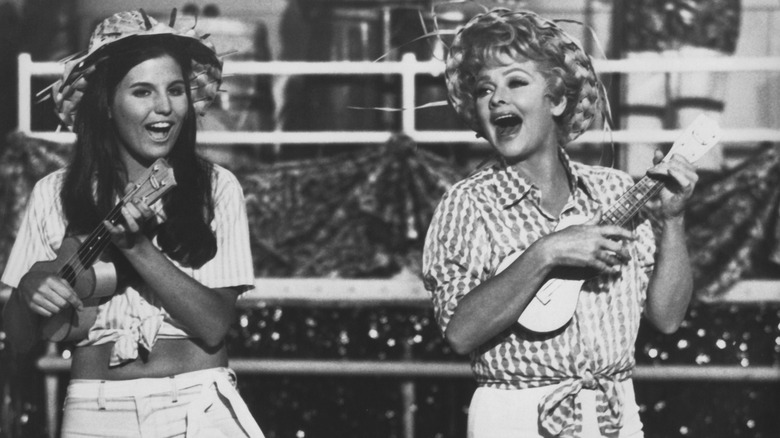
Despite Lucille Ball almost dying while filming "I Love Lucy," the show's run from 1951 to 1957 was a memorable period for the actor. So much so, it prompted creators to make spinoffs of sorts that took the beloved Lucy Ricardo from "I Love Lucy" and reimagined her as Lucy Carmichael in "The Lucy Show," a widow whose comedic antics were similar to those of her former fictional counterpart. The show ran for six seasons from 1962 to 1968, which warranted yet another "Lucy" spinoff, "Here's Lucy" in 1968.
Though it started in the late '60s, the show lasted well into 1974, spanning six seasons. "Here's Lucy" also followed a similar trajectory as Ball's prior spinoff show, only this time, she portrayed Lucy Carter, and worked alongside her children, Lucie Arnaz and Desi Arnaz Jr., the show ended with 144 episodes, but not without nominations from Primetime Emmys and the Golden Globes alike. The legacy of "I Love Lucy," however, seemingly cast a shadow over its successors, which included "Here's Lucy." While Redditors acknowledge that "Here's Lucy" shared the distinct comedic style present in "I Love Lucy," many believe the spinoff just felt "off." Not to mention that networks were more willing to air reruns of "I Love Lucy" than its 1968 successor, helping "Here's Lucy" fade further into obscurity over the years.
Low ratings and a unique working relationship between its leads spelled out the end for Me and the Chimp
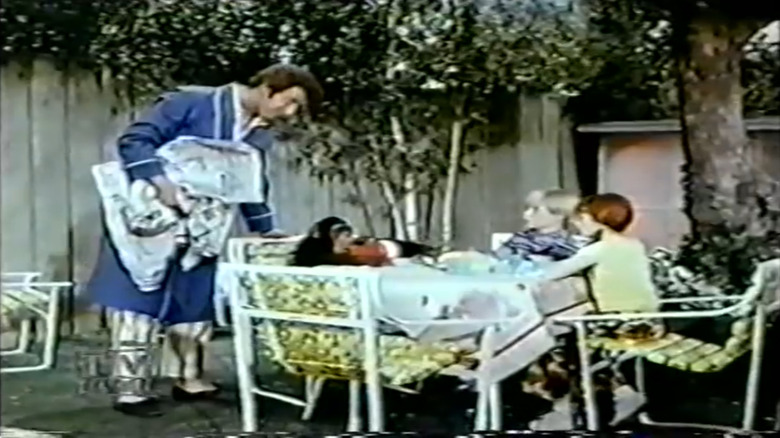
Over the years, various film and tv projects have explored concept of primates as man's best friend. Whether it be the 1968 "Planet of the Apes" or more modern animations like "Curious George," and Cartoon Network's "My Gym Partner's a Monkey," this has been a longstanding genre in films-slash-television shows alike for decades. In 1972, CBS sought to do the same in the sitcom "Me and the Chimp." Starring Ted Bessell, the series followed dentist Mike Reynolds and his everyday antics with his adoptive chimp, Buttons. Balancing a remarkable amount of intelligence and the overarching reality of dealing with a wild animal, the show lent itself to numerous funny moments. Despite this, however, it only lasted 13 episodes.
Though low ratings certainly played a part in the sitcom's demise, the working relationship between Bessell and Jackie — the chimp who played Buttons — wasn't sustainable, as Jackie was hard to work with. Understandable as this was, it seemed to have made filming tricky. Per a 1971 feature in The Deseret News, Bessel was accustomed to getting through scenes efficiently via long takes, but this wasn't possible when working with a chimpanzee. "She'll work for a short time and then run off. She comes back when she gets good and ready," he quipped. "I'm used to working with a professional like Mario Thomas. ... With Jackie, we did everything in short takes, if at all." The show's reputation didn't help either, as publications often deemed "Me and the Chimp" one of the worst sitcoms to exist.
The Streets of San Francisco helped push police procedurals forward
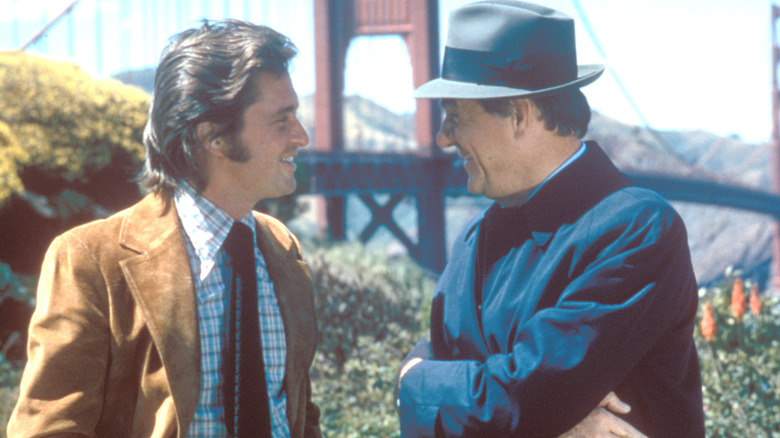
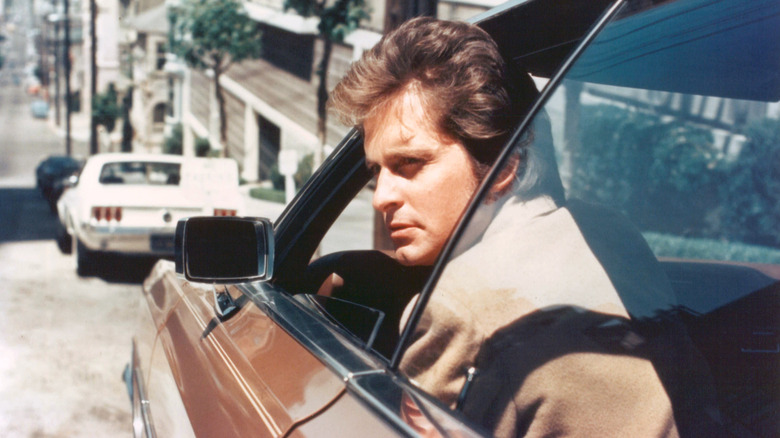
Before we had the likes of "Law & Order," the '70s had a surge of police procedurals flooding networks that more or less helped push the genre forward. The ABC 1972 buddy-cop series "The Streets of San Francisco," followed two homicide detectives — Steve Keller and Mike Stone — who solved crimes for the San Francisco Police Department. Instead of relying on its action sequences, "The Streets of San Francisco" was more story-driven, prioritizing plot lines that focused on social issues such as drug addiction, poverty, and homelessness. The show helped to launch the career of Michael Douglas, who later became known for his roles in "Fatal Attraction" and "Basic Instinct," and his marriage to Catherine Zeta-Jones.
"The Streets of San Francisco" was a notable success throughout its five-season run, garnering exceptional nominations from the Primetime Emmys and Golden Globes. However, with Douglas' departure and declining ratings, ABC had no choice but to cancel the buddy-cop series in 1977. Despite its success, it simply became an afterthought as it competed with shows like "Columbo" and "Hawaii Five-O," two other cop dramas whose syndication lasted through the 1970s. Even with a lengthy fixture of reruns long after its demise, the show has since been a relatively forgotten police procedural amongst its contemporaries.
Harry-O quietly stood out despite its premature demise
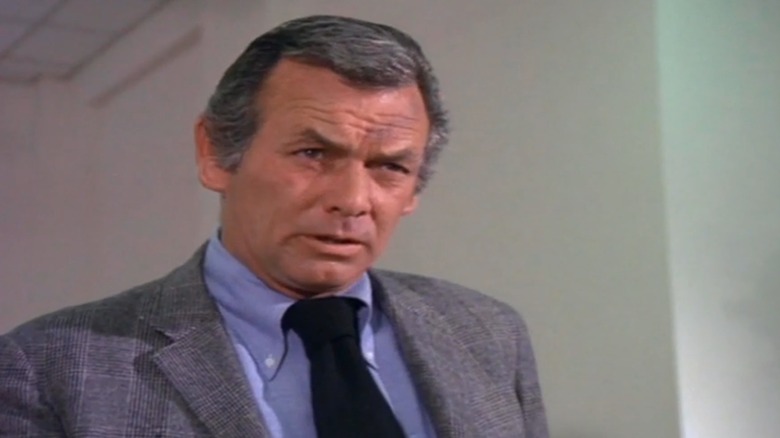
ABC wasn't done producing its fair share of detective shows, as just a year after it launched "The Streets of San Francisco," it greenlit "Harry-O" in 1973. Starring the legendary David Janssen, the show followed an ex-police officer-turned-private investigator, Harry Orwell, who, after a traumatic injury, developed a cynical outlook on life. The show dove into various topics centered on his reluctant heroism, but it made him even more likable, given his cumulative growth throughout the show's two-season run.
The show's lifespan was cut short in 1976 when ABC decided to end "Harry-O." This was seemingly abrupt, but it appeared to be due to creative differences between the showrunners and Janssen himself. According to an interview with The Daily Item, Janssen wanted the series to maintain a certain tone that the network — particularly ABC president Fred Silverman — wanted to change despite its good viewership (via MeTV). "Silverman wanted more sex and violence in the show," he said. "I wanted more humor, more of a relationship between myself and the show's police lieutenant, Anthony Zerbe." Although the show quietly stood out amongst its contemporaries, the short, two-season run ultimately contributed to how obscure it has remained over the years.
Kolchak: The Night Stalker was the primary inspiration for a more fortunate series
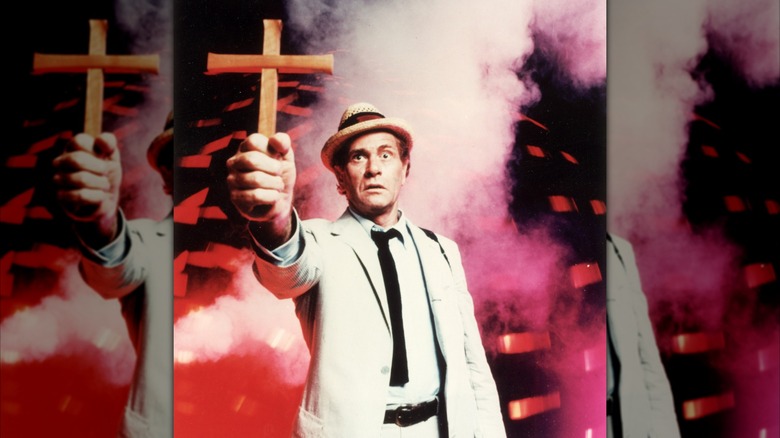
In the world of supernatural horrors, "Kolchak: The Night Stalker" had a very clear throughline in the genre. Spawning from a TV movies of the same name from 1972 and 1973's "The Night Strangler", ABC decided to greenlight the "Kolchak" series in 1974 in place of a potential third movie. The series followed a Chicago reporter, Carl Kolchak — played by Darren McGavin — and his investigation of various supernatural murders. It toed the line between mystery and horror, which made for an interesting series throughout the mid-'70s.
Unfortunately, ABC only aired 20 episodes before calling it quits in 1975. Viewership was low, and according to McGavin's 1983 interview with Fangoria Magazine, the direction of the show was completely out of whack. Plotlines were uninspired, and poor scripts were being thrown away, which, in turn, meant they were losing money. This prompted McGavin to influence ABC to cancel the show altogether (via MeTV). "I'd have to give a symposium to explain what happened. I called up the network and said, 'Let's cancel this god-damn thing. You're losing money, we're losing money, and I'm tired, and I don't want to do any more. Why don't we just stop?'" he explained. "Three hours later, they canceled the show." The series wasn't all for naught, however, as the show inspired Chris Carter to create "The X-Files." He'd even pay homage to McGavin by having him guest-star among the cast of "The X-Files" in 1998 and 1999.
The legacy of Chico and the Man was plagued by the loss of its lead
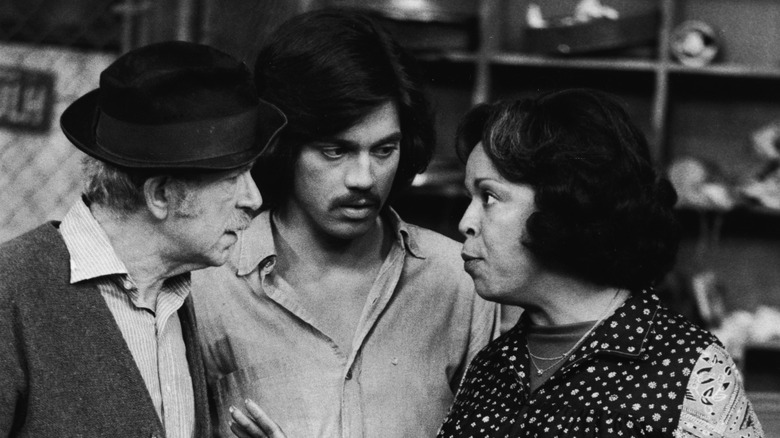
One fortunate outcome of '70s sitcoms was that they became home to some level of minority representation in public media. Whether it be on-screen depictions of Black families, such as "The Jeffersons," or having Hispanic and Italian heritages at the forefront of "Welcome Back, Kotter," this decade saw slightly more diversity on television screens. This was the case for "Chico and the Man," a 1974 NBC sitcom that followed the father-son-like relationship between mechanic Chico Rodriguez and his boss, "The Man." The show was one of the first American sitcoms to have a Mexican-American main character, helping it rise to popularity throughout its four-season run.
Freddie Prinze's performance as Chico Rodriguez was highly memorable, from his energetic banter to his infamous "looking good!" catchphrase. Unfortunately, tragedy struck when Prinze died by suicide in 1977. It came as a shock to the entertainment industry as a whole, and cast a dark cloud over the future of "Chico and the Man." The show lasted one extra season following the incident before it was canceled in 1978. As for its legacy, it will forever be known as a groundbreaking sitcom for Mexican-Americans.
Firehouse played a little fiddle to a more popular firefighter-themed series
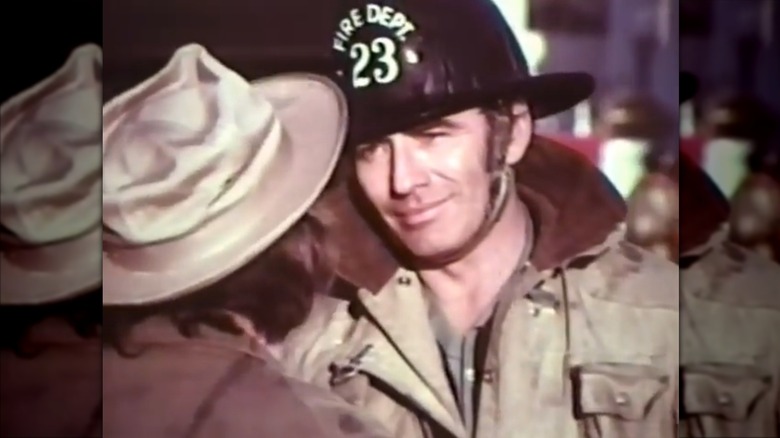
Representation started to improve slightly in the '70s, and it couldn't be more apparent than in the creation of series focused on firefighters. In 1973, ABC premiered the TV movie "Firehouse," which focused on a Black firefighter navigating racial tension within the Los Angeles Fire Department. This lent a hand at tackling certain social issues at the time, but the 1974 series took a more hands-off approach. Instead, the "Firehouse" TV series was more action-focused. It was also based on Dennis Smith's "Report from Engine Company 82," a non-fiction book that chronicled his ambivalent time as a firefighter in New York.
The series was short-lived, with ABC only airing 13 episodes, with the network cancelling the show due to extremely low viewership. The sad reality of "Firehouse" was that it just couldn't compete with its contemporaries, with more viewers preferring to watch NBC's medical drama "Emergency!" Some tv fans even suggested that "Firehouse" was ABC's attempt to create its own version of the seven-season spectacle, but it ultimately flopped. Given how popular firefighter shows became in the decades that followed — from "Chicago Fire" to "9-1-1" — it's sad that such a trailblazing show like "Firehouse" fell by the wayside.
Tabitha was a spinoff that couldn't exist beside its predecessor
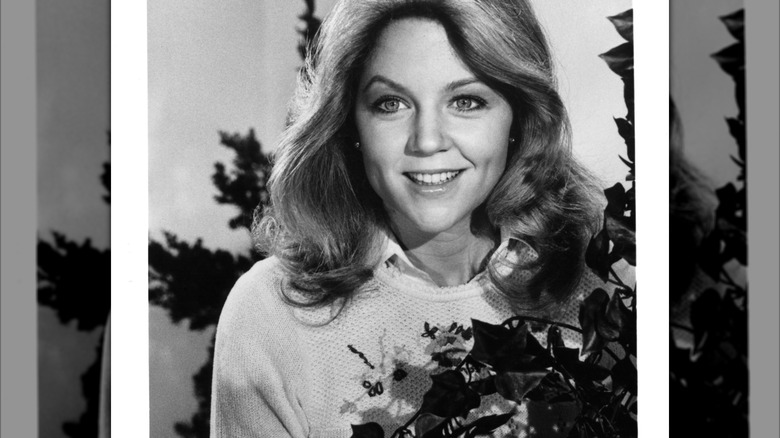
The mid-'60s saw the rise of the fantasy sitcom "Bewitched," which followed a witch named Samantha — played by Elizabeth Montgomery — navigating life as an ordinary housewife to Darrin Stephens. Through their marriage, Samantha opts for a life of normalcy in the suburbs, but gets thwarted by her magical family. It created a unique sense of storytelling we'd later see in shows like "Wizards of Waverly Place." At the time, however, "Bewitched" was such a spectacle that ABC created a 1977 spinoff called "Tabitha."
In "Bewitched", Samantha gave birth to Tabitha and Adam, both of whom adopted their mother's supernatural abilities. As the name suggests, "Tabitha" was based on Samantha's eldest daughter — now played by Lisa Hartman instead of Erin Murphy — and her trajectory through adulthood as a half-breed witch. In case you're curious, here's what little Tabitha Stephens looks like now.
Given how successful its predecessor was, it seemed "Tabitha" would've followed suit. To the network's surprise, however, "Tabitha" garnered low ratings and was canceled thereafter in 1978. Fans weren't thrilled about its premise and its lack of original "Bewitched" characters present in the spinoff. In an interview with Celebrity Drop, Murphy sounded off on why she thought "Tabitha" failed, saying, "I think they made it a little too quickly. I don't think it really carried the characters over." Montgomery, through angry fan mail, learned just how bad the spinoff was being received (via IMDb), sharing that the disgruntled viewers "ranged from kids who hated it to grownups who said, 'This is the stupidest thing I've ever seen.'" Needless to say, over the years, "Bewitched" fans preferred to leave "Tabitha" in the past, as it was a spinoff nobody wanted.
Mary Hartman, Mary Hartman faded to obscurity after a controversial run
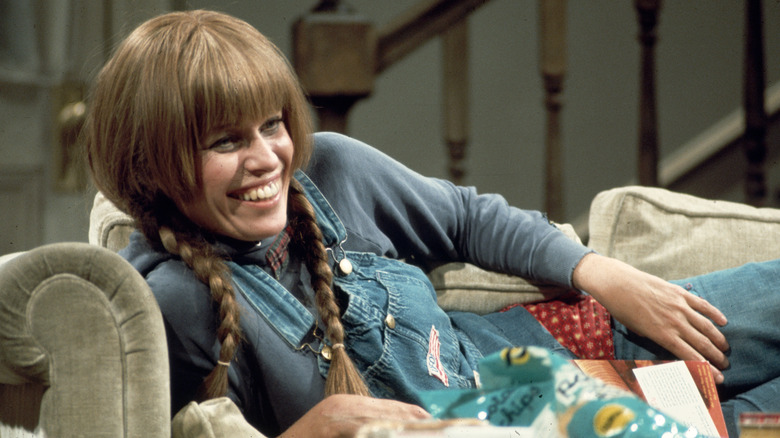
When done right, satire in entertainment can be funny, which is one of the reasons why Anna Faris landed a role in "Scary Movie," as she parodied the "final girl" archetype in classic horror films. However, it can also become a hotbed of controversy. This was the case in the 1976 series, "Mary Hartman, Mary Hartman." Through its satirical commentary on soap operas, "Mary Hartman, Mary Hartman" followed a television-obsessed suburban housewife who was involved in a variety of absurd incidents that happened around her.
This may appear unproblematic on paper, but when it involves topics of mass murder and sexual assault, it could make for a hard watch. While it only ran for two seasons, the show amassed a total of 325 episodes, which was a demanding schedule for the lead, Louise Lasser. This caused her to resign, and creator Norman Lear chose to end the show entirely in 1977. According to his interview with the New York Times that same year, Lear preferred to end it this way rather than dragging it on, despite how seemingly successful it was. "Throughout television's history, hit shows have been allowed to run to the point they fizzle out," he said. "We didn't want that to be 'Mary Hartman, Mary Hartman's' fate. Instead, we chose to leave it as it is, wrap a ribbon around it, and put it away with love."
Quark spearheaded a satirical approach to fictional space adventures
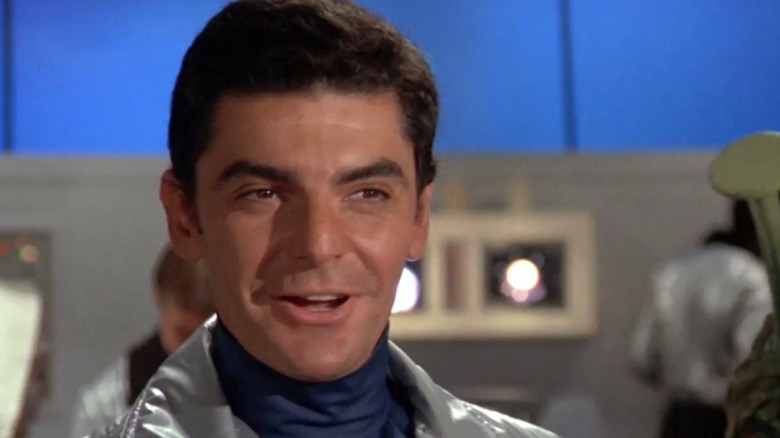
The '60s proved to be a period in which space adventures were a theme that could garner success. We'd see the rise of "Star Trek" in 1966 and other satirical sci-fi shows ranging from "My Favorite Martian" to animated cartoons like "The Jetsons." This shaped the landscape for other franchises like "Star Wars" to thrive in the '70s. It also welcomed NBC's "Quark," a 1977 satirical take on notable sci-fi franchises during the time.
Through following the adventures of what appears to be a space traveler with an affinity for garbage collecting, the show proved to be a competent comedy series. However, "Quark" suffered a loss when creator Buck Henry left the show after its pilot to make the 1978 film "Heaven Can Wait." Henry was proactive enough to leave notes for the rest of the production team to follow, explaining his wants for the show to be completely satirical. Despite his efforts, Henry, during his interview with TV Time Machine, stated that "Quark" turned into a parody anyway, which led to the show's premature downfall after just 8 episodes. "I left a number of wishes, not instructions, because you can't instruct talent," he said. "But I wanted them to not lapse into parody. I wanted it to be satire. ... It turned into a kind of parody of 'Star Trek,' which is what I didn't want it to be."
Space Academy was an ambitious attempt that never fully took off
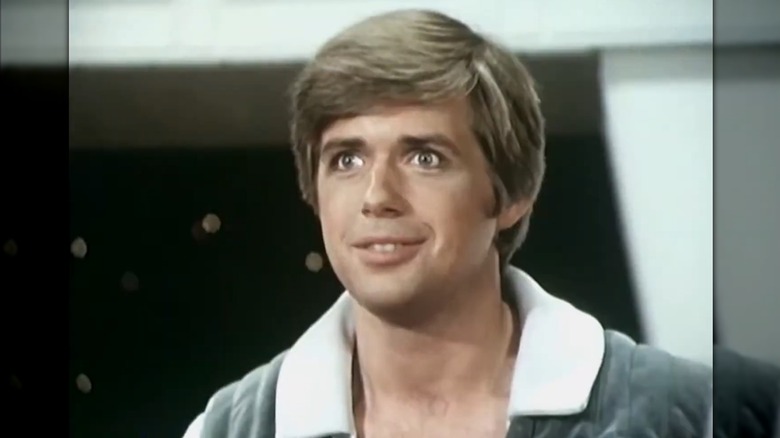
Sci-fi remained at the forefront of entertainment in 1977, thanks to the success of "Star Wars." Even after the failure of "Quark," networks were still on the hunt for their next answer to the galactic spectacle. That was until CBS enlisted the help of Filmation, an animation studio behind "Star Trek: The Animated Series," and its co-founder, Lou Scheimer, to spearhead their newest creation, "Space Academy." Instead of being an animated series, it was a live-action children's television show that followed a team of aspiring astronauts studying in a space academy orbiting Earth. Throughout the show, they'd learn secrets about their galaxy, tackle cosmic missions, encounter otherworldly species, and more.
Given the success of sci-fi projects at the time, CBS had no problem shelling out money for "Space Academy." The budget of $150,000 per episode was said to be an all-time record for a Saturday morning show. Scheimer told Starlog magazine (via Agrapha FX), "Our budget was high to begin with ... and we found it wasn't enough. Now CBS is paying us almost twice as much as a normal half-hour Saturday Morning show," he recalled. Despite their efforts, "Space Academy" was canceled in 1977 after 15 episodes due to low viewership. Even with its advantageous financial support as a Saturday morning show, it simply couldn't compete with other network shows that were airing at the time.