
Quentin Tarantino Lauds This '60s Classic For Influencing His Work
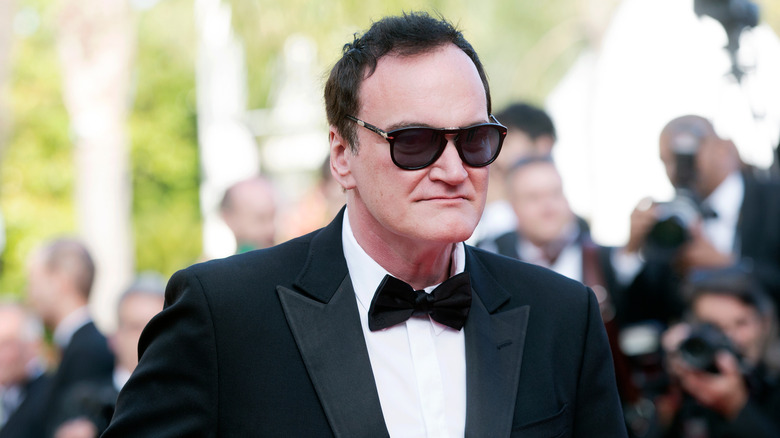
Finding a movie Quentin Tarantino hasn't watched is challenging enough to be its own game show. Watching him talk about this passion, you realize cinema isn't so much a pastime for him as it is a lifelong field of study. Who could forget the time he sat down blindfolded on "Jimmy Kimmel Live" in 2021 and was fed the strange plot points from movies most people haven't even heard of? Tarantino rattled off their names, their directors, and the kind of trivia you won't even find on IMDb.
Yes, Tarantino knows movies, yet when you ask him about the one that shaped him most, the Oscar-winning filmmaker doesn't reach for a French New Wave feature or an Eastern martial arts obscurity. He lands on a film almost everyone has either seen or heard of before: Sergio Leone's timeless 1966 classic, "The Good, the Bad and the Ugly," which is also one of Clint Eastwood's greatest hits.
Tarantino has spoken about his love for the Western flick repeatedly over the past three decades. In 2002, he put it at the very top of his list for the British Film Institute's Sight & Sound poll. A decade's time certainly didn't change his opinion — when asked during a 2012 interview on SiriusXM about movies from his youth that influenced his own work the most, he immediately picked "The Good, the Bad and the Ugly" (along with Mario Bava's "Black Sabbath" and Charles Barton's "Abbott and Costello Meet Frankenstein." At a 2014 special screening of "The Good, the Bad and the Ugly" at Cannes to celebrate its 50th anniversary, Tarantino even referred to Leone's film as "the greatest achievement in the history of cinema" (per The Telegraph).
Tarantino worships Leone's spaghetti Western, and its fingerprints are all over his own work
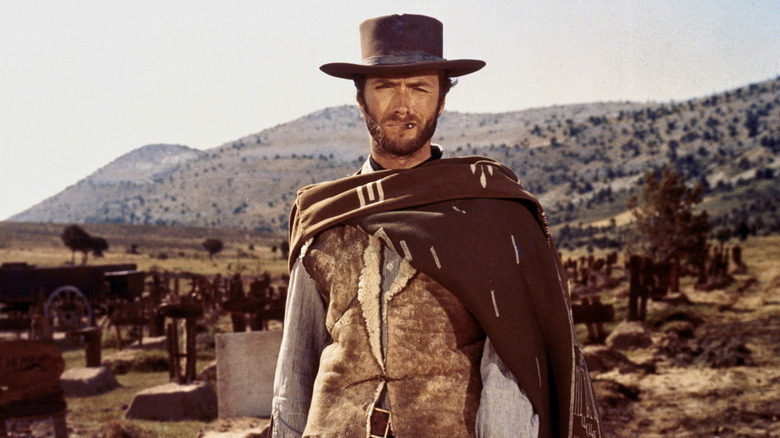
So, we know Quentin Tarantino really loves "The Good, the Bad and the Ugly," but is there a particular moment that makes the film for him? Apparently, it's not the heroic behind-the-scenes moment when Clint Eastwood saved a man's life. The director has noted on more than one occasion that the legendary three-way standoff between the titular leads in the finale is the golden bough he measures every other scene against.
Speaking to Empire about the sequence, Tarantino explained that every aspect of the mise-en-scène comes together to serve the conclusion of the film. "After you've seen all the little shots of the guys getting into position, you suddenly see the whole wideness of the bullring and all the graves around them," he said. "It's my favorite shot in the movie, but I'll even say it's my favorite cut in the history of movies."
Looking at his own films, we can see why. Tarantino has spent decades trying to recreate Sergio Leone's magnum opus. From the scene of drawn pistols that closes out "Reservoir Dogs" to the last standoff in "Once Upon a Time in Hollywood," the man loves nothing more than letting the tension simmer until someone finally reaches for their gun (or sword).
The nod runs even deeper, since Tarantino probably gave his torture-happy crook the nickname "Mr. Blonde" as a wink to the nickname given to Eastwood's gunslinger in the 1966 movie. Tarantino once told Roger Ebert that Leone's decision to end his films with a showdown never got old, and it's something he's turned into a signature style for his own films (consider the final duel with O-Ren Ishii in "Kill Bill: Vol. 1" or the violent showdown in the Candyland plantation at the end of "Django Unchained"). Whatever the setting, Tarantino keeps walking his characters back into that same Sergio-style standoff.