
The High School Superlative Ron Howard Was 'Irked' He Didn't Win (And For Good Reason)
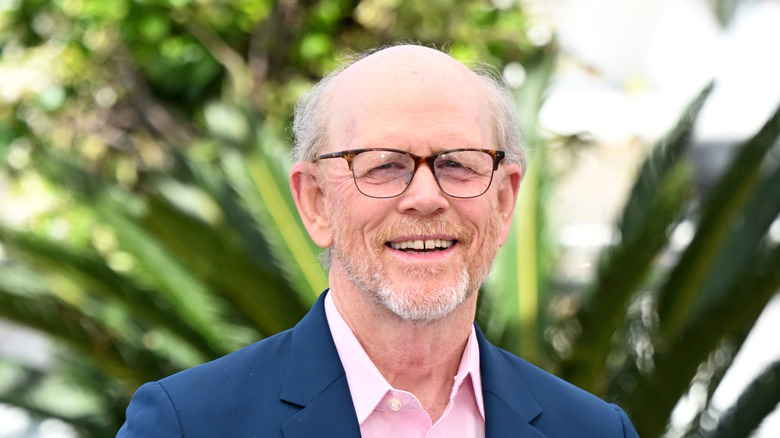
Actor-turned-director Ron Howard has a rather impressive number of accolades under his belt. For starters, he won his first Golden Globe at the age of just 23, for his role as Richie Cunningham on the classic sitcom "Happy Days." Moreover, as a filmmaker, Howard has two Academy Awards to his name, having won both best picture and best director for his 2001 biographical drama "A Beautiful Mind," starring Russell Crowe and the stunning Jennifer Connelly, who also won the best supporting actress Oscar for the film. Over the years, Howard has also added a second Golden Globe to his shelf, alongside several Emmys, and even a pair of Grammys.
But while he's since moved on to bigger and better things, there was one early honor that the prolific filmmaker admitted he was irritated about not winning at the time. And, to be fair, it's hard to deny that he was robbed. Before landing the lead role in "Happy Days" as a young adult, Howard was a well-established child star. In fact, prior to becoming Richie Cunningham in 1974, Howard was best known for his role as Opie Taylor on "The Andy Griffith Show," whom he played from 1960 to 1968. Not only that; around the time his high-school career was wrapping up, the future Oscar winner landed a key role in 1973's "American Graffiti," the sophomore feature from eventual "Star Wars" creator George Lucas (who later became Howard's mentor).
And yet, even that wasn't enough to secure him a certain senior superlative. "I was irked, I will admit, when I came in third in the senior class's voting for Most Likely to Succeed. Third? Third? C'mon! Hadn't I already frickin' succeeded?" the "Apollo 13" director complained, in an October 2021 op-ed for The Sydney Morning Herald.
Ron Howard's childhood acting gigs earned him a pretty penny
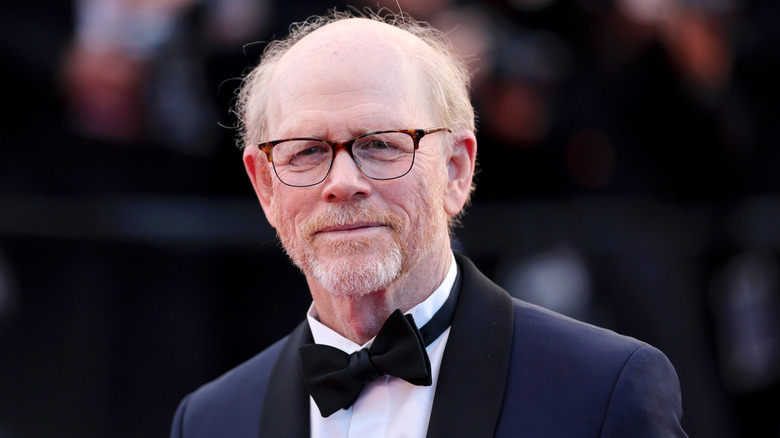
Ron Howard's classmates may not have voted him "Most Likely to Succeed," but he had the bank balance to prove them wrong — not that the actor felt the need to publicly flaunt that fact at the time. Besides, like many former child stars, Howard had no real control over his finances until he came of age. In fact, he had no idea how much money he even had until his parents signed his bank accounts and other assets over to him when he finally turned 18. "My net worth, I discovered, was well into the six figures," the "Splash" director noted in his Sydney Morning Herald op-ed. "A sum that I was proud of, though I didn't breathe a word of it to my friends at Burroughs High School in Burbank, lest I come off as a jerk."
In other words, Howard had a bare minimum of $100,000 to his name upon graduating high school. Mind you, the actor-turned-filmmaker turned 18 in March of 1972, when $100,000 had about the same buying power as $800,000 does in 2026. It's unsurprising, then, that Howard was more than happy to accept a rather modest payday for the low-budget "American Graffiti." As he reasoned, "Money was the least of my concerns at that point in my life." Notably, in addition to the young performer's nearly-decade-long tenure on "The Andy Griffith Show," Howard's other childhood gigs included high-profile shows like "The Twilight Zone," "Dennis the Menace," and "Gunsmoke," as well as movies such as "The Journey" and "The Courtship of Eddie's Father." So, while the future Oscar winner may have been robbed of a coveted spot in the yearbook, he cried all the way to the bank.