

Quote Of The Day By Francis Bacon: 'There Is No Excellent Beauty That Hath Not Some...'
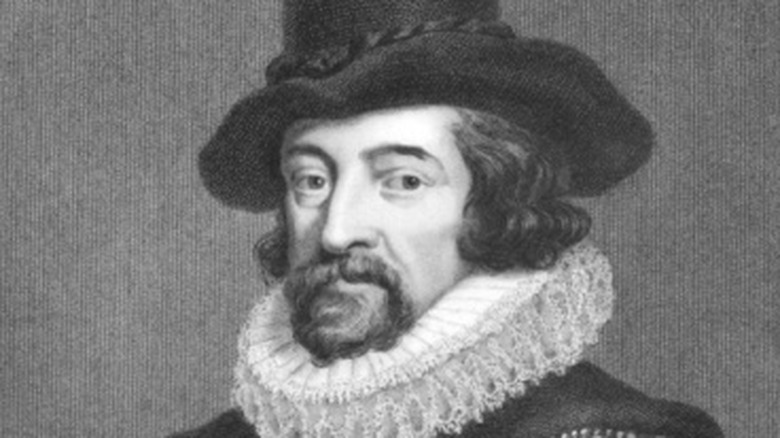
A literal and figurative Renaissance man, Sir Francis Bacon changed the way we think about the world in general and science in particular. Born in London in 1561, Bacon studied at Trinity College, Cambridge, before taking up law, rising through the ranks, and becoming a member of Parliament. Though he was also elevated to Queen Elizabeth I's counsel, he ultimately fell out of favor with her for political reasons, during which time Bacon began writing the essays which would establish him as one of England's greatest writers. Once Her Majesty died and James I took the throne, Bacon's star rose once again. He was knighted and given increasingly more prestigious titles, including lord chancellor and Viscount Saint Albans.
Bacon is best known for creating the empirical method of scientific reasoning: the use of observation and evidence to draw conclusions about the world, rather than relying on opinion or religious belief. In addition to his famous essays, Bacon also penned volumes of history and philosophy later in his life, when he once again found himself in trouble with the government. In a bizarre twist of fate, Bacon died in 1626 from pneumonia brought on by attempting to freeze a chicken.
The Englishman's impressive way with words even led to the 19th-century claim that he was the one who really wrote Shakespeare's plays. That theory has been dismissed by Shakespearean scholars, but Bacon is still acknowledged as a hugely influential writer all the same. His contemporary, poet Ben Jonson, once described Bacon as "one of the greatest men, and most worthy of admiration, that had been in many ages," (via the Shakespearean Authorship Trust). We salute Bacon's many talents by choosing one of his writings as our quote of the day.
Quote of the Day by Sir Francis Bacon
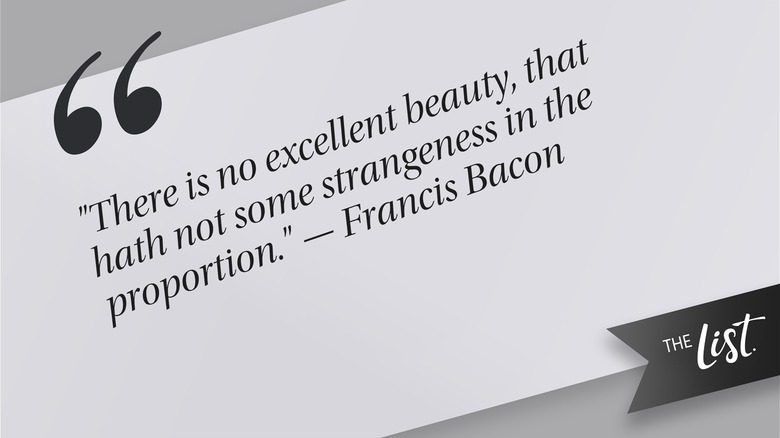
Sir Francis Bacon's 1612 work "On Beauty" muses about what makes someone attractive, and he ultimately concedes that there are no easy answers: "There is no excellent beauty, that hath not some strangeness in the proportion," (via Authorama). Virtuous people aren't usually beautiful, but there are a few key exceptions. A sweet expression can make someone beautiful, but not as much as graceful actions do.
In other words, what we might consider "perfection" in someone's features may not be as pleasing as we imagine. The Englishman's essays are among the most revered of his many works; indeed, the philosopher and statesman is credited with inventing the modern essay. Bacon wrote both thoughtfully and wittily about universal topics such as love, marriage, parenthood, friendship, traveling, truth, and death.
Deeper meaning of Bacon's quote — True beauty contains imperfections
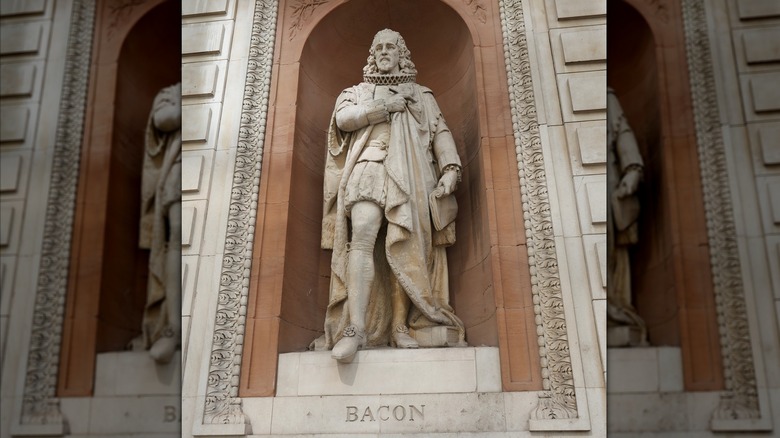
Science actually backs up Sir Francis Bacon's theory about beauty. As another great writer once proclaimed, beauty is in the eye of the beholder. But Bacon goes a step farther in trying to determine exactly what makes someone beautiful. He notes that artists such as the ancient Greek painter Apelles and the Renaissance master Albrecht Dürer tried to create faces that were either symmetrical or that were a combination of other people's best features. "Such personages, I think, would please nobody, but the painter that made them," Bacon critiques (via Authorama). Actual beauty, he argues, contains imperfections and asymmetry that become attractive when combined: "A man shall see faces, that if you examine them part by part, you shall find never a good; and yet altogether do well."
Bacon would be pleased to know that research backs him up. Studies have shown that people perceive symmetrical faces as being less appealing than asymmetrical ones. The natural unevenness of our features may help show emotions more clearly than faces that are identical on both sides. In fact, true symmetrical faces are so rare that they may even appear more artificial to the eye. Lovely people also become lovelier with age or, as Bacon puts it, "pulchrorum autumnus pulcher" (beautiful people have a beautiful autumn).
Think of all the actresses who have aged like fine wine — the qualities that made them gorgeous a decade or two ago are still there. As such, just as the Japanese art of "wabi-sabi" can help us embrace our imperfections, we can be inspired by Bacon's assurance that the unique features we possess, along with our good deeds, all combine to make us beautiful.
More quotes by Bacon
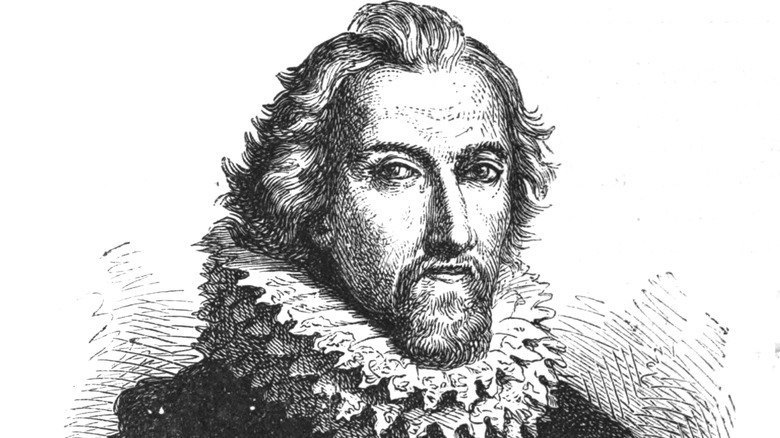
- "Imagination was given to man to compensate him for what he is not; a sense of humor to console him for what he is."
- "Money is a great servant but a bad master."
- "Begin doing what you want to do now. We are not living in eternity. We have only this moment, sparkling like a star in our hand — and melting like a snowflake."
- "Some books should be tasted, some devoured, but only a few should be chewed and digested thoroughly."
- "Alonso of Aragon was wont to say in commendation of age, that age appears to be best in four things — old wood best to burn, old wine to drink, old friends to trust, and old authors to read."