

Quote Of The Day By Mary Oliver: 'Two Or Three Times In My Life I Discovered...'
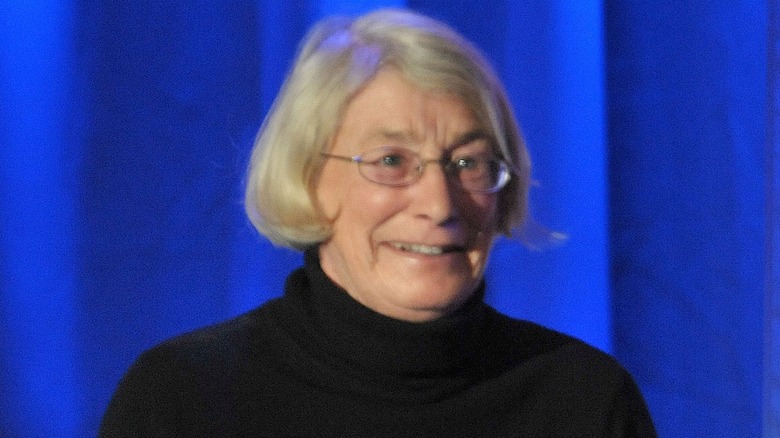
Just about every poet who ever picked up a pen has written about love. Yet it's not every day you come upon a string of words that not only perfectly encapsulates that fundamental human experience but is also so poignant you go back to read it and reflect on it again and again.
Mary Oliver made her name writing about ordinary encounters with the natural world. Her poems included birds, ponds, and trees, and they included walking and observing. She was born outside Cleveland in 1935, and collected the big literary prizes across her career. Oliver won a Pulitzer for her 1983 collection "American Primitive" and then a National Book Award for 1992's "New and Selected Poems." Oliver was a private individual, but the one person she wrote about was her partner, Molly Malone Cook, and their real-life love story.
The two spent 40-something years together, most of it in Provincetown, Massachusetts, where Cook, a photographer, became Oliver's literary agent. While Cook was sick, much of Oliver's writing happened at night, by the glow of a flashlight. Her days belonged to Cook, whom she refused to move into a nursing home. Cancer took her partner in 2005. When asked about what she'd done with her life in a 2011 interview with Maria Shriver, Oliver said: "What I have done is learn to love and learn to be loved. That didn't come easy." And a love that lasted decades and left her grateful even after the grief is why Mary Oliver is the voice behind today's quote of the day.
Quote of the Day by Mary Oliver
Mary Oliver once wrote, "Two or three times in my life I discovered love. Each time it seemed to solve everything. Each time it solved a great many things but not everything. Yet left me as grateful as if it had indeed, and thoroughly, solved everything."
The lines come from "Sometimes," a poem from "Red Bird," which came out in 2008, three years after Cook's death. "Red Bird" was the first of Oliver's books to include a sequence of connected love poems, and these passages include what is arguably one of the most honest reviews of love ever written. Love is as life-changing and exhilarating as everyone makes it out to be, but there's a way to live with the fine print.
Deeper meaning of Mary Oliver's quote — Love doesn't have to fix everything to be enough
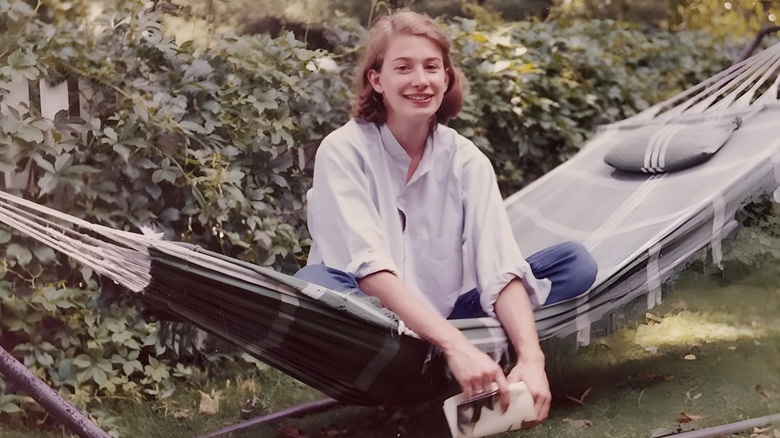
When love first arrives, you feel joy in every fiber of your being. It is like an intoxication that drives all your troubles and concerns away. Love can fill every corner of your heart with happiness and possibilities. Love arrives and seems to fix everything. But then you get a reality check, and notice, ever so slightly, that sure, while it did fix plenty, it didn't fix all of it. Most of us may stop there, thinking about the relationship that couldn't cure the loneliness, or the friend who couldn't talk you out of your self-doubt, and that's where disappointment slowly seeps in.
Since these noisome feelings undermine your initial giddiness, it's easy to forget about the highs. This is where Oliver pushes on to a third beat. She won't pretend love did more than it did, but she won't let the shortfall spoil what it got right, either. And here, the word "each" is significant, since love is something that oversells itself to us time and again, yet we shouldn't be the least bit embarrassed to fall for it.
Because at the end of the day, you're grateful that it happened at all. Think about the company, the laughter, the years, and the memories. Think about all those great experiences that love gave you. And then ask yourself: So what if it wasn't perfect? We tend to give the people and things we love an impossible job — to fix the loneliness, the boredom, the insecurity, the doubt, the existential dread. But count the great many things it does take care of, and you realize love was never the cure for being human; it was supposed to be good company along that winding way.
More quotes from Mary Oliver
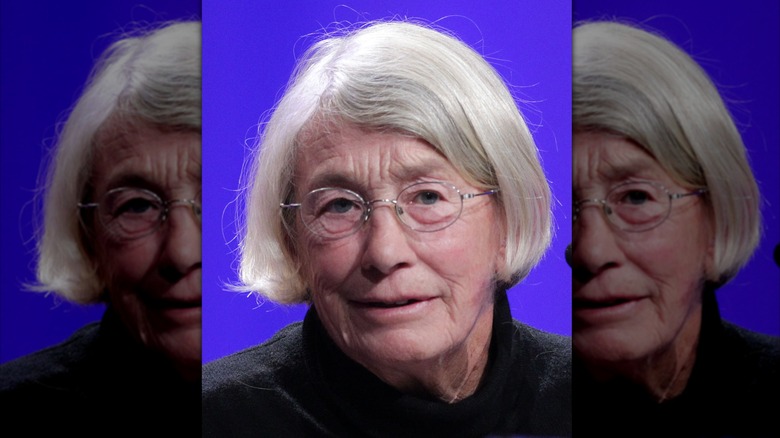
- "To live in this world / you must be able / to do three things: / to love what is mortal; / to hold it / against your bones knowing / your own life depends on it; / and, when the time comes to let it go, / to let it go."
- "When it's over, I don't want to wonder / if I have made of my life something particular, and real. / I don't want to find myself sighing and frightened, / or full of argument. / I don't want to end up simply having visited this world."
- "I tell you this / to break your heart, / by which I mean only / that it break open and never close again / to the rest of the world."
- "Isn't it wonderful the way the world holds both the deeply serious, and the unexpectedly mirthful?"
- "There are moments that cry out to be fulfilled — like, telling someone you love them."