

Prince William Will Be The First British Monarch To Have This Ancestry
We may receive a commission on purchases made from links.
It was over 400 years ago that England, then under the rule of King James I, established its first settlement in what would one day be the United States. On that note, it was then about 250 years ago that the residents of what had become the 13 colonies formally rejected the monarchy and declared their independence from Great Britain. A war broke out around that time, which would be far from the last between the U.S. and the UK. In the many years since, however, the two nations have largely made nice. As a matter of fact, there are now members of the British royal family with American blood.
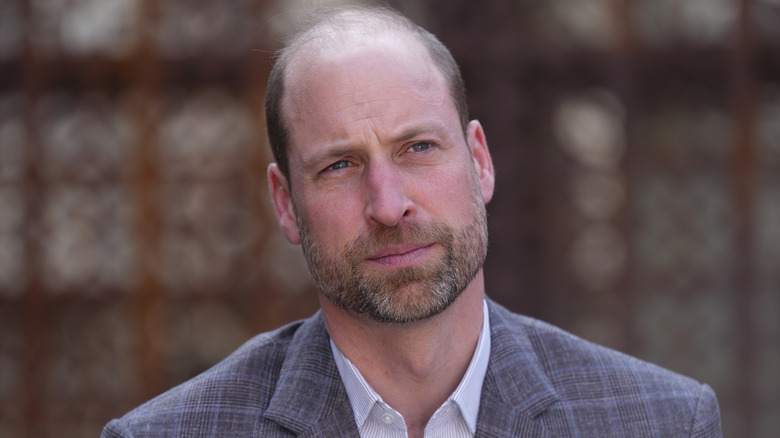
Prince William — the heir apparent to King Charles III — will actually be the first such individual to serve as head of the Commonwealth when he eventually becomes king. As royal author Stephanie Green explained to Marie Claire, in September 2026, the Prince of Wales is, in fact, one-sixteenth American through his mother, the late Princess Diana. The People's Princess, who was born Diana Spencer in Sandringham, England, was the great-granddaughter of New York-born socialite Frances "Fanny" Burke Roche (which, by the way, also makes her cousins with "The Bear" star Oliver Platt).
"She was one of the most celebrated beauties of the Gilded Age. [...] I don't know if you watch the show 'The Gilded Age,' but she is right out of that show," Green pointed out, of Roche. The author further remarked, "[M]y hope is that someday Prince William will receive honorary American citizenship like Winston Churchill did," adding, "I just think it's a wonderful twist of history and I think it shows that families and countries are much closer than we than we think — and that story is still unfolding."
Prince William isn't the only British royal with American blood
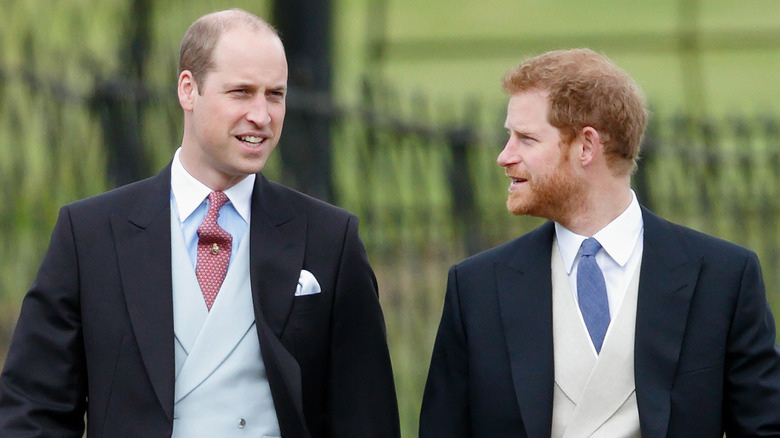
Of course, it bears mentioning that if Prince William is one-sixteenth American through his mother, so too is his younger brother, Prince Harry. And that seems rather serendipitous, given that the Duke of Sussex is married to easily the most high-profile American royal there is, Meghan Markle, who was born and raised in California. Then, of course, there are the couple's two children, Prince Archie and Princess Lilibet, the latter of whom was born on U.S. soil, in her mother's home state.
While an American woman like Meghan becoming a royal was obviously headline-worthy news, it turns out Harry has blood ties to the States as well — albeit rather distant ones. What's more, royal author Stephanie Green's September 2026 chat with Marie Claire actually came very shortly after Harry and his family moved back to England after spending the previous six years living stateside.
Meghan Markle's Americanness clashed with the British royals (including William)
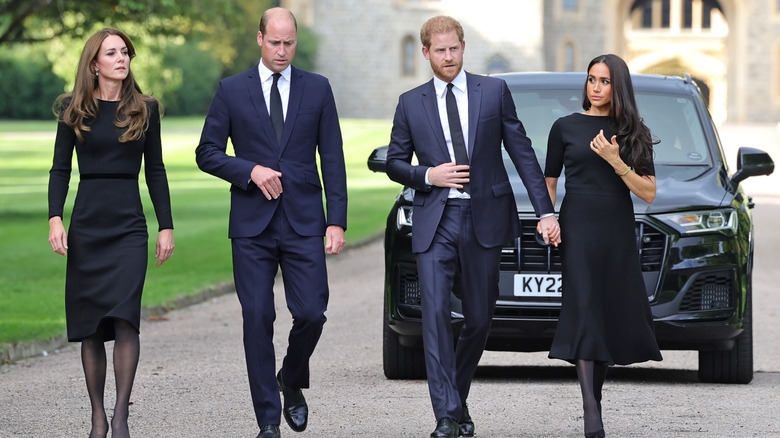
Regarding tome "American Crown: From Revolutionaries to Royalty: The Story of Prince William's American Heritage," author Sophie Green shared with Marie Claire, "The book is really about William because he's going to be king one day. [...] [There's an] irony in having a king with all of this American blood, but having a brother whose wife is American who's going back and forth across the pond." At the time of writing, there's little indication that the long-standing feud between William and Prince Harry will be ending any time soon. Reports even suggest that the Prince of Wales and wife Kate Middleton can't agree on how to handle Harry being back in England.
It's worth noting that Meghan Markle's brassy American style reportedly clashed with the comparatively much stuffier British royals, with insiders suggesting she was a big reason for the fallout between the once-close brothers. In fact, as Harry himself revealed in his bombshell memoir "Spare," they even came to physical blows over her. William apparently described the duchess as ""difficult," "rude," and "abrasive." If their secret lineage proves anything, however, it's that whether he likes it or not, the Prince of Wales has a lot more in common with Harry than just the obvious. And, as Green was quick to point out, the same can be said for the U.S. and the U.K. too.