

Mary Oliver Rewrote The Narrative Of Her Painful Childhood With A Fulfilling Inner Life
Content warning: The following article contains mentions of sexual abuse.
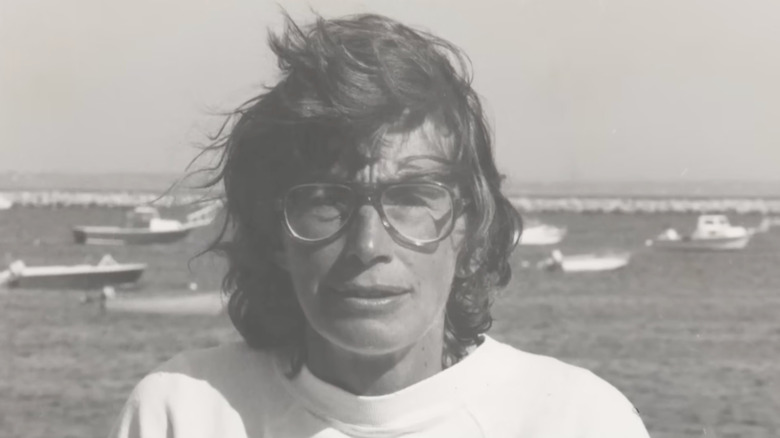
Mary Oliver's fascination with the outside world defined her life as a poet, offering an escape from the fractured home that had left her traumatized since early childhood. For her, poetry — especially poetry that paid close attention to nature –was not so much a career as it was a place to live. In fact, when she was still a child, Oliver knew the hardships of going down that creative path, and she sat down and listed everything she was willing to give up. A house, a car, and nice clothes and dinners all made the list. Poets stayed poor, she figured, and as she explained to Maria Shriver in 2011 for Oprah's O magazine, she had made up her mind to be one.
Oliver endured sexual abuse in early childhood, and neither parent paid her much attention. She was actually 75 when she first talked about it to Shriver, decades after the experience. And since home was where trouble was, Oliver stayed away from it. "To this day, I don't care for the enclosure of buildings," she told Krista Tippett on her podcast, "On Being," in 2015. She also avoided school, and spent those skipped hours among the trees, with a volume of Walt Whitman and a notebook for company. The poets she read out there in the woods contributed to that remedy she was already concocting. "I made a world out of words," she told Shriver. "And it was my salvation."
In her words, that rough childhood and traumatic upbringing were the reason she was out of her parents' house within a day of finishing high school. She never dropped the habit of going among the trees, noticing everything, and writing it down. And it turned a girl who wanted to disappear into one of the most widely read poets in America.
If you or anyone you know has been a victim of sexual assault, help is available. Visit the Rape, Abuse & Incest National Network website or contact RAINN's National Helpline at 1-800-656-HOPE (4673).
Fame and bestseller status didn't change how Mary Oliver wanted to live
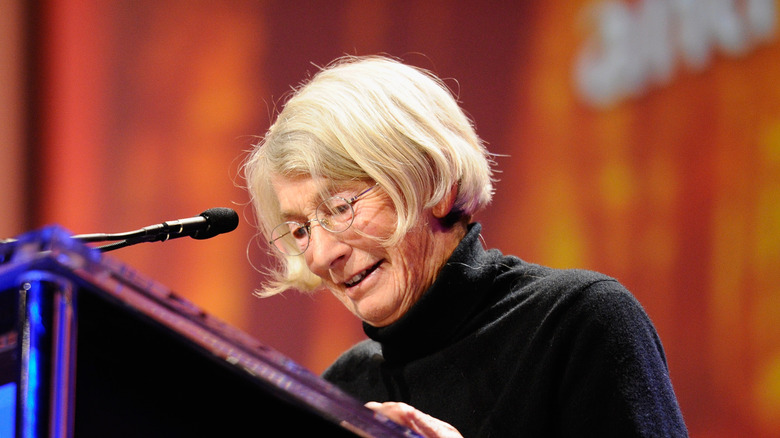
The life Mary Oliver built with her partner Molly Malone Cook ran on very little money. The poet took teaching work when she had to and picked the dull jobs to avoid getting hooked and losing focus on her writing. There were some lean years when the couple had to forage for food in the woods or by the sea around their Provincetown, Massachusetts, home, and often in those periods, dinner meant fish and clams. Her car wasn't much to look at either. "I had a $100 car I used to stop by hitting a brick wall," she recalled to a group of students once (per Ms. magazine).
Then, in 1984, her fifth collection, "American Primitive," ended up taking the Pulitzer Prize. In 1992, she won the National Book Award for her poetry collection, "New and Selected Poems." As far as such things are reckoned in literary circles, Mary Oliver had made it. But by her own telling, when the call came that she had won the Pulitzer, she stood at the sink doing dishes, said no to a television crew and went back to her project of the moment, which was collecting used shingles for the house.
Oliver valued her privacy so much that she turned down Shriver request for an interview for six years before saying yes. But all that suited her fine. "I got saved by poetry, and I got saved by the beauty of the world," she told Tippett. The life she'd fenced off turned out to be a good one, one of poetry and loving and learning. Asked what she'd done with her life in that 2011 interview, she joked about the pencils she'd worn down, then answered seriously. "What I have done is learn to love and learn to be loved." The woods, it turned out, taught her to do that really well.