
5 Stars You Forgot Appeared On Beverly Hillbillies — Including This Famous Cowboy
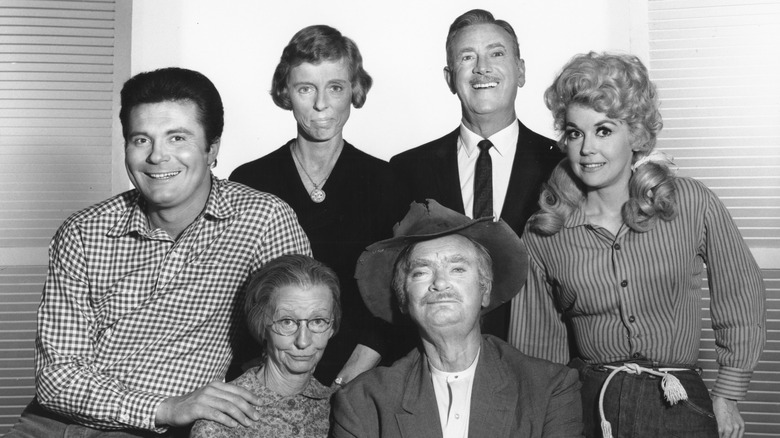
"The Beverly Hillbillies" entertained fans for nine seasons as audiences tuned in each week to see what kind of hijinks the Clampett family got into. The series, about a widowed hillbilly who accidentally strikes oil while hunting in the Ozarks and moves his kin to the fanciest zip code in America, was a long-running hit. The show earned seven Emmy nominations during its run, though sadly never winning an actual award.
While trophies were just out of reach for the series, viewership was not a problem. "The Beverly Hillbillies" was a ratings smash for CBS, turning its stars into household names. Many of the cast of "The Beverly Hillbillies" went on to lead successful careers in acting. The show was so popular that it had no problem getting some big names to appear, bringing joy to fans who loved seeing the Clampetts mix it up with others. But, with almost 300 episodes, it can be difficult to remember all the stars that showed up on "The Beverly Hillbillies," especially when some of them hadn't become famous yet, didn't look like themselves, or only popped in for a few quick seconds.
John Wayne didn't ask for much when he appeared on The Beverly Hillbillies
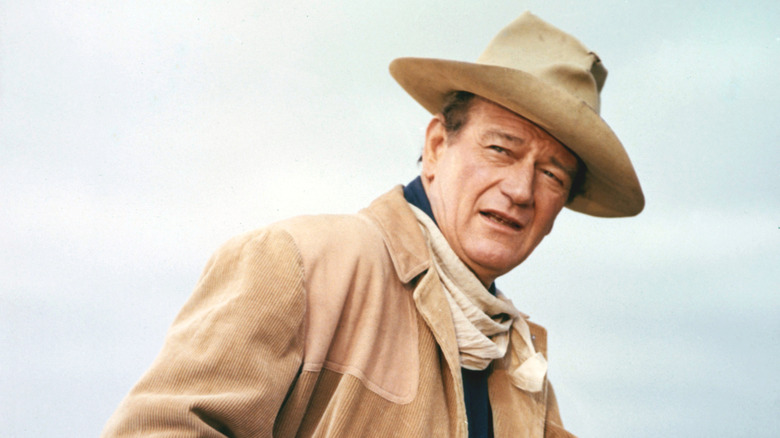
One of the most iconic actors of all time, John Wayne is remembered for his rough-and-tumble Westerns where he always beats the bad guys and shows up just in time to save the day. But the famous actor also had a pretty good sense of humor and wasn't afraid to poke fun at his heroic persona from time to time. That was the case when Wayne made a quick cameo during the fifth season of "The Beverly Hillbillies."
In the episode "The Indians are Coming," Granny Clampett misunderstands a phone call from a cousin and believes the Crowfoot tribe has attacked the Clampett land in the Ozarks. In reality, Chief Running Wolf is headed to Beverly Hills to peacefully settle a dispute. Fearing for her family's safety, Granny prays for the Duke himself to show up and save the family.
While Granny has her own adventure keeping the Clampett mansion safe, the misunderstanding between Chief Running Wolf and Jed Clampett is quickly and peacefully resolved. Then, just before the episode ends, John Wayne, looking more like a fancy Hollywood celebrity than a grizzled fighter, shows up and introduces himself, to which Granny responds, "Where was ya when I needed ya, John?" As payment for his quick cameo, John Wayne shooed away the usual check and instead accepted a bottle of Jack Daniel's bourbon, which surely made the show's accountant very happy.
Sharon Tate's big break was The Beverly Hillbilllies
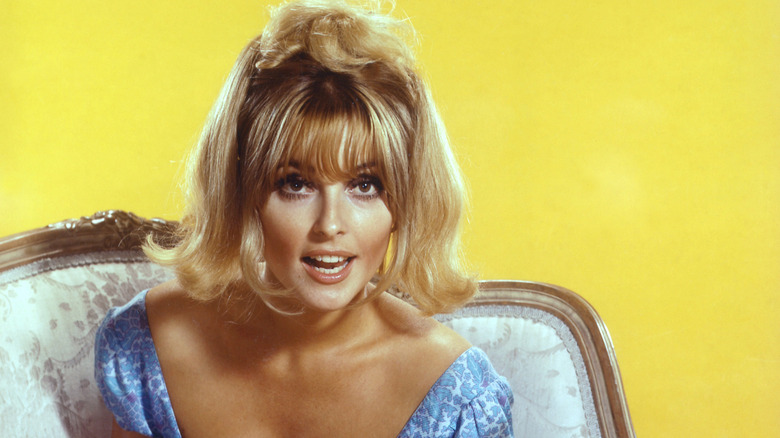
Before she became a movie star and 1960s sex symbol, Sharon Tate found her first big role on "The Beverly Hillbillies." The famous blonde idol is almost unrecognizable as Janet Trego, the dark-haired secretary at Commerce Bank of Beverly Hills whom Jethro Clampett is infatuated with. Tate appeared in 15 episodes of the show before her career hit the stratosphere in 1967 with her Golden Globe-nominated performance in "Valley of the Dolls."
Tate's appearances in "The Beverly Hillbillies" began soon after she signed a contract with Filmways, Inc., the studio behind the show. Initially, Tate was going to play Billie Jo Bradley on "Petticoat Junction," until Filmways founder Martin Ransohoff decided she needed to have more acting experience before being made a lead on a series. But seeing Tate's natural comedic talent, Ransohoff gave her a recurring role on "The Beverly Hillbillies" as a way to learn on the job. The black wig that hid Tate's hair was also his idea, which Tate explained in a Playboy interview (via Sharon Tate: A Life): "Mr. Ransohoff didn't want the audience to see me till I was ready."
Rob Reiner appeared in two episodes of The Beverly Hillbillies
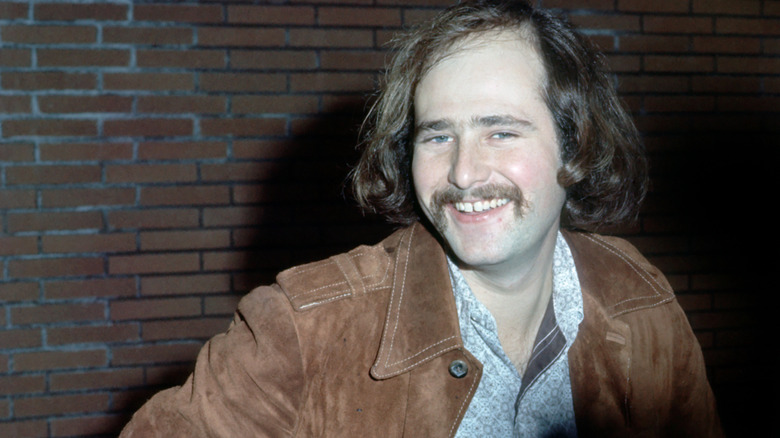
The son of Carl Reiner, Rob Reiner became famous for playing Michael "Meathead" Stivic, the long-haired liberal rival to Archie Bunker on "All in the Family." But two years before becoming a household name, Reiner guest-starred on two episodes of "The Beverly Hillbillies" as Mitch, a hippie who befriends Jethro Clampett.
Reiner couldn't have known it, but "All in the Family" actually led to the end of "The Beverly Hillbillies." 1960s TV was littered with simpler shows — often set in the South – that didn't challenge the viewer, and "The Beverly Hillbillies" sat high at the top of the charts. But when "All in the Family" began in 1971, the landscape changed almost overnight, heralding what some call "The Rural Purge." Critic Mitchell Hadley explained the phenomenon on American TV, saying, "Within the shows in the Rural Purge, the problem became that the perception was these shows weren't relevant, that they weren't speaking to today's issues."
Hadley went on to explain: "The success of 'All in the Family' demonstrated that the sitcom no longer had to try to have the broad demographic appeal or the cultural sociological appeal that the southern family-oriented, escapist shows had been providing in the past." CBS, which aired both "All in the Family" and "The Beverly Hillbillies," was quick to see where things were headed, and decided to place its bet on the Bunkers over the Clampetts. Just months after "All in the Family" premiered, "The Beverly Hillbillies" aired its final episode.
Julie Newmar traded in her catsuit for a bathing suit
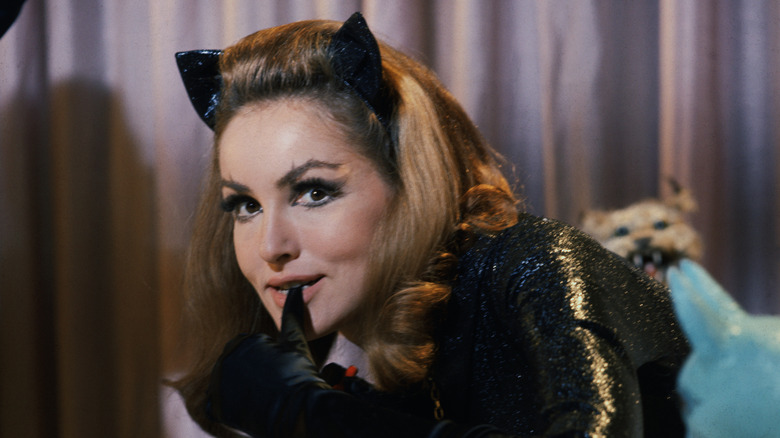
Not unlike Margot Robbie's transformation in "Barbie," Julie Newmar was famous for being able to mix her stunning good looks with wit and comedic timing, earning her a Tony Award for her performance in "The Marriage-Go-Round" in 1959. And while she is best known for playing Catwoman on the "Batman" TV series, Newmar was a staple of television throughout the 1960s, '70s, and '80s, guest-starring on everything from "The Twilight Zone" to "The Love Boat." Her many TV appearances even brought her to the Clampett home in the fourth season of "The Beverly Hillbillies."
In the episode, which aired the same year "Batman" began, Newmar plays the beautiful Swedish movie star Ulla Bergstrom, who moves into the Clampetts' home to study their southern accents for an upcoming role. Unsurprisingly, Jethro falls head over heels for the gorgeous actor. The episode's comedic bits contrast Newmar's statuesque figure and elegant demeanor with the more "country bumpkin" stylings of the Clampetts. The show wasn't afraid to follow in the footsteps of "Batman" — where Newmar wore a skin-tight outfit — by showcasing her in a one-piece bathing suit that accentuates her figure.
Hedda Hopper played herself on The Beverly Hillbillies
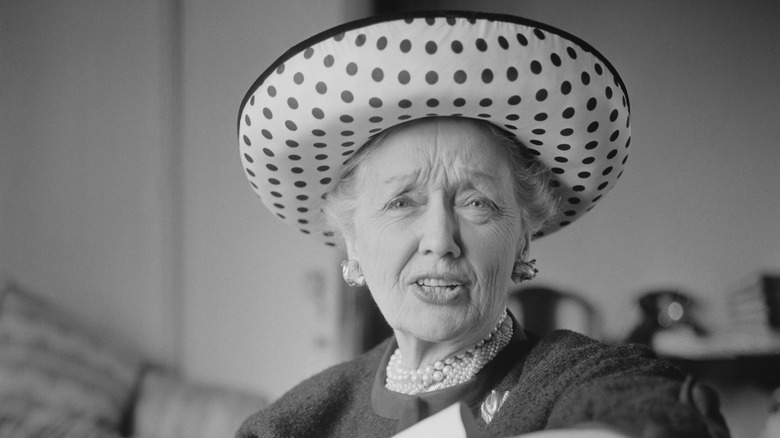
During her lifetime, Hedda Hopper was one of the most divisive figures in Hollywood, but in a business built around fame, she was too well known to ignore. Hopper had dreams of becoming a famous actor, but after failing to make it on Broadway and spending time as a B-movie actor, she finally found success as a gossip columnist. Hopper had a reputation for going after celebrities with a passion, and even played a role in the House Un-American Committee, going after several actors and filmmakers who were being investigated for communist ties in her columns to help turn the public against them. Through it all, Hopper played into her reputation, calling herself (per The Saturday Evening Post), "the b**** of the world" and dubbing her Beverly Hills home, "the house that fear built."
Hopper was so well-known that she often appeared as herself in movies and TV shows, including "Sunset Boulevard" and "I Love Lucy." In "The Beverly Hillbillies," she didn't just make a cameo; the whole episode, "Hedda Hopper's Hollywood," was built around her.
In the episode, Hopper turns to Jed Clampett and his millions in the hopes that he will save Mammoth Pictures, a failing movie studio. To show Jed how important the studio has been to the legacy of Hollywood, she takes him on a tour of the studio's Walk of Fame: a series of cement blocks with the handprints of stars forever saved in them. Not understanding Hopper's point, Jed gets to work filling in the handprints with new cement.