

Princess Diana's Brother Has Made Some Serious Claims About Her Car Crash
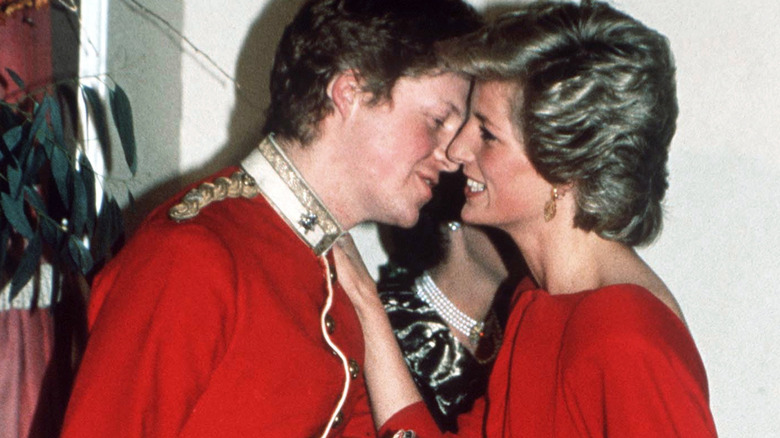
Princess Diana's brother experienced one of the worst days of his life on August 31, 1997. On this fateful day, Charles Spencer, 9th Earl Spencer, learned that his beloved sister had died following a car crash in Paris. This loss came as a shock, both to Spencer and the world. During her lifetime, Diana leveraged her fame to leave an extraordinary impact on the hearts and lives of people across the globe. She shed light on important issues — including the stigmatization of HIV/AIDS — and risked her life to support humanitarian causes, such as the abolition of landmines in war. Because her life had been so incredibly meaningful, Diana's death caught fans, family, and the royals totally off guard. The shock of it all led to conspiracy theories around Princess Diana's death, much to her brother's chagrin.
Indeed, Spencer has noted that the legend surrounding Diana seems to have taken on a life of its own. In a 2026 publication statement the BBC later quoted, Spencer said that he'd published a memoir about Diana to challenge "untruths that have become accepted over time." The final work, titled "Swan Song: Diana, My Sister," was Spencer's attempt to set the record straight regarding the late princess. One of its main topics? What really happened the night of Diana's fateful car crash. By reflecting on his painful past, Spencer shed light on the events surrounding the tragic accident.
Princess Diana's brother partially blames the BBC for the car crash
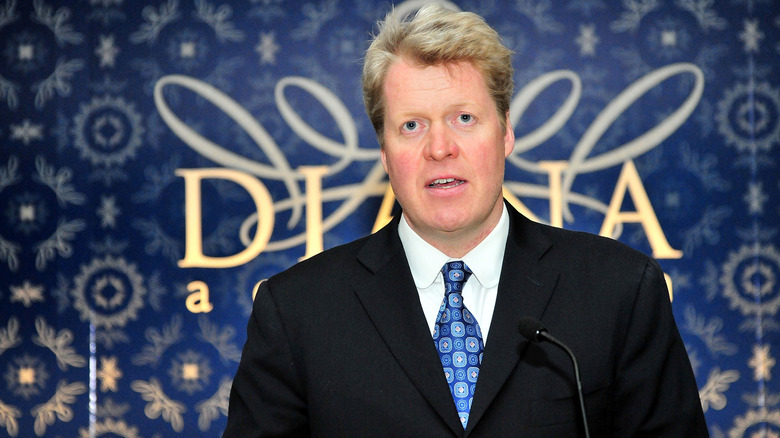
Since Princess Diana's death on that fateful day in 1997, her fans have blamed everyone from the royal family to MI6 for what went down. According to the princess' brother, however, the BBC was actually partially responsible for the tragedy that took Diana's life. Writing in his book, "Swan Song: Diana, My Sister," Charles Spencer, 9th Earl Spencer, recalled how Princess Diana was tricked into giving her infamous BBC interview. He explained how former BBC journalist Martin Bashir fabricated documents to convince Diana that Buckingham Palace was teeming with enemies who aimed to harm her. Apparently, Bashir cast doubts on many members of Diana's staff — including her usual chauffeur.
As Spencer wrote in "Swan Song," "One of the victims of 'Panorama's' lies was Diana's personal driver, who Bashir framed as an informant against her. That innocent man lost his job." As a result of this situation, Diana lost a relationship with a trustworthy chauffeur. And rather than travel about in his car, she began to circulate increasingly with Henri Paul — the driver who worked for the Al-Fayed family. Paul ultimately perished in the same car crash that caused Diana's death after getting behind the wheel under the influence. Thus, Spencer wrote, "I maintain that you can go further and draw a direct line between this 'Panorama' interview and Diana being driven by Mohammad Fayed's Henri Paul in Paris, on the night of 31 August 1997."
Princess Diana's fears of dying in a car crash were unrelated to the accident
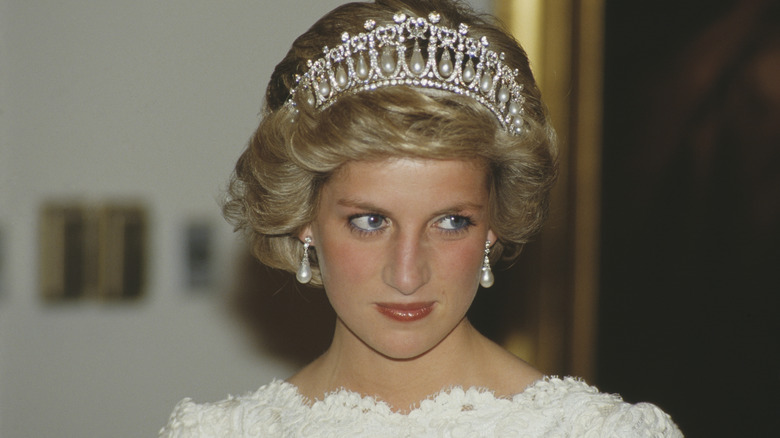
Princess Diana's brother, Charles Spencer, 9th Earl Spencer, has also admitted that the People's Princess was indeed afraid of dying in a car crash in the days leading up to her tragic accident. Whereas many conspiracy theorists have postulated that Diana was somehow aware of a potential plot against her life, Spencer said that the reality was much simpler. In his book, "Swan Song: Diana, My Sister," the earl explained how the lies BBC journalist Martin Bashir told Diana left the princess fearing for her life. "Diana was, I believe, persuaded that her life was in imminent danger. Somehow, she was conned into thinking that giving that interview to 'Panorama' was the best way to protect herself," Spencer wrote.
Of course, there are other theories as to why Diana was so on edge prior to her death. As Spencer relayed in his book, the princess' lawyer, Lord Mishcon, thought that she was suffering from symptoms of paranoia. After all, he found her concerns about dying in a car crash to be both illogical and unfounded. That said, Spencer maintained, "[W]hat Diana said was not the product of paranoia ... [but rather] the logical fear of a woman who had been repeatedly lied to by some unscrupulous journalists." Given that the BBC was so well regarded, the earl noted, it would only have been natural for Diana to believe what she'd been told.
At first, Queen Elizabeth II was apparently nonplussed by the accident
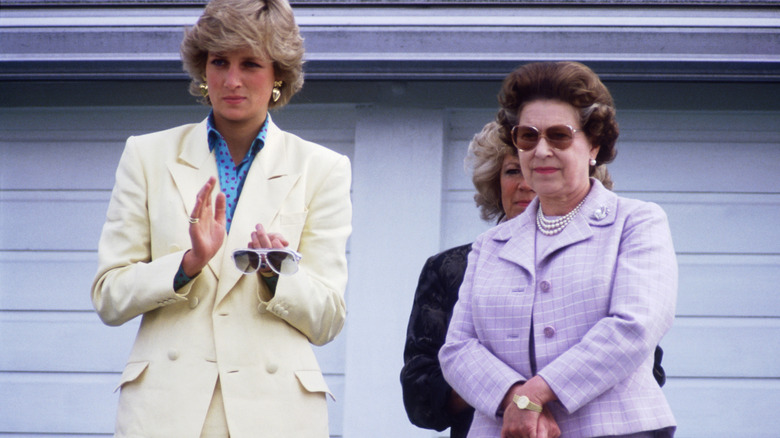
Princess Diana's brother, Charles Spencer, 9th Earl of Spencer, has claimed that Queen Elizabeth II was not originally concerned about the car accident that ultimately took her former daughter-in-law's life. In his memoir, "Swan Song," Spencer described the late monarch's initial reaction as rather nonplussed. He wrote, "When the queen had heard the first news of Diana's being in a traffic accident, she had asked tetchily, 'What is she up to now?'" While this reaction may seem bizarre, it's important to recall that, at the time, Diana had been the center of several salacious headlines, as she searched for an identity outside of the British royal family's strict lifestyle. The way that Spencer described things, it seemed as though the queen had perhaps tired of the news whirlwind that always seemed to zoom around the princess.
Spencer did admit, however, that the queen changed her tune after it became clear that Diana might not survive. Not only did Elizabeth worry about the well-being of her grandsons, Prince William and Prince Harry, but she also became concerned with Diana's legacy. As Spencer recalled in his memoir, "After Diana's death, the queen said she wanted Diana's coffin to be placed in the royal burial ground at Frogmore, near Windsor Castle, where princes and princesses generally end up." Although Spencer declined this offer, he recognized the significance of the gesture. It was the late queen's way of honoring Diana's royal status, if only in death.
Princess Diana's siblings originally thought the car wreck was no big deal
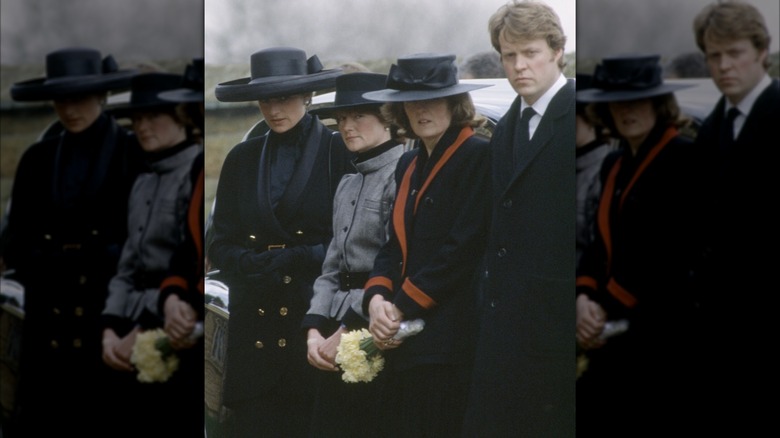
Queen Elizabeth II was not the only one to originally underestimate the gravity of Princess Diana's fatal car crash. The entire Spencer family also believed that Diana would pull through. Writing in his memoir, "Swan Song," Charles Spencer, 9th Earl Spencer, recalled thinking that the accident had likely been nothing serious. Apparently, his older sister, Lady Jane Fellowes, called to inform him of the crash. Spencer recalled, "She apparently had an injury — it might possibly be a broken leg, but nothing more than that." While the Spencer siblings did stay awake that night in hopes of hearing updates about their royal sister's condition, they hoped for good news. What they got instead was simply heartbreaking.
Describing the turn of events, Spencer shared, "The situation became more worrying. Diana had shattered her leg, Jane said. No, she had actually taken a blow to the head." It took quite a long time for the Spencer family to receive the news that both the driver, Henri Paul, and the other passenger, Dodi Al-Fayed, had died in the accident. At that point, they began to worry in earnest. It wasn't until Jane's husband, Robert Fellowes, received a terrible phone call from the palace that the family learned the truth. "That's it ... It's curtains ... Dutch is dead," Jane quietly told her brother. That moment caused a great deal of agony for Diana's beloved siblings.
The Spencer family was so shocked by Princess Diana's death that they couldn't speak
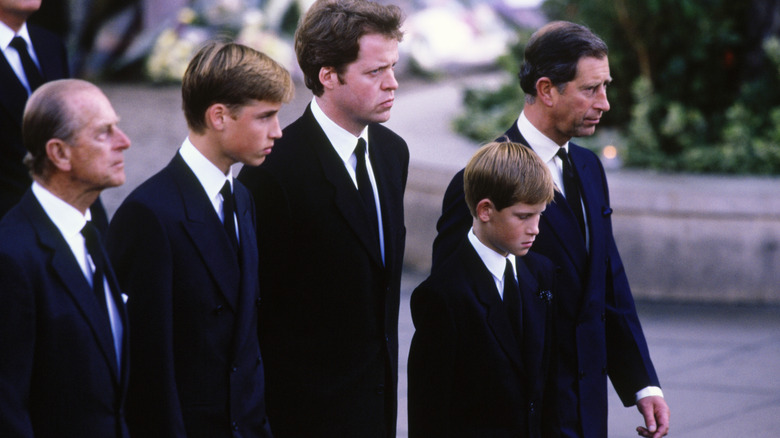
After Princess Diana's brother and sisters received the news of her death, they were at a loss for words. Although many families have been known to share their grief, the Spencers felt such massive shock waves at Diana's death that they literally could not speak to each other on the phone. As Charles Spencer, 9th Earl Spencer, recalled in his memoir, "Swan Song," it was so difficult to process Diana's death that language escaped him. After his sister, Lady Jane Fellowes, delivered the news, Spencer blurted, "Oh, God, Jane!" He then proceeded to disconnect the call, rather than join his siblings in shared grief. "Then, not knowing what I could possibly add, I hung up," Spencer wrote.
Interestingly, the Spencer family's unique reaction to this massive loss can be partially traced back to their heritage as members of Britain's upper class. In this subculture, large expressions of emotion are highly discouraged. As Spencer himself admitted in the same memoir, this was also true in regard to positive emotions. "Our parents might not have actually said they loved us, because that was the way of their class and of that time, but we knew that they did," he explained. In that sense, we can view the Spencers' initial inability to speak to each other as a sign of pain. Their loss was so great that they could not bear to continue the phone call.
King Charles III was allegedly happy to hear about Princess Diana's car crash
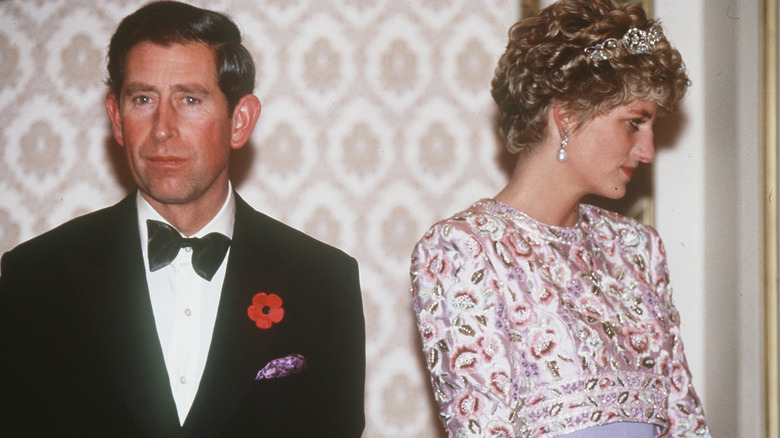
While Princess Diana's brother and sisters clearly struggled to process her untimely death, one person allegedly did not share in their grief. According to Charles Spencer, 9th Earl Spencer, Diana's ex-husband, then-Prince Charles, was oddly happy about her death. Writing in his memoir, "Swan Song," Spencer claimed, "Unlike my other callers, who were stunned, barely able to articulate their condolences and offers of help, he sounded giddily elated — like a lottery winner, I remember thinking at the time." During this phone conversation, Charles apparently told Diana's brother that Prince William and Prince Harry had already heard the news. "It all sounded strangely matter-of-fact, given the enormity of the disaster," Spencer opined.
Although this alleged reaction could be considered wildly inappropriate, Spencer offered a potential explanation. In his view, Charles was already hoping that Diana's death would allow him to marry Queen Camilla. A complete timeline of King Charles and Queen Camilla's relationship shows that the pair began their affair before Diana was even in the picture. The way that Spencer viewed things, "[T]he prince's first reaction must have been to think more of how this event might free him to marry the woman he loved, rather than appreciating the loss of the one he did not." He went on to note that divorce can change the way that two people view each other, even if they are royalty.
Reporters took a while to learn the truth about Princess Diana's crash
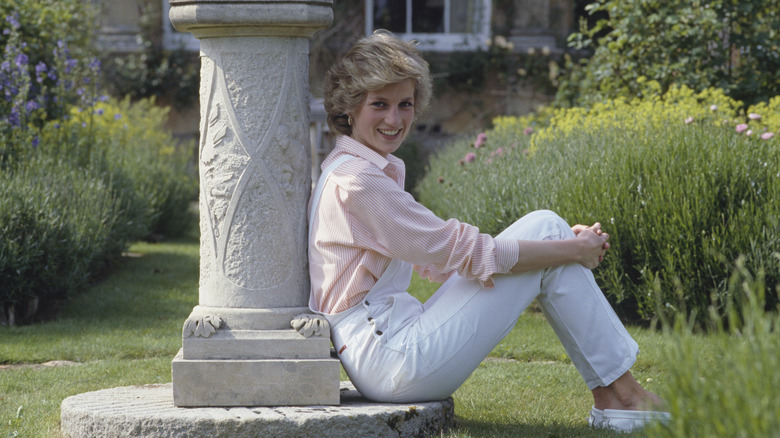
When Princess Diana's brother, Charles Spencer, 9th Earl Spencer, learned of his sister's passing, he was one of the only people in the world who knew the truth. While he reeled from the shock of Princess Diana's death, Spencer watched television commentators speculate over whether she might pull through. In reality, only a bodyguard named Trevor Rees-Jones survived the car crash. However, as they reflected on what was to come, the newscasters covering the disaster had no idea that the princess had already died.
Writing about this dreadful situation in his memoir, "Swan Song," Spencer recalled, "Knowing that Diana was dead, and that these absurd commentators had yet to register that fact — but must soon enough — was, I thought, the most extreme case of dramatic irony imaginable." Indeed, as he stared at the TV screen, Spencer only needed to wait until the tragic news reached them. During this strange interval when the journalists did not know the truth, Spencer said that he struggled terribly to reconcile what he saw on TV with the truth.
Throughout Diana's life, she struggled with the way the press had represented her. Even after her death, news outlets seemed to get things wrong. In fact, just hours before the gravity of the situation became clear, presenters spoke quite ill of Diana. According to Spencer, some news programs even seemed to blame her for having been in an accident at all.
King Charles III's team allegedly empowered the press following Princess Diana's accident
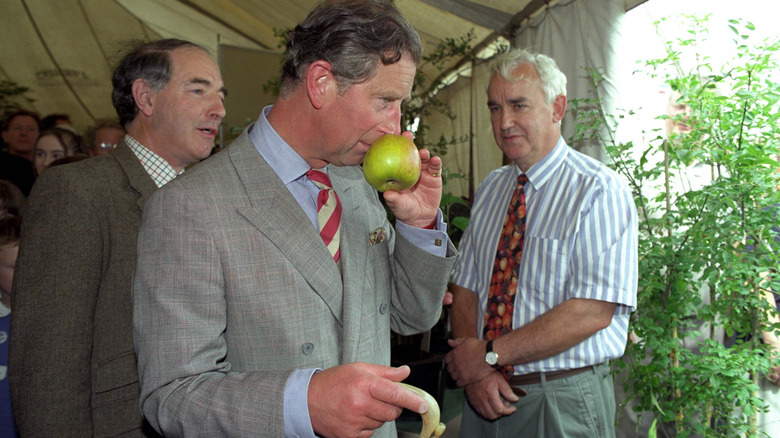
When Princess Diana died after that fateful car accident, her fans, including her brother, were aghast at the way the press had treated her. In the months prior to her death, headlines about the princess had been incredibly salacious. Diana then died in a paparazzi car chase, leaving the public utterly appalled. Had the media been responsible for the tragic loss of the People's Princess? What could tabloids change to prevent such a terrible tragedy in the future?
While these questions were helpful, Charles Spencer, 9th Earl Spencer, wrote that one very powerful man tried to empower the press following the accident. King Charles III apparently encouraged his team to tell unflattering stories about the Spencer family to The Royal Rota. As Spencer claimed in his book, "Swan Song," "But the tabloid press continued their retribution against me for several years, egged on by members of Prince Charles' household."
Fascinatingly, Spencer's account seemed to nod to the accusations Prince Harry made in his own memoir, "Spare." Like his nephew, Spencer alleged that people working for Charles had consistently shared stories about him to the press after Diana's death. The earl also seemed to corroborate Harry's claims by claiming that these stories also focused on other people in Charles' orbit. These parallels indicate that both Spencer and Harry were displeased with Charles' press strategy in the aftermath of Diana's death.
Princess Diana's nieces initially refused to believe that she'd died
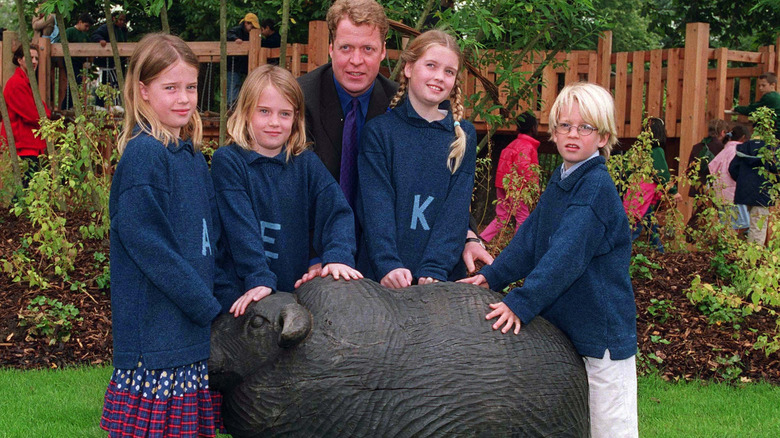
Princess Diana's brother had many conversations following that tragic car accident in Paris, but the hardest was arguably the one he had with his small children. At the time of Diana's death, Charles Spencer, 9th Earl Spencer, was living in South Africa with his kids. Just two months before the car wreck, Diana had traveled to Cape Town to spend time with Spencer and his little ones. This meant that on the day of her death, Diana's memory was fresh in the minds of her nieces and nephew.
Reflecting on the moment he broke the news to his children in "Swan Song," Spencer recalled, "I wanted to shield my angels from the ghastliness of the night's events." He quickly realized, however, that Princess Diana's nieces and nephew had the right to know what had gone down. "I'm afraid that Aunt Diana has — has died," he told them. Their first reaction? Denial. As Spencer wrote, "Five-year-old Eliza was the first to speak: 'But not in real life, Daddy?' she said." Spencer had to reaffirm that the news on the television was, indeed, a reflection of reality.
Sadly, Lady Eliza Spencer was not the only one who struggled to grapple with her aunt's death. Her cousin, Prince Harry, also admitted to doubting the veracity of the event in his memoir, "Spare." These instances of denial demonstrate the magnitude of the loss that reverberated throughout the family.
Princess Diana's brother fought against conspiracy theories related to the accident
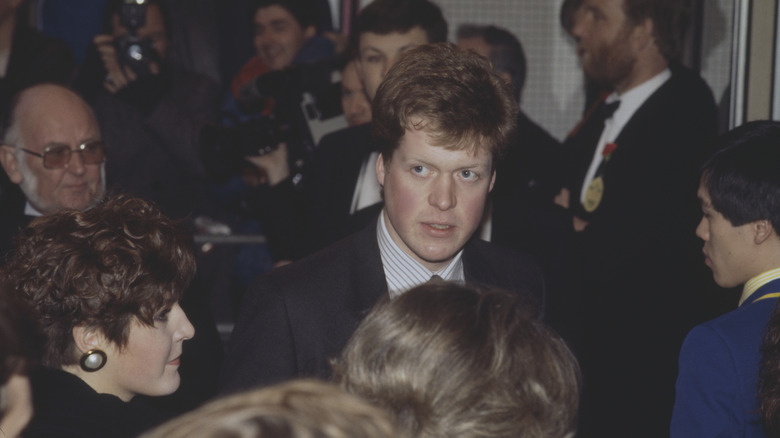
Princess Diana's brother, Charles Spencer, 9th Earl Spencer, has spent years protecting his late sister's legacy. One of the main challenges of that role has been separating fact from legend, especially when it comes to the conspiracy theories surrounding the late princess' car accident. Even in 2026, Spencer has found himself combating these incorrect ideas. As he told People, "I've never believed in the conspiracy theory, because if somebody was conspiring to kill somebody very high profile like that, I don't think that would be the manner that it would happen in." While he agreed that Diana would have been a likely target, he didn't find the circumstances of the accident suspicious.
In the same conversation with People, Spencer went on to say that the accident would have been impossible to stage. Apparently, Diana was not following a concrete driving route on the night of her death. Or, as Spencer put it, "First of all, nobody planned for Diana to go through that tunnel that night ... The fact that it ended up tragically being a car crash, I think, is purely a coincidence." That said, Spencer does not blame conspiracy theorists for testing out new ideas. The earl even seemed to hint that he would be open to unorthodox theories if they happened to make sense. "By the way, if I thought otherwise, I would say so," he reaffirmed. "I just don't see it."