

Quote Of The Day By Socrates: 'But If Death Is The Journey To Another Place, And...'

Much of Western philosophy as we know can be credited to Socrates. The famed Greek philosopher lived from 469 to 399 B.C. He was a foot soldier in Pericles' Athens. Yet, he soon became widely known for his philosophical teachings. He founded the Socratic method, which teaches through asking students questions, prompting critical thinking and reasoning until they come to the conclusion themselves, rather than simply supplying them with answers upfront.
Socrates did not write down his beliefs and teachings, himself. Instead, his thoughts have become known thanks to recordings from his students, namely fellow philosopher Plato. Socrates believed deeply in the importance of philosophizing and questioning everything. Yet, Socrates was clear about his awareness that neither he nor anyone knows everything and there is always more to examine and discover. Delving into and nurturing your soul, in Socrates' eyes, was far more important than any material concerns.
He was eventually put to death for his teachings, but he seemingly had no regrets about spreading the word about his beliefs. While on trial, he apparently told the court, "The unexamined life is not worth living" (via History). And that's why Socrates' unique view on death is today's quote of the day.
Quote of the Day by Socrates
"But if death is the journey to another place, and there, as men say, all the dead abide, what good, O my friends and judges, can be greater than this?" This Socrates quote comes from the "Apology." During Socrates' trial in 399 BCE, Plato recorded his speeches. This quote, in particular, comes from Socrates' speech after he was sentenced to death, demonstrating that, based on many peoples' beliefs about death, Socrates didn't think it was something to be feared.
Deeper Meaning of Socrates' Quote — If the afterlife has just judgment, we shouldn't fear death
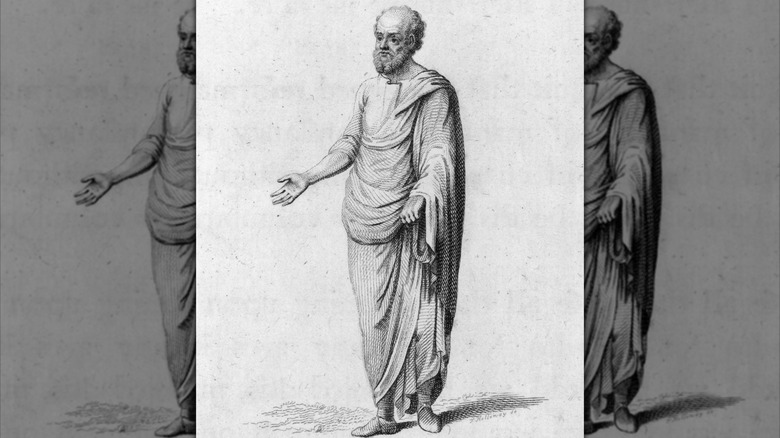
After receiving his death sentence, Socrates maintained his belief that there were many things about human existence that he didn't know for sure. What happens after death, he acknowledged, was one of those things. In his eyes, if it is true that there's a place all people will go after death, then he had no negative feelings about going there. Furthermore, while a judge sentenced him to death, the idea that he was going somewhere to be judged by a higher power made him feel at peace. Socrates didn't believe that teaching his philosophy made him deserving of punishment. Therefore, if he was headed somewhere after death with other good people, in his eyes, "that pilgrimage will be worth making,"
(via the Online Library of Liberty).
Most people wouldn't be as calm and composed as Socrates apparently was after receiving a death sentence. Yet the philosopher was confident he had lived his life how he should have — even if a judge disagreed. This reminds all of us to live our lives in a similar way. Remaining steadfast in our own beliefs is more important than abiding by others' rules. If you believe that what you are doing is right, nothing should stop you or affect your views. Today, it's as important as ever to stand up for what one believes in and allow those beliefs to lead us into the future unafraid.
More Quotes From Socrates

- "Either death is a state of nothingness and utter unconsciousness, or, as men say, there is a change and migration of the soul from this world to another."
- "Prefer knowledge to wealth, for the one is transitory, the other perpetual."
- "The only true wisdom is in knowing you know nothing."
- "He who is not content with what he has, would not be content with what he would like to have."
- "An unexamined life is not worth living."