

Quote Of The Day By Philosopher Seneca: 'Only My Vices, And The Outward Aids To These Vices, Have...'
We may receive a commission on purchases made from links.
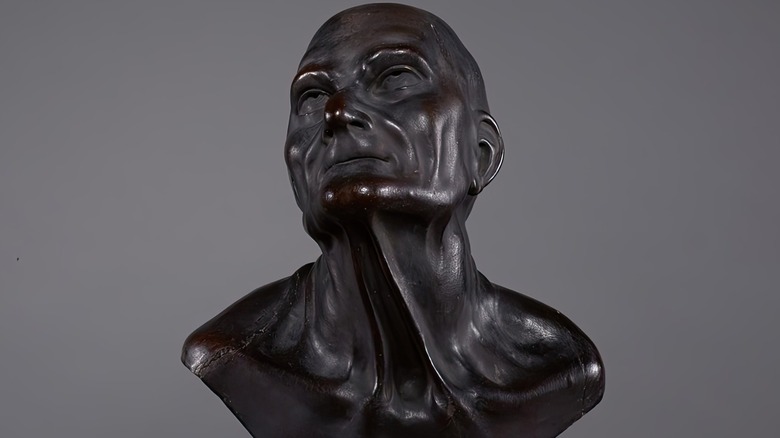
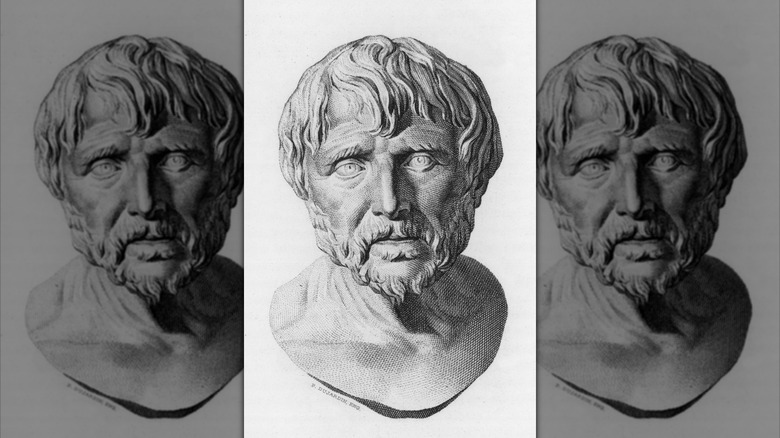
There are many ancient philosophers whose work still holds relevancy today. You may already be familiar with more famous faces like Socrates. However, another major (and sometimes forgotten) philosophical figure, who lived during the Roman Imperial Period, was Lucius Annaeus Seneca. Born around 4 BCE in Corduba, Spain, and living until 65 AD, Seneca first experienced Rome thanks to his aunt, who cared for the philosopher in his early years. While there, he received a robust philosophical education. Later, he began a political and legal career, attaining a position as an elected public official, and eventually, becoming advisor to several Roman emperors.
While he had quite an eventful political career, Seneca also became known as one of the fathers of Stoic philosophy, a consciousness that requires self-mastery, perseverance, and wisdom. He was also known for weaving together his philosophical writings with politics. Although his writing style often seemed autobiographical, it was actually more about opening discussion on questions he reflected on, inviting readers to think about them in terms of their own lives. Throughout his existence, Seneca wrote various essays, letters, dramatic plays, and even political satires.
Interestingly, even though Seneca grew up in a wealthy family and experienced much of the luxuries life had to offer, he believed living simply was the key to a good life and wealth isn't the most important thing. Throughout his many writings, he explored themes of grief, the pursuit of happiness, morality, resilience, and aging. And, the Stoic philosopher's writing often contained practical advice, making it helpful and relevant, even today, including our chosen quote of the day.
Quote of the Day by Seneca
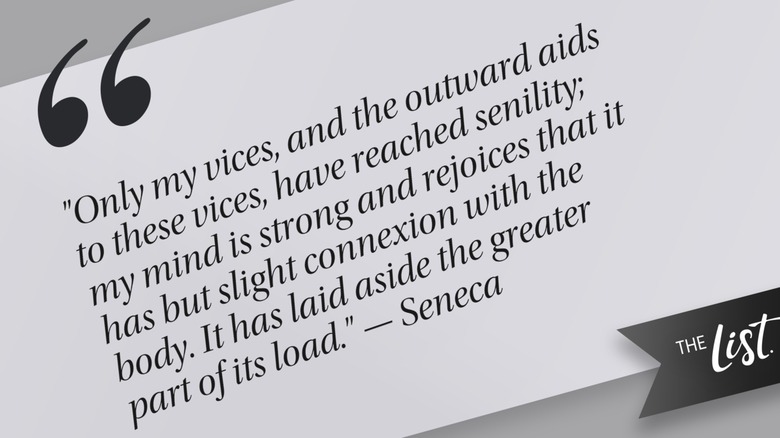
Seneca once said, "Only my vices, and the outward aids to these vices, have reached senility; my mind is strong and rejoices that it has but slight connexion with the body. It has laid aside the greater part of its load." This quote is from one of his most famous works, "Moral Letters to Lucilius," a collection of 124 personal letters that delves into the themes Seneca often explored in his work, including morality, time, death, wealth, and friendship. This particular quote speaks about how growing older can bring a sense of peace and freedom, but at the same time, it also invites readers to consider the negative impact excessive materialism can have.
Deeper Meaning of Seneca's quote — Peace is found when you aren't driven by material gain
Seneca often wrote in his work about wealth and how it invited particular vices — whether it was things like excessive drinking or hoarding material possessions. With this quote, the Stoic philosopher reflected on how he grew tired of those things as he got older, and with age came wisdom. Seneca didn't feel weak in mind or body — the only things that lost grip on him were his previous way of living and the pitfalls that came with it. Instead of grieving the loss of his old self, he expresses a sense of relief and peace.
Seneca is also inviting the reader to think about the pursuit of wealth and other desires, and if it's truly going to make them happy. Although he lived during very different times, the wisdom of this idea is still relevant today. We live in the age of instant gratification — everything is at our fingertips. Streaming, food delivery services, and next-day Amazon Prime shipping make it easier than ever for us to acquire material things, but Seneca invites us to reconsider whether those are what truly make us happy or not.
As we grow older, it's important to slow down and focus less on the material and more on what truly matters: Virtues like love, wisdom, and kindness. Seneca reminds us that it can be freeing to spend less time concerned about the newest iPhone. Instead, you can find a sense of peace in knowing that you don't have to constantly strive for more.
More quotes From Seneca
- "Sometimes even to live is an act of courage."
- "True happiness is to enjoy the present, without anxious dependence upon the future, not to amuse ourselves with either hopes or fears but to rest satisfied with what we have, which is sufficient, for he that is so wants nothing. The greatest blessings of mankind are within us and within our reach. A wise man is content with his lot, whatever it may be, without wishing for what he has not."
- "All cruelty springs from weakness."
- "It is not the man who has too little, but the man who craves more, that is poor."
- "We suffer more in imagination than in reality."