
The Complete Transformation Of Laverne & Shirley Star Penny Marshall
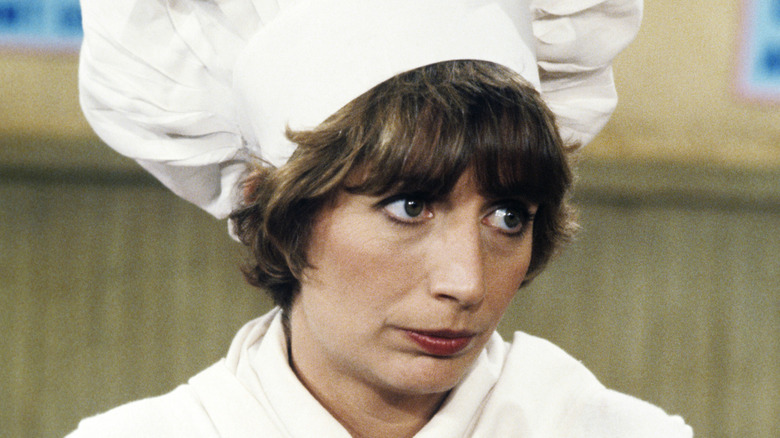
Few TV series of the 1970s became as instantly popular as "Laverne & Shirley." The spinoff of mega-hit "Happy Days" premiered in January 1976, and was an immediate ratings grabber. Like its predecessor, the series was set in Milwaukee in the 1950s, focusing on the titular Laverne DeFazio (played by Penny Marshall) and roommate Shirley Feeney (Cindy Williams, who died in 2023), who toiled by day in the Shotz Beer bottling plant while getting up to an endless array of sitcom shenanigans in their spare time.
The show proved to be a star-making vehicle for Marshall. When the series ended its successful eight-season run in 1983, she could have had her pick of any sitcom on television. Instead, she pivoted to a whole new career behind the camera, ultimately becoming one of Hollywood's most successful film directors while blazing trails for women in an arena traditionally dominated by men.
Yet that's only one part of the journey of the multitalented actor, director, and producer who starred in one TV's most beloved sitcoms while also making some of the biggest movies of the 1980s and '90s. To find out more, read on to explore the complete transformation of "Laverne & Shirley" star Penny Marshall.
Her mother was a dance teacher who pushed her toward performing
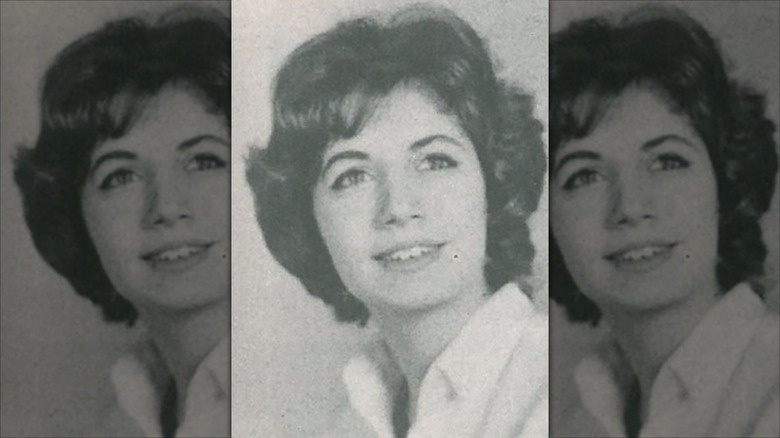
Penny Marshall was born in 1943. A native of the Bronx, that was where she spent her formative years. "To me, it was the center of the universe, at least the only universe that mattered," Marshall wrote in her 2012 memoir, "My Mother Was Nuts." "I grew up never knowing north, south, east, or west. I only learned uptown, downtown, and 'We're going to Alexander's,'" she added, referencing the popular Bronx department store.
When she wasn't at school, she could be found in her mother's dance studio. For Marshall, dance training began pretty much as soon as she was able to walk. "At 11 months, I learned to do a backbend, an arabesque, and a somersault," Marshall wrote, recalling she was just 4 when she performed in her first dance recital.
Dance was a big part of her childhood, but not by her choice. "By 8 years old, though, I hated every minute of the hour-long classes," she admitted. The youngster eventually progressed up the dance ladder to study ballet, but that didn't change her attitude. "I hated ballet," she wrote. Though she wanted to quit, her mother wouldn't hear it, pushing her daughter onstage whenever and however possible. "My mother had us entertain at any place that would feed us," she added. And while she may not have enjoyed the dancing, she discovered that she loved to perform, possessing an innate ability to entertain.
She got married (and then divorced) after getting pregnant at 19
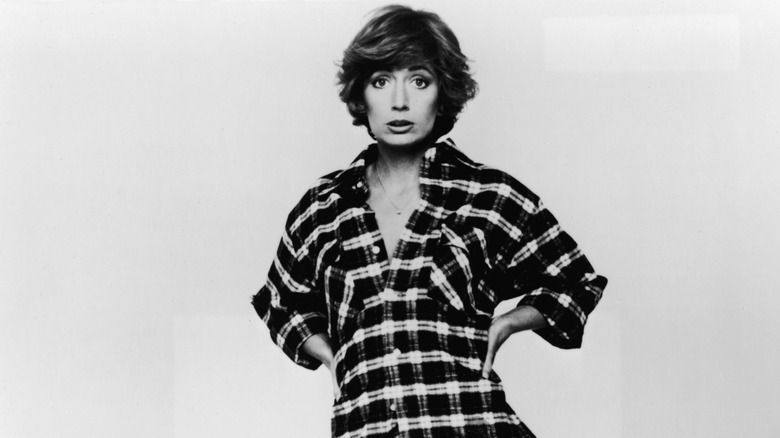
After graduating from high school, Penny Marshall attended college in New Mexico. It was there she met fellow student Michael Henry. They began dating, and she soon became pregnant. "I was just 19, and he was younger," Marshall recalled in a 2012 interview with Newsweek. At that time, in the years before Roe v. Wade, ending the pregnancy was not an option — at least not a safe one.
Feeling they had little choice, the two teenagers decided to get married. Their wedding took place in November 1963, falling on the weekend John F. Kennedy was killed. "All that was on the TV during our honeymoon in a motel was the funeral, which set the tone," she wrote. They welcomed a daughter, Tracy Henry, but the marriage didn't last long. Realizing they were far from a perfect match, Marshall and Michael divorced in 1966.
Looking back on her accidental pregnancy, Marshall eventually came to see it as an unexpected blessing. "What I thought was a major, life-changing mistake that could have given me a scarlet A ended up giving me a wonderful family," the grandmother of three said.
Meeting Rob Reiner changed her life
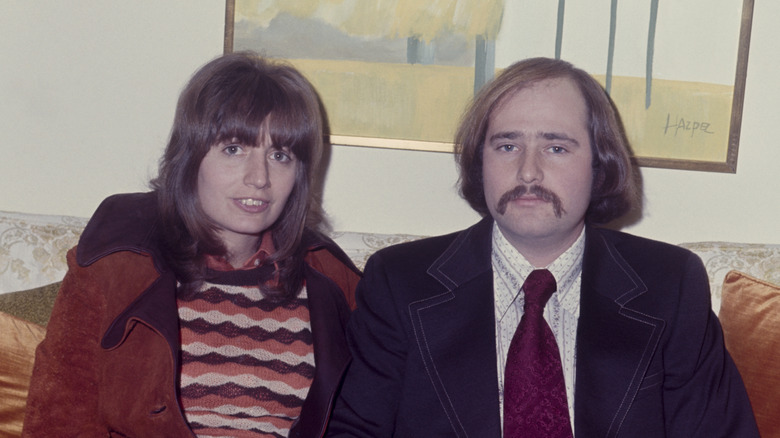
After her divorce, Penny Marshall followed her brother, Garry Marshall, to Hollywood. He'd experienced success as a comedy writer, and she wanted to break into acting. Before long, she began landing some small roles in TV shows, including "That Girl," "Love, American Style," and others.
In 1970, she auditioned for a new sitcom called "All in the Family," trying out for the role of Gloria Stivic (which ultimately went to Sally Struthers). It was there she met Rob Reiner, who auditioned for the role of Gloria's husband, Mike, and got the job. They began dating, and after a brief courtship, they got married in 1971. Rob would go on to adopt Marshall's daughter, Tracy Reiner (née Henry), and raise her as his own child.
While he was, like her, an aspiring young actor, Rob Reiner was also something of a Hollywood scion, son of Carl and Estelle Reiner. Rob's father was a comedy icon; not only did he create "The Dick Van Dyke Show," he went on to experience massive success alongside Mel Brooks with their "2,000 Year Old Man" comedy albums. "All in the Family" was not an instant hit; its debut episode landed in 55th place in the Nielsen ratings, but word of mouth led to viewer curiosity. Before long, it rocketed to No. 1 — a spot it would return to regularly throughout the next few years. Before long, Marshall found herself married to a celebrity, star of television's most popular and controversial new series. At the time, Marshall didn't realize she'd eventually experience similar success — although it would take a few years.
Her brother cast her in a TV hit
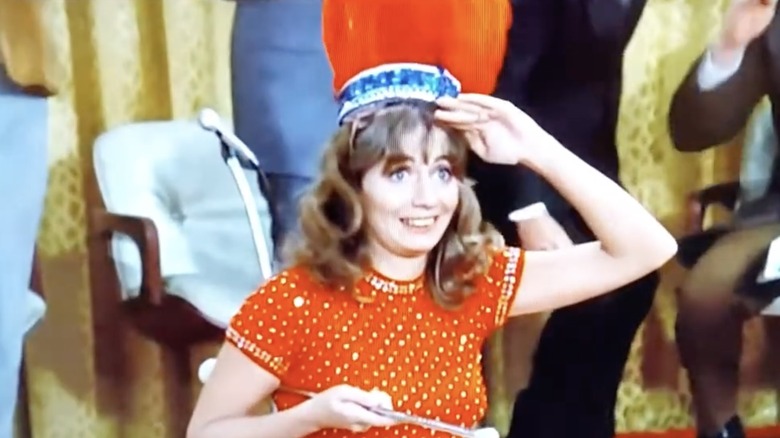
During the early 1970s, Penny Marshall built up a slew of credits in film and television, appearing in the likes of "The Bob Newhart Show," "Banacek," and other TV shows of the era. Her big break came in 1972, courtesy of her brother Garry Marshall. He was putting together a TV version of "The Odd Couple," originally a Neil Simon play that was made into a hit movie. He cast her in the recurring role of Myrna Turner, quirky secretary of sportswriter Oscar Madison (played by Jack Klugman).
Thanks to her gift for physical comedy (she even leaned into her dance background for an episode that featured Myrna performing a baton-twirling cheerleading routine), the character became a fan favorite. "And all I did was whine," she said in a 2013 interview with the Television Academy Foundation, admitting her character's primary function was to provide exposition that moved the plot forward. "'You look tired, you should go on a cruise.' It was that kind of a part," she explained.
During her years on "The Odd Couple," she picked up a lot of new sitcom skills, ranging from technical aspects like hitting the right mark to the tricks of the trade when delivering zingers in front of a live studio audience. "But I learned a lot on that," she said of the expertise she gained.
Laverne & Shirley made Penny Marshall a star but ended her marriage
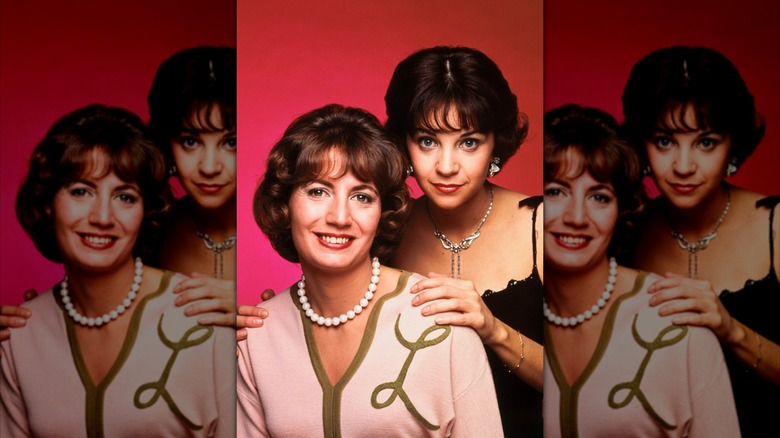
Garry Marshall began to expand his TV empire with the sitcom "Happy Days," which debuted in 1974. As ratings grew, the network was eager for Marshall to replicate its success in a spinoff. That led him to introduce two new characters in a 1975 episode of "Happy Days" played by his sister, Penny Marshall, and "American Graffiti" star Cindy Williams, and see how they landed with the audience. In that episode, the chemistry between Marshall and Williams was palpable. "We had something special," Marshall wrote in "My Mother Was Nuts." "Everyone who saw our 'Happy Days' episode agreed."
The result was "Laverne & Shirley," which premiered in early 1976 and became an out-of-the-box hit. Marshall literally became a celebrity overnight; as she wrote in her memoir, "we woke up the next day as the stars of the No. 1-rated show in the country."
For Marshall, however, there was a downside. "The feat was great for my career, but not so great for my marriage," she wrote, revealing the show that "Laverne & Shirley" displaced from the No. 1 spot was "All in the Family," an awkward situation that sparked friction with husband Rob Reiner. "I was apologizing," Marshall recalled when interviewed for the book "Is That a Gun in Your Pocket?: Women's Experience of Power in Hollywood." "It got to where I knew it would cause trouble." Her assessment was correct; Marshall and Reiner divorced in 1981, ending their 10-year marriage. "It's still sad that Rob and I didn't work it out," she told The Hollywood Reporter, three decades after their split.
A new career opened up when she began directing television
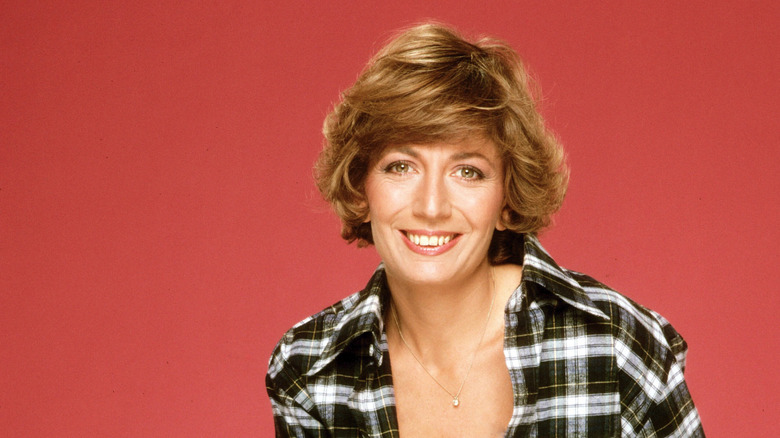
As "Laverne & Shirley" settled into its successful run and the years passed, Penny Marshall hungered for a new challenge. That arrived with the opportunity to direct a 1979 episode of the show. That went well enough that was invited to direct a few more, ultimately directing four episodes of "Laverne & Shirley." As she wrote in "My Mother Was Nuts," she received some pointers from pal Steven Spielberg. "Steven compared directing to babysitting," she wrote. "He jokingly pointed out that I already sat on the phone with half of Hollywood at night, dispensing advice. Why not get paid for it?"
When two "Laverne & Shirley" writers landed a deal to shoot a pilot for a sitcom — "Working Stiffs," starring Michael Keaton and Jim Belushi — they asked Marshall if she would direct it. "Well, you're down at the bottom of the barrel, aren't you," she recalled telling the writers in jest, but agreed to take it on.
Further opportunities came. Producer Don Simpson approached her about directing her first movie, a comedy based on the book "The Joy of Sex." That fell through, but then another friend, actor Debra Winger, asked her to direct "Peggy Sue Got Married." Marshall was hired for the job — but not for long. Just a few weeks into pre-production, she was fired when producers suffered buyer's remorse, believing the film was too ambitious for a first-time director (Francis Ford Coppola stepped in to take over). However, they promised to find her a movie to direct that would be more in her wheelhouse.
She was 'scared stiff' when directing her first movie
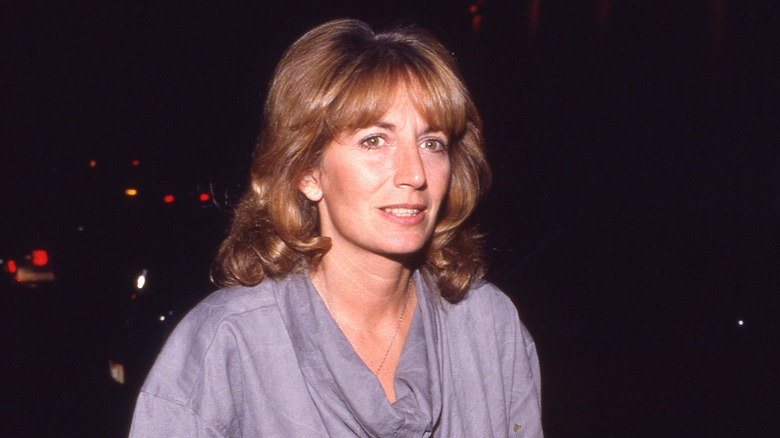
Serendipity raised its head when Penny Marshall went to dinner one evening with pal Whoopi Goldberg in the mid 1980s. By then, Goldberg was already a bona fide star, a comedy sensation who'd also received rave reviews for her intense dramatic performance in "The Color Purple." Goldberg had recently started shooting a new movie called "Jumping Jack Flash," but it wasn't going well. A few days after their dinner, Marshall received a phone call from the film's producer, informing her they'd fired the entire creative team — including the director. "They wanted me to take over," she wrote in her memoir.
She took the job, but stacked the deck by calling in favors by enlisting some of her famous friends to appear in the film. "I brought in Jon Lovitz, Phil Hartman, Lynn Marie Stewart, Carol Kane, Jim Belushi, and my brother, who played a detective," she wrote. Meanwhile, she was getting a trial-by-fire education in filmmaking. "My days lasted 20 hours, and it was all I could do to keep up," she wrote. "I was scared stiff," she said in the Los Angeles Times in 1986 of becoming a first-time director.
When the film finally came out, reviews weren't great, mixed at best. That was particularly true when it came to assessments of Marshall's directing abilities. "Under the shaky hand of director Penny Marshall, the story doesn't even achieve coherence," wrote film critic Roger Ebert. While reviews like that did not suggest a bright future in directing, her luck was about to change when producer Jim Brooks dropped a script on her desk, insisting it should be her second film. Its one-word title: "Big."
She struck Hollywood gold with Big
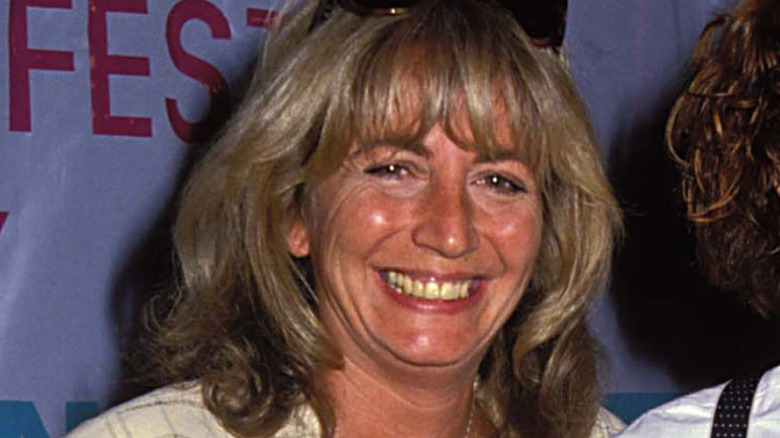
If "Jumpin' Jack Flash" wasn't the hit she'd hoped for, the same cannot be said of her second film. In "Big," Penny Marshall gave the starring role to Tom Hanks, part of his stunning transformation. Hanks starred as a 13-year-old boy who is magically transformed into a grown-up, and delivered a career-defining performance. This time, reviews bordered on ecstatic — Roger Ebert, who'd criticized her directorial debut, praised Marshall in his review — while the film brought in nearly $115 million at the box office.
Like her first film, her second also proved to be illuminating for the rookie director. "'Big' was an education," she wrote in "My Mother Was Nuts." According to Marshall, her inexperience led to some unfortunate and costly blunders along the way — missteps that she would not repeat in future films.
Meanwhile, exceeding the $100 million mark propelled her into the annals of Hollywood history. "My brother and others told me that it made me the first woman to direct a movie that reached and surpassed that magic milestone," she recalled. The success of "Big" was undeniable. She was suddenly being taken seriously as a filmmaker, presented with A-list projects for her highly awaited follow-up to "Big."
She broke the glass ceiling as one of Hollywood's most successful directors
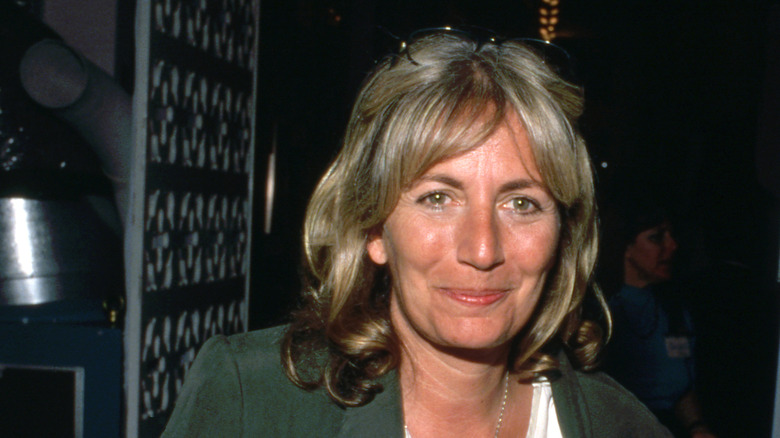
After "Big," it would certainly have made sense for Penny Marshall to direct another lighthearted comedy. However, she eschewed those expectations by making a film based on "Awakenings," the memoir of neurologist Oliver Sacks. Sacks pioneered trailblazing research into a drug called L-DOPA, which revived patients who'd spent decades in a catatonic state. Marshall cast Robert De Niro as a patient, and Robin Williams as Sacks. Despite the lessons she'd learned from her previous movies, production was not without its hurdles — such as the time when Williams accidentally broke his co-star De Niro's nose on the set. When completed, though, the 1990 film was widely praised by critics, although it only racked up about half the box office of "Big."
She followed that up with what would become an instant classic flick about an all-female baseball team in the 1940s. For "A League of Their Own," she assembled an all-star cast headed by Geena Davis, "Big" alum Tom Hanks, Rosie O'Donnell, and Madonna. The latter two struck up a bond on the set of the movie, and the childhood tragedies they'd experienced helped bond O'Donnell and Madonna as forever friends. Reviews were through the roof — as was the box office, earning even more than "Big" had worldwide.
By this point, it was clear that Marshall was no flash in the pan. Over the next few years, she continued to make movies, including "Renaissance Man" in 1994, "The Preacher's Wife" with Whitney Houston in 1996, and the Drew Barrymore-starring "Riding in Cars with Boys" in 2001. The latter, however, would be her final feature film.
Penny Marshall received a devastating diagnosis
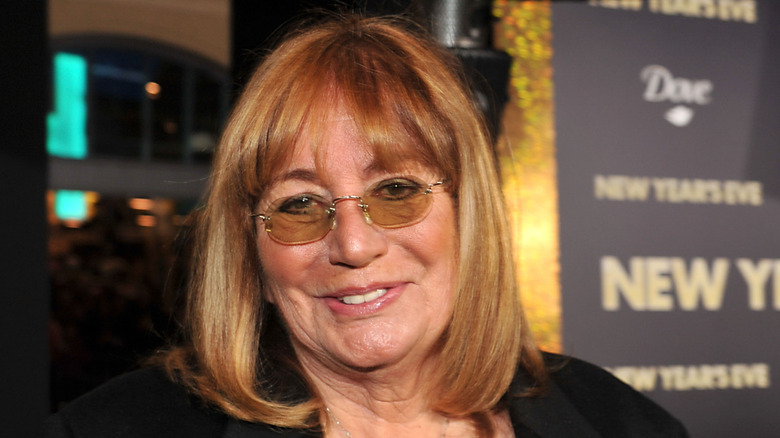
In 2009, Penny Marshall and brother Garry Marshall were speaking at a gala in New York City when she began feeling dazed. When that feeling persisted, she was taken to an emergency room, where a doctor offered a dire diagnosis: she had lung cancer, which metastasized to her brain. She underwent brain surgery, with the tumor successfully removed.
When she returned to Los Angeles, Penny began undergoing an aggressive treatment of radiation and chemotherapy to address her lung cancer. That proved to be effective, and she subsequently announced the cancer went into remission. Surviving cancer, she wrote in her memoir, sent her into soul-searching mode. "Should I be doing more with my life?" she asked herself, revealing she even turned to the internet. "One day I got on my computer and searched for 'What do people do with their lives after surviving cancer?' Nothing came up," she wrote.
One thing she did do was write her memoir, with "My Mother Was Nuts" published in 2012. "I can't say I'm excited about the Yankees losing, or there not being a basketball season yet, but I am excited about writing this book," Penny said in a statement she'd issued to The Hollywood Reporter. "People have always asked me how I got from the Bronx to Hollywood, so I thought it was time to tell how it all happened. I have had many lives (not in the Shirley MacLaine sense) and you will hear about them all ... just don't expect any recipes ... I don't cook."
She'd mostly retired from directing before her death in 2018
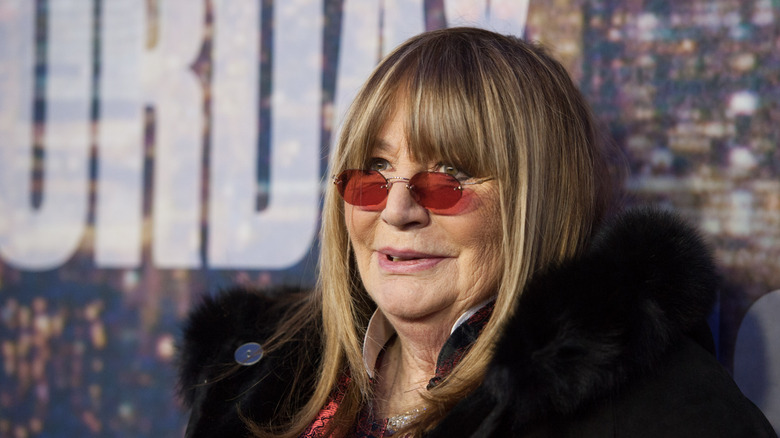
After the publication of her memoir, Penny Marshall laid low, spending time with her friends and family, especially her beloved grandchildren. She continued to take on the occasional acting role, including a guest spot in sitcom "Mulaney," lending her voice to a Scooby-Doo movie, and narrating her brother Garry Marshall's 2016 film "Mother's Day." She also took a guest-starring role in the Matthew Perry-starring sitcom reboot of "The Odd Couple." The appearance was something of a full-circle moment, considering how important the original "Odd Couple" was during the early stages of her career. What's more, that 2016 episode was a tribute to her brother, Garry, who died earlier that year.
Penny also returned to filmmaking, starting work on "Rodman," a documentary on former Chicago Bulls star Dennis Rodman. Sadly, she didn't live long enough to see "Rodman" through. The film was only partially completed when she died in December 2018 at age 75. The cause of death was stated as complications from diabetes.
Penny truly lived an extraordinary life, which she summed up in the introduction to her 2012 memoir. "I'm not someone who's had to deal with much personal drama outside of the usual: growing up with parents who hated each other, two marriages and divorces, the ups and downs of various relationships, raising a daughter and watching friends crack up and overdose. There was the cancer thing, too," she wrote. "As you can see, though, there's nothing out of the ordinary, nothing that most people don't go through, nothing that says, 'Penny, you were lucky to get through that one.'"