
'60s TV Characters With The Most Iconic Fashion
Ask anyone who was there, and they'll tell you that the 1960s were an incredibly pivotal decade. This era brought us landmark cultural events like the Civil Rights Movement, the Moon Landing, and Woodstock. The British Invasion came roaring in, introducing us to bands like the Beatles and the Rolling Stones. Andy Warhol and Roy Lichtenstein dominated the art world, and Yves Saint Laurent unveiled his famous Mondrian Dress. While all this was going on, Americans were glued to their televisions. In the 60s, television was the premier form of mass media, with some 90% of families owning a TV set.
As society changed, so too did the fashion landscape. Rooted in rebellion and individualism, '60s fashion railed against conformity and challenged the modesty standards put forth during the previous decade. Mod fashion appeared on the scene, emphasizing trends like miniskirts, shift dresses, and color-blocking. Then came the Youthquake movement, which popularized bold, vibrant patterns and go-go boots. Bolstered by massive marketing campaigns, these trends became the core of 1960s fashion.
It wasn't long before fashion and television converged, giving rise to some of the greatest fashionistas of the decade. From "Bewitched" to "I Dream of Jeannie," '60s sitcoms are a treasure trove of groovy and far-out looks. That said, let's take a look back at our favorite '60s sitcom stars and their iconic wardrobes.
Morticia Addams was the original goth on 'The Addams Family'
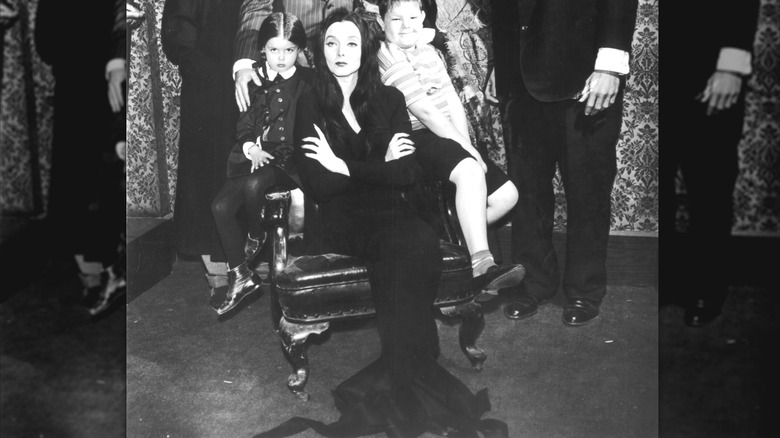
By the time Jenna Ortega starred in Netflix's "Wednesday," Wednesday Addams and her kin had long been a cultural phenomenon. "The Addams Family" premiered on television in 1964 and was based on a comic series from the 1930s. The show centered around Gomez and Morticia Addams, along with their morose offspring, Wednesday and Pugsley. Fans adored the series, not only for its bizarre storylines but also for its wholesome messaging. Despite being a family of outcasts, the Addams loved and supported each other unconditionally.
Morticia Addams was originally played by Carolyn Jones, who brought endless charm and humor to the role. In addition to her acting chops, Jones embraced Morticia's broody, whimsical wardrobe, including tight silhouettes, gauzy textiles, and a smattering of black fabric. Morticia's clothing was nothing short of iconic: In addition to nailing the goth aesthetic, the diligent layering and plush fabrics made her look like a fashion model.
After the series ended in 1966, Jones' Morticia Addams remained one of the foremost goth babes of the 20th century. Speaking to Elle in 2020, costume designer Ruth Meyers said that fashion was an integral part of Morticia's character. "I always had this fantasy that Morticia...would have a day dress, [a] dress for the afternoon, and a dress for dinner," explained Meyers, who designed the costumes for the 1991 movie adaptation of "The Addams Family." "By the afternoon, she was getting more exotic and by the evening, she was a peacock encrusted in jet and beautiful lace."
Endora cast a sartorial spell on 'Bewitched'
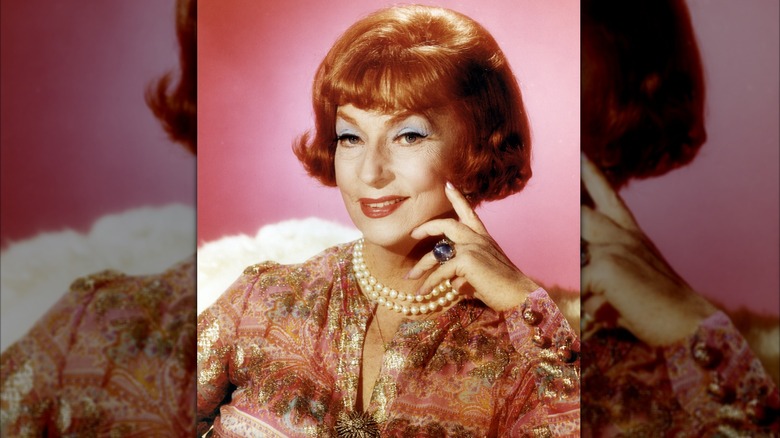
"Bewitched" was a blockbuster sitcom starring Elizabeth Montgomery as Samantha Stephens, a witch with supernatural powers. Hijinks abound when Samantha marries Darrin, a mortal, and tries to distance herself from the world of magic and curses. The series debuted in 1964 and went on to enchant audiences for eight seasons. Many of Samantha's conflicts involved her mother, Endora, the hard-nosed yet loving matriarch played by Agnes Moorehead. In addition to her snarky comedic style, Endora's fashion left an indelible mark on '60s pop culture.
At times, Endora was the poster woman for Youthquake fashion, a '60s trend defined by bold colors, funky patterns, and baby doll silhouettes. Endora's meticulous bob and signature winged liner were equally integral to her character.
Endora also pulled inspiration from the mod movement, which emphasized large collars, color blocking, and bold patterns. Ultimately, this witchy diva embodied a spectrum of '60s trends and became one of the most stylish TV characters of her time. Moorehead died in 1974, thus joining the roster of "Bewitched" stars we've sadly lost. However, her sartorial legacy lives on. Decades later, Endora is a fixture on Pinterest boards, social media posts, and editorial tributes to 1960s fashion.
Barbara Eden's 'I Dream of Jeannie' getup was iconic and controversial
The 1960s marked a time of radical progress in America. As the Civil Rights Era ramped up, spearheaded by figures like Martin Luther King Jr. and Malcolm X, feminist activists saw an opportunity to advance their own cause. The women's movement nabbed several victories during this era, including the passage of the Equal Pay Act and broader access to contraceptives. As feminism spilled into fashion, the '50s housewife aesthetic faded away, giving rise to not-so-modest trends like miniskirts and shift dresses.
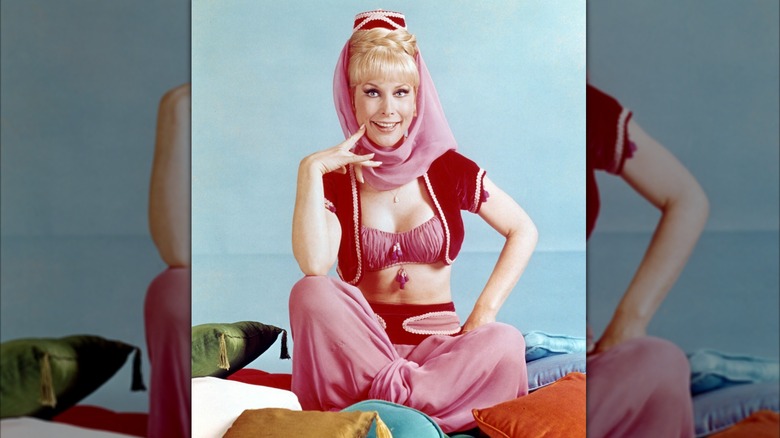
"I Dream of Jeannie" channeled this shift when it premiered in 1965. The series focused on Jeannie, a mythical genie who is accidentally summoned into the real world by her future husband, Tony. Throughout the series, Jeannie famously wears pink harem pants, a ruched bra top, and a cropped red bolero — a remarkably racy look for 1960s television.
According to Barbara Eden, who starred as Jeannie in the series, Jeannie's costume caused a massive uproar among TV executives. The network ultimately decided that Jeannie could show her midriff, but not her belly button. "Here was this long oak table with all these suits around it," Eden recalled to Foundation Interviews. "And it was a very serious meeting, talking about my bellybutton and whether it should or should not be seen."
Laura Petrie's pants were revolutionary on 'The Dick Van Dyke Show'
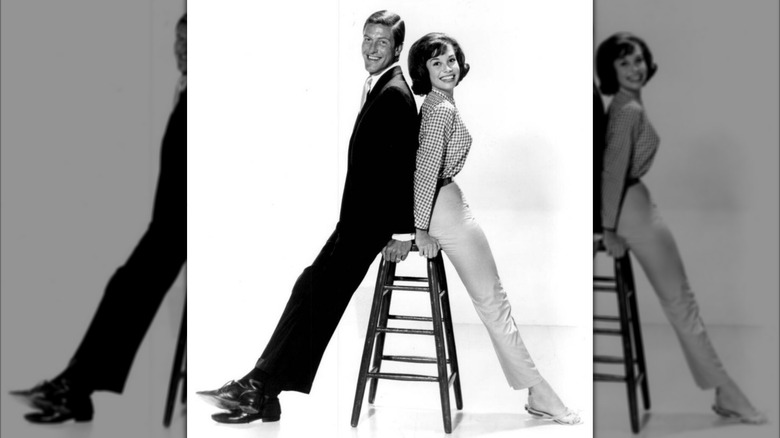
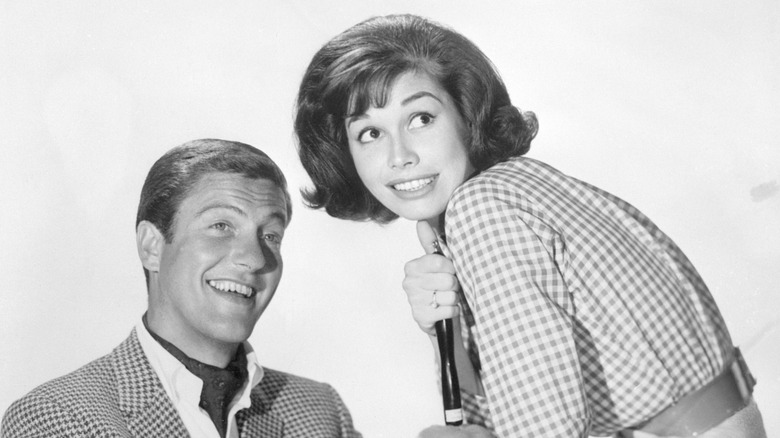
When "The Dick Van Dyke Show" premiered in 1961, it introduced us to Rob Petrie and his wife, Laura Petrie, played by Mary Tyler Moore. Laura spent her days as a housewife; however, the show was careful to avoid using stereotypes to portray her. Laura had pizazz: She was energetic, opinionated, and most intriguing of all, she wore pants. This characterization was a sharp contrast to other TV housewives of the time, who were typically shown wearing tea dresses and floating around the home in a cloud of feather dusters and superficial thoughts.
Speaking with TV Guide in 2004, Moore explained that TV executives were not pleased when she started wearing pants on-set. "I had Laura wear pants, because I said, 'Women don't wear full-skirted dresses to vacuum in,'" the comedian shared. She added, "We got the absolution of men everywhere and women kind of breathed a sigh of relief, too, and said, 'Hey, that's right. That's what we wear.'"
Laura Petrie's fashion legacy isn't just rooted in her iconic pants. Throughout the series, she rocked a legendary '60s wardrobe packed with pencil skirts, shift dresses, mod blouses, and fitted sweaters. By the time "The Dick Van Dyke Show" wrapped in 1966, Moore was a bona fide fashion icon.
Julia Baker was chic and refined in 'Julia'
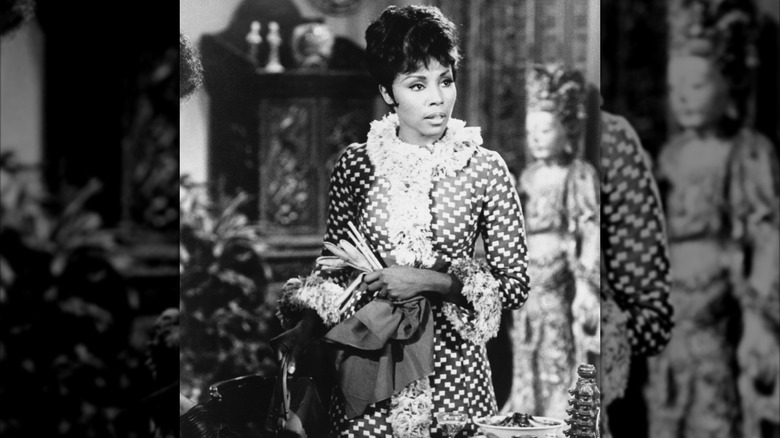
In 1968, NBC released "Julia," starring Diahann Carroll as the titular character. The show follows Julia Baker, an ambitious single mom navigating grief, dating, and her career. By the time she landed the role, Carroll had already starred in several films and Broadway shows. Now, she would be the first Black woman to star in a television role that didn't portray her as a domestic worker or a housewife. In an era where few roles were available to Black women, audiences relished seeing this complex, career-focused character on their TV screens.
Speaking with Foundation Interviews in 2011, Carroll said that she underwent a complete makeover prior to auditioning for the role. The actor thought she needed a look that was more appealing to viewers, particularly to the housewives who were expected to make up the majority of her audience. "I flew into California a couple of days early," Carroll explained. She added, "I brought my makeup friend and my hair friend and my assistant [...] I wore a little black dress, I also cut my hair."
Julia's character subverted many previously established tropes, and her wardrobe further served as a departure from the norm. While other sitcom characters embraced maximalist fashion with vivid colors and patterns, Julia's wardrobe was more classic and subdued. When she wasn't clad in her signature nurse's uniform, Julia wore solid colors, scant accessories, and premium fabrics like wool and satin.
Mary Anne Summers was effortlessly fabulous on 'Gilligan's Island'
Every few years, a new "It" girl enters the picture. In the early 1960s, that title unequivocally belonged to first lady Jackie Kennedy. Not only did she redefine first lady fashion, but Kennedy also reshaped the fashion industry by popularizing designers like Givenchy, Oleg Cassini, and Christian Dior. Kennedy's looks became the blueprint for 1960s fashion; however, due to their exorbitant cost, her style wasn't all that relatable. In 1964, "Gilligan's Island" premiered and offered a more accessible take on 1960s fashion.
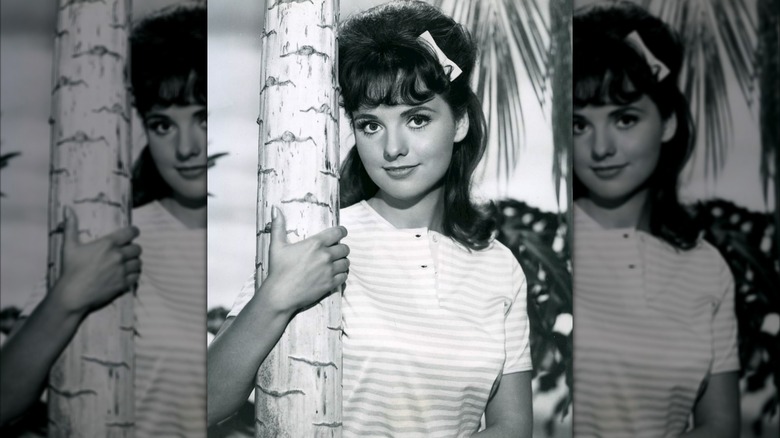
The series focused on a group of travelers who become trapped on a remote island after their boat sinks. One of these reluctant survivalists is Mary Ann Summers, played by actor Dawn Wells. An All-American girl from Kansas, Mary Ann's wardrobe was a charming array of cropped blouses, frilly farm dresses, and gingham. Similar to Jackie Kennedy, Mary Anne's style was chic and feminine; however, unlike the first lady, it was totally unpretentious.
Speaking to Warner Brothers TV in 2015, Wells revealed that she still owns a pair of hot shorts that she wore on the set of "Gilligan's Island." She also shared a surprising logistical detail about Mary Ann's wardrobe. "The reds had to match and the blues had to match even though we were in black and white," Wells explained, "because, in black and white the shadow makes the difference and you could tell it wasn't the same color."
Judy Robinson was light years ahead of her time on 'Lost in Space'
In the 1960s, the possibility of space travel felt more tangible than ever. The previous decade saw the Soviet Union launch a satellite into space, and in 1961, President John F. Kennedy famously vowed that the U.S. would land a man on the moon within the next few years. These revelations quickly spilled over into pop culture, with art, fashion, and media taking inspiration from the Final Frontier.
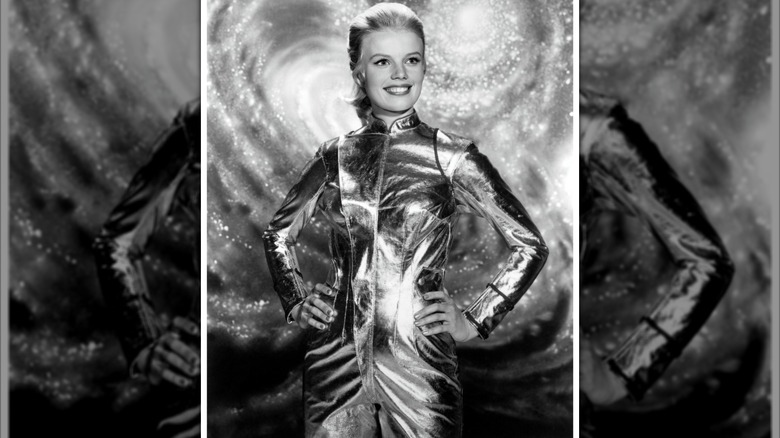
In 1965, "Lost in Space" premiered and introduced viewers to the Robinsons, a family of space colonists who become stranded in a faraway galaxy. The series featured a variety of robots and space aliens, not to mention a smattering of delightfully futuristic costumes. Tall collars, metallic suits, and boxy silhouettes dominated the show's aesthetic. The entire cast was dressed to the intergalactic nines; however, Judy Robinson was the character who consistently stood out.
Played by actor Marta Kristen, Judy is a master class in utilitarian fashion that does not compromise on style. Her space boots are chic, dainty, and perfectly coordinated to her outfit. She utilizes color-blocking to look trendy and elevated, even in the throes of interstellar danger. Her hair is styled into a sculpted bouffant that seems to defy the laws of gravity. Judy also schooled us in futurism, an aesthetic trend that took shape during the '60s. Her penchant for lamé fabric and sleek bodysuits was deeply futurist and light years ahead of its time.
Ann Marie was a mod goddess in 'That Girl'
Prior to the 1960s, television was populated with one-dimensional female characters. When women appeared on TV, they were often presented in the form of a housewife or a secretary. However, as the decade rolled on, women took up more space in media. Not only were women being cast in leading roles, but their characters became much more dynamic. Now, a female character could be artistic, career-oriented, or even unmarried.
When "That Girl" premiered in 1966, the series offered a bold depiction of this modern, self-reliant woman. The show centered around Ann Marie, played by Marlo Thomas, a small-town girl who moves to the Big Apple in search of acting opportunities. That Girl" became a massive success, earning Thomas a Golden Globe and four Emmy nominations.
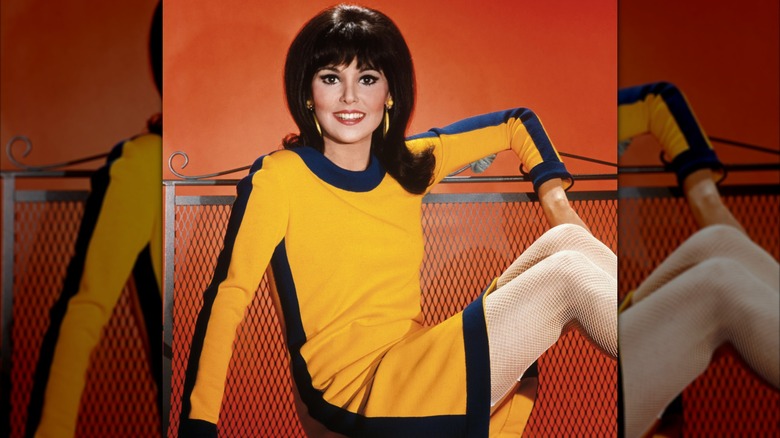
Ann Marie was a career woman who always dressed for success. She championed the 1960s mod aesthetic, endorsing trends like color-blocking, shift dresses, and pastel hues. She frequently wore pants, a move that further bolstered her image as a progressive figure. Speaking with Pop Entertainment in 2017, Thomas revealed that her hands-on production on "That Girl" and the styling of Ann Marie inspired her own clothing line. "When we decided to do this, I wanted to be on the design team," she explained. "I wanted to [choose] the colors, the fabrics. I wanted samples made in my size to try on and see how they fit and feel. If the fabric didn't feel great, we would change it, or not make it at all."
Lisa Douglas was the ultimate diva in 'Green Acres'
When it comes to celebrity fashion, the 1960s were a legendary highlight reel. From Jackie Kennedy's pink Christian Dior gown to Audrey Hepburn's iconic "Breakfast at Tiffany's" dress, evening wear — and the divas who wore it best — thrived during this decade. In 1965, a new icon entered the fold when Eva Gabor starred as Lisa Douglas in "Green Acres."
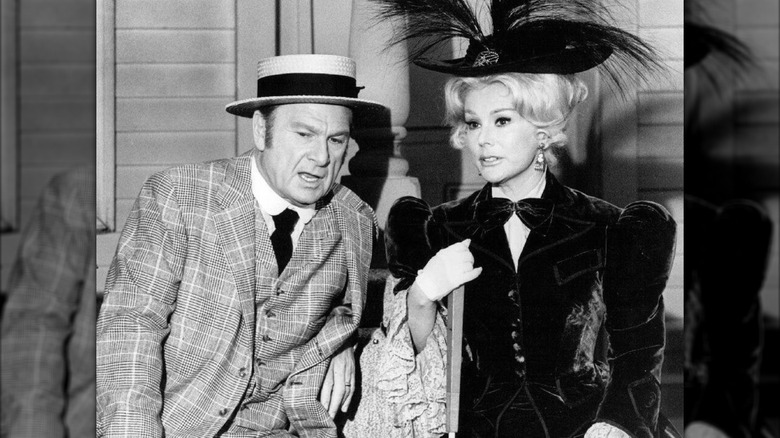
The series follows Lisa and her husband, Oliver Wendell Douglas, a well-to-do couple who spontaneously move from New York City to a small town called Hooterville. Hilarity ensues as the couple tries to fit in and adjust to life in the back woods. Unwilling to give up her previous lifestyle, Lisa is often seen parading around town or attempting to do farm chores while dressed like the star of a debutante ball. Her wardrobe features luxurious ballgowns, feathered garments, and enough jewels to rival the GDP of a small country.
By all accounts, Eva Gabor seemed made for the role of Lisa Douglas. Alongside her sisters Zsa Zsa and Magda Gabor, Eva was a wealthy socialite who'd spent years being primed for fame. By the time Eva landed her "Green Acres" role, all three Gabor sisters were fixtures within the Hollywood social scene. As Zsa Zsa later wrote in her memoir (via Vanity Fair): "We were born to be special, born to be queens and empresses, to marry the crème de la crème, to personify perfection." Lisa, too, personified perfection with her glamorous wardrobe.
Billie Joe Bradley was downhome chic in 'Petticoat Junction'
"Petticoat Junction" premiered in 1963and introduced us to the residents of Hooterville, where Kate Bradley and her three daughters ran the Shady Rest Hotel. The series followed the lives of the local townsfolk, which often centered around the Motel. "Petticoat Junction" existed in the same orbit as "Green Acres" and "The Beverly Hillbillies," which also aired in the 1960s, and all three series featured naive, lovable characters who hailed from or lived in tiny, rural towns. These common themes were the result of an increased demand for shows about rural communities, which peaked in the '60s.
According to cast member Lori Saunders, audiences loved "Petticoat Junction" because it featured wholesome stories and squeaky-clean themes. "There wasn't any violence, swearing, and nothing risqué," Saunders told Closer Weekly. "It was a healthy show you could watch with your children."
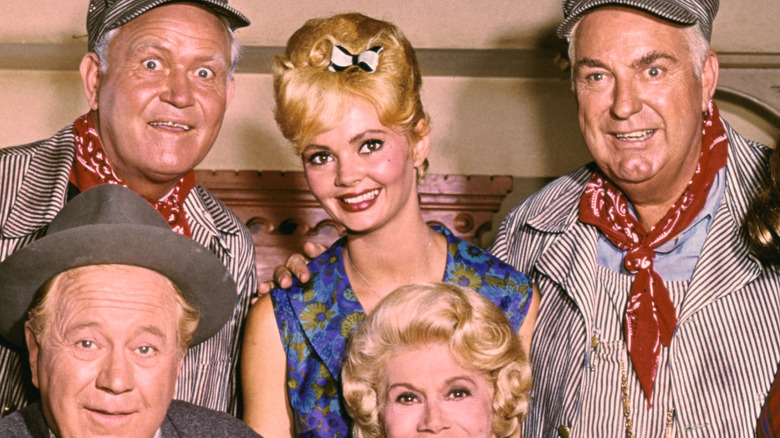
When viewers tuned in to "Petticoat Junction," they were treated to a cornucopia of farm-inspired fashion; Think chambray blouses, puff sleeves, gingham, and lots of barnyard red. The show's best-dressed character? That honor belongs to Billie Joe Bradley, played by actor Jeannine Riley. Billie Joe had an incredibly dynamic wardrobe — she looked ravishing in denim overalls, but she pulled off dainty, feminine outfits just as easily. Some of Billie Joe's best looks were her frilly prairie blouses, floral shift dresses, and high-waisted cutoff shorts.