

The Heartbreaking Way The Royal Family Handled William & Harry's Grief
We may receive a commission on purchases made from links.
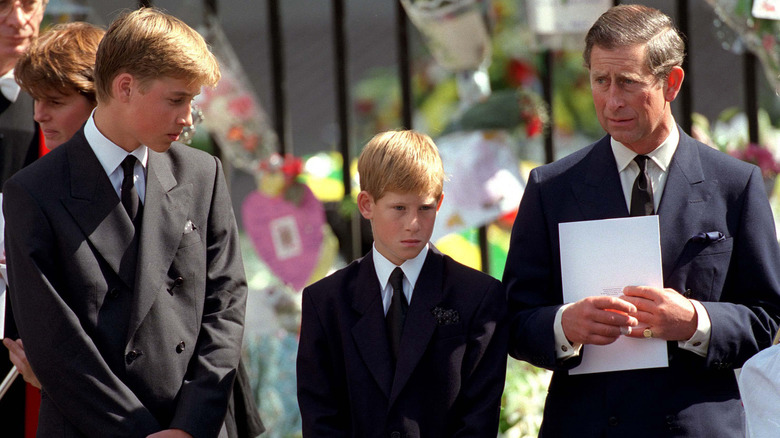
The world was shocked to learn the details of Princess Diana's death in August 1997 following a serious car accident. Diana sustained unusual pulmonary vein damage, so even a first responder who treated her was surprised when she didn't survive. Due to the suddenness of this tragedy, the royals struggled to balance their family's personal needs while simultaneously figuring out their public responsibilities.
William, Prince of Wales, was 15 and Prince Harry, Duke of Sussex, was 12 at the time, and they were at Balmoral with Queen Elizabeth and King Charles. It was early in the morning when Charles broke the news to Harry. "He was in shock, it seemed," Harry later recalled in his memoir "Spare" (via E! News). "Pa didn't hug me. He wasn't great at showing emotions under normal circumstances, how could he be expected to show them in such a crisis?" Harry also noted his own absence of emotion at the time as he struggled to process this devastating information.
Due to the overwhelming circumstances, Charles reportedly wanted William and Harry to go to therapy, according to Christopher Andersen's book, "Brothers and Wives." While it seems like it should be pretty straightforward for the royals to make these healthcare arrangements, Andersen asserted that things got bogged up by the workings of The Firm. "There was concern among some of Her Majesty's advisors that it 'would simply not look good at the moment' for members of the royal family 'to be seen to have mental health issues,'" Andersen claimed (via The Royal Observer).
Public reaction seemed to cast a shadow on royal decision-making
Christopher Andersen's claim about the royals' anti-therapy stance seems surprising, given their initial reactions to Princess Diana's death. Queen Elizabeth seemed to put family first, even though the British public demanded her presence. "I think [the royal family] were quite shocked by just how far the degree of hostility had gone," historian Sarah Gristwood explained to Cosmopolitan UK. Since the queen was busy keeping media coverage away from William, Prince of Wales, and Prince Harry, Duke of Sussex, it's possible she wasn't as aware of the wider response.
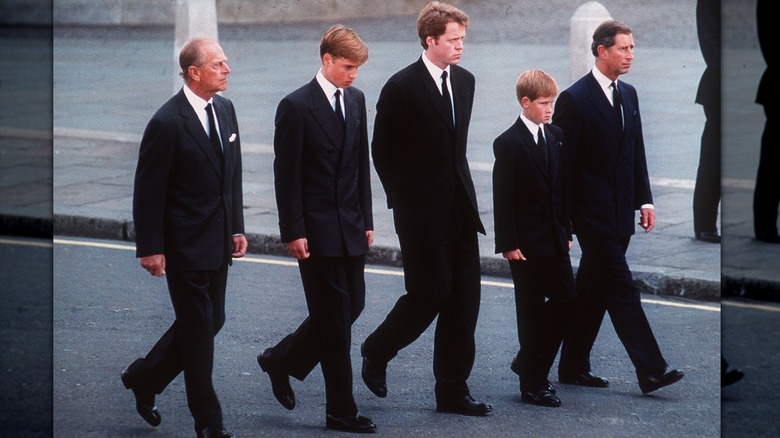
Although Elizabeth soothed this situation when she made her first speech after the tragedy, public approval may have played into subsequent decisions. Diana's heartbreaking funeral was a highly visible event seen by 2.5 billion people on TV. Diana's brother, the 9th Earl Charles Spencer, later accused the royals of questionable behavior regarding William and Harry's participation in the funeral procession. "It was the worst part of the day ... walking behind my sister's body with two boys who were obviously massively grieving their mother," Spencer recalled to the BBC in 2017.
In hindsight, the procession decision seems to have been nearly impossible. Over time, Harry has changed his mind regarding his feelings about participating. Even before the funeral, public mourning complicated his ability to process the situation. "One of the strangest parts to it was taking flowers from people," Harry informed Anderson Cooper on "60 Minutes" in 2023. "As if I was some sort of middle person for their grief."
William and Harry worked to destigmatize mental health
Sadly, it's also possible that the reported therapy refusal for William, Prince of Wales, and Prince Harry, Duke of Sussex, was rooted in attitudes about mental health at the time. While the royals tried to offer grief support in-house, it would have been difficult to match the training and experience of a professional. In addition, their proximity to the situation complicated things further. "[King Charles] tried to do his best and to make sure that we were protected and looked after," Harry recalled in a 2017 BBC documentary (via The Guardian). "But he was going through the same grieving process as well."
William and Harry were never the same after Princess Diana's death, and worries about appearances ended up causing a lot of difficulties. "My way of dealing with it was sticking my head in the sand," Harry explained to The Telegraph (via CBC). "Repression though has a cost, and it's steep." Eventually, Harry attended grief counselling as an adult to work through the trauma of his mom's death.
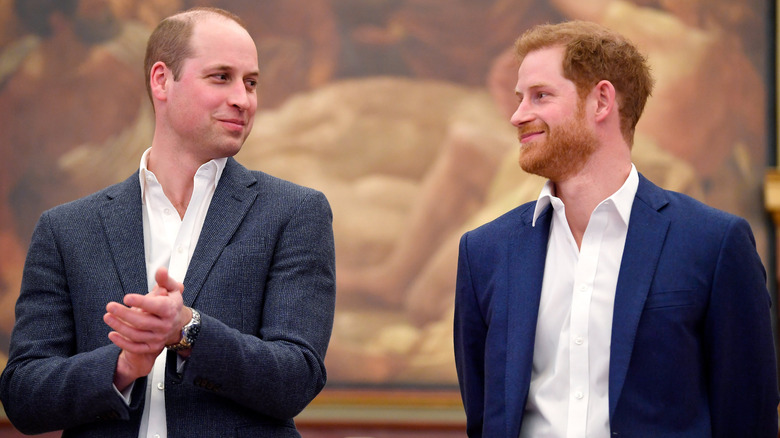
Before William and Harry's feud, the brothers' commitment to mental health advocacy united them when they launched the Heads Together campaign along with Catherine, Princess of Wales. Like Harry, William gradually became outspoken about the emotions he's experienced while grieving. "You feel pain like no other pain," the prince explained to the BBC (via The Royal Family Channel). "But it also brings you so close to all those other people out there who have been bereaved."