
Here's What Happened To The Logan's Run Cast In The 50 Years Since The Film Premiered
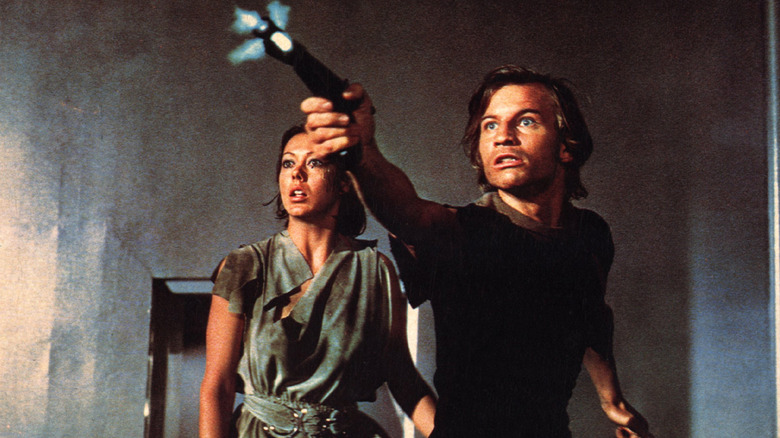
In 1976, "Logan's Run" became a smash hit, grossing a total of $25 million, which was an impressive amount for a science fiction movie at the time. Based on the book by William F. Nolan and George Clayton Johnson, the movie depicted a future where the world is a false utopia; everyone has everything they need because anyone over 29 is sent to the "Carrousel" where, unbeknownst to the general public, they are executed. And while reviews were mixed at the time of release, "Logan's Run" was nominated for three Academy Awards, winning one.
It seemed that "Logan's Run," with its distinctive 1970s style, social commentary, and sexy swagger, was destined to become a beloved classic for generations to come. But then, not unlike its own plot, "Logan's Run" was suddenly seen as the last vestige of old science fiction with the arrival of the bigger and more action-packed "Star Wars" in 1977. With its never-before-seen special effects and wild imagination, "Star Wars" made "Logan's Run" look quaint in comparison. The love that "Logan's Run" received from audiences in 1976 was so diminished by 1977 that the TV series it spawned lasted just 14 episodes. In the years since, "Logan's Run" has become more of a cult classic than an outright classic, helped in part by the movie's stars going on to have amazing careers.
Michael York is a star of the stage and screen
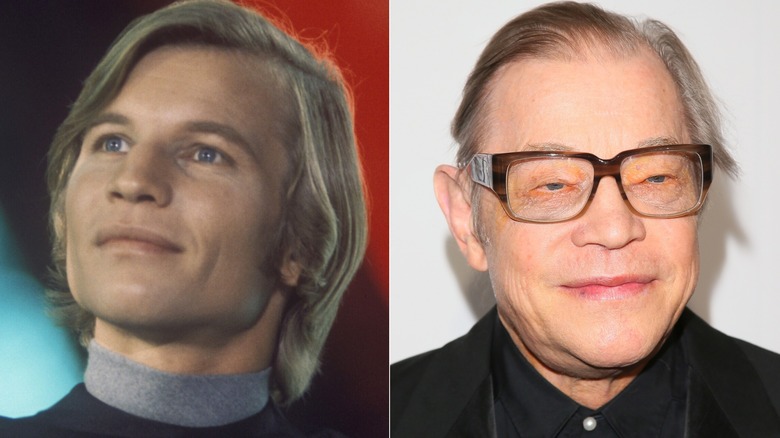
Michael York's career started on the stage, where he worked alongside the legendary Ian McKellen on a National Theatre production of Shakespeare's "Much Ado About Nothing." York made his film debut in the 1967 adaptation of "Taming of the Shrew," with the twice-married and twice-divorced Elizabeth Taylor and Richard Burton. "Logan's Run" was the first time he was the sole lead of a movie, but he almost turned the role down until, as he explained to the Hollywood Reporter in 2021, a friend and colleague convinced him otherwise: " ... he turned up — actually wagging a finger at me — and said 'You've got to do this! You don't understand. It's pressing all my buttons!'"
After "Logan's Run," York continued to split his time between movies, TV, and theater. In 1997, he played what may be his most iconic role, and one very different for the usually serious actor: Basil Exposition in "Austin Powers: International Man of Mystery," a role he would return to two more times. And while "Star Wars" overshadowed his own science fiction classic, York doesn't appear to hold any grudges. He lent his voice to two episodes of "Star Wars: The Clone Wars," and he is the stepfather to Rick McCallum, a movie producer who, during his time at Lucasfilm, worked closely with George Lucas on the prequel trilogy.
In 2013, York revealed that he was diagnosed with a blood disorder called amyloidosis. The deadly disease caused him to lose his voice and left his face swollen and the area around his eyes discolored. A mix of stem-cell transplants and chemotherapy have helped him recover, and York has continued acting and voice acting well into his 80s.
Jenny Agutter is a famous TV nun who is still a railway child
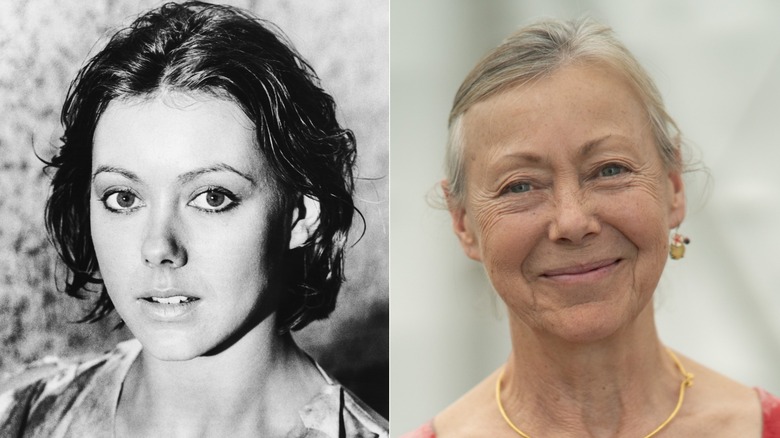
Jenny Agutter made her acting debut in 1964's "East of Sudan" when she was just 12. Her breakout role came three years later with the BBC adaptation of "The Railway Children." In 1972, Agutter won an Emmy for her work in "The Snow Goose." The actor then chose to step away from the cameras and spend some time on the stage, joining the National Theatre, but was convinced to return to making movies with "Logan's Run" where she played Jessica 6.
Agutter followed up "Logan's Run" with the 1977 adaptation of "Equus," which earned her a BAFTA. In 1981, she co-starred in the horror classic "An American Werewolf in London" before returning to the stage to play Regan in the Royal Shakespeare Company's "King Lear." In 2012, took on the role she is best known for, playing Sister Julienne on "Call the Midwife."
An Officer of the Order of the British Empire, Agutter uses her celebrity to help bring attention to the search for a cure to cystic fibrosis, a disease that has directly impacted her family, taking the life of her older brother and younger sister. Her niece was also diagnosed with the disease in the 1970s. Despite Agutter carrying the gene, her son, whom she had at 37, did not get cystic fibrosis. In 2022, she returned to the role that made her famous, playing Bobbie in "The Railway Children Return."
Roscoe Lee Browne's voice was instantly recognizable
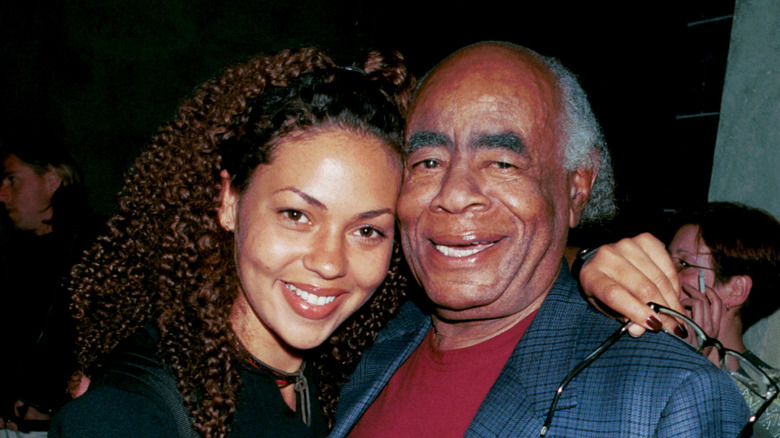
While he may not be recognizable in "Logan's Run," Roscoe Lee Browne's commanding and confident voice makes the robot Box unforgettable. Before becoming an actor, Browne made a name for himself as an athlete, becoming the world champion of the 800-yard dash in 1951. Five years later, he made his acting debut in a production of "Julius Caesar." Browne became one of the most recognizable off-Broadway actors, winning an Obie award for his role in "Benito Cereno." In 1966, he directed and starred in the Tony-nominated musical "A Hand is on the Gate," alongside James Earl Jones and Cicely Tyson.
On screen, Browne is best known for playing Jebediah Nightlinger in the 1972 John Wayne Western "The Cowboys," and in the years after "Logan's Run," he played Saunders, the snooty butler, on the soap opera spoof "Soap." But his voice is far more recognizable than his face may be to some. In the '90s, Browne voiced the Kingpin in "Spider-Man: The Animated Series," and was the Narrator in both "Babe" and "Babe: Pig in the City." Throughout his life, Browne had to deal with a fair amount of racism. In one instance, according to the Guardian, Browne told the story of a director who said his voice was too "white." Browne, who had heard that from others in the past, retorted, "We had a white maid." Roscoe Lee Browne passed away in 2007 at the age of 81.
Farrah Fawcett became an icon
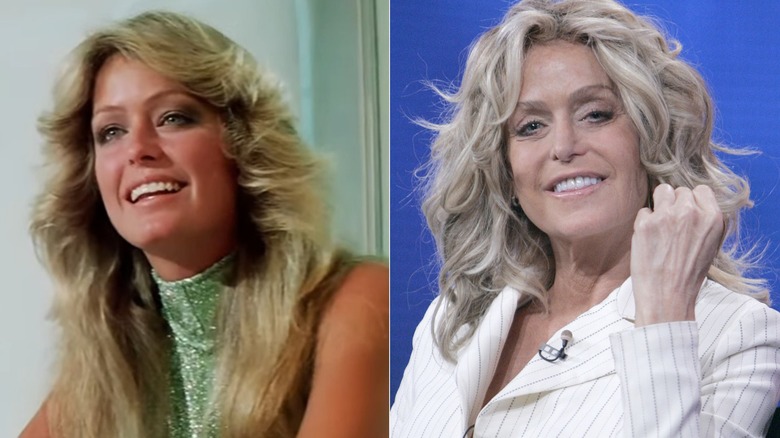
When "Logan's Run" was being filmed in 1975, Farrah Fawcett was best known for being Lee Majors' wife who appeared in commercials. By the time the movie released in June 1976, the Holly 13 actor was likely the biggest name in the cast. In March 1976, the "Charlie's Angels" TV movie aired, launching the classic series and Fawcett's career. But what really made the actor an icon was her poster, showcasing her wavy blond hair, big smile, and red swimsuit, which sold over 12 million copies. Through it all, Fawcett was aware of what made her and "Charlie's Angels" so popular, telling TV Guide in 1977, "When the show was number three, I thought it was our acting. When we got to be number one, I decided it could only be because none of us wears a bra" (via CNN).
Wanting more for her career, Fawcett left "Charlie's Angels" after Season 1. For a time, it seemed like a bad decision. Her first movie after leaving the hit series, "Somebody Killed Her Husband," was ravaged by critics. For later film projects, she was nominated for "Worst Actress" and "Worst Supporting Actress" at the Golden Razzies two years in a row. But Fawcett proved that she was more than a big smile when she won over critics in the 1983 play "Extremities" and received her second of six Golden Globe nominations for 1984's "The Burning Bed" (the first having been for "Charlie's Angels").
Fawcett continued acting in films and TV until her cancer diagnosis in 2006. She passed away in 2009, with her death being overshadowed by Michael Jackson's. Adding insult to injury, Fawcett's last wish was never fulfilled, and additionally, she was left out of the Oscars "In Memoriam" segment. Despite those slights, Fawcett's legacy continues to shine bright.