

These '80s Sitcoms Were Filled With Drama Behind The Scenes
The following article mentions eating disorders and allegations of sexual misconduct.
The 1980s were a golden age for television sitcoms. Just about every night of the week, you could sit down with your family around the television and learn important life lessons delivered with a punchline. As much as the hit sitcoms of the decade made everybody laugh, audiences also showed up for shows that worked through social issues, reacted to national discussions, and sparked important conversations.
As a result, many of the biggest stars of the decade came up through sitcoms; if an actor is being invited into people's living rooms every week, it makes sense that those people would be interested in the actor's off-set life, too. What most television audiences in the '80s didn't know, however, was that their favorite sitcoms were often full of drama behind the scenes. Even though most sitcoms wrapped things up by the end of the episode and left beloved characters on good terms, the actors playing out these storylines were dealing with all sorts of situations in their own lives.
After all, real life is significantly messier than your average sitcom script. Actors who starred on these shows faced unfair scrutiny from the public, difficult expectations from producers, abusive behavior from castmates, and much, much more ... and then they put on a happy face and performed for a live studio audience. Read on to learn more about these '80s sitcoms that had drama-filled backstories.
Three's Company fired Suzanne Somers for seeking equal pay
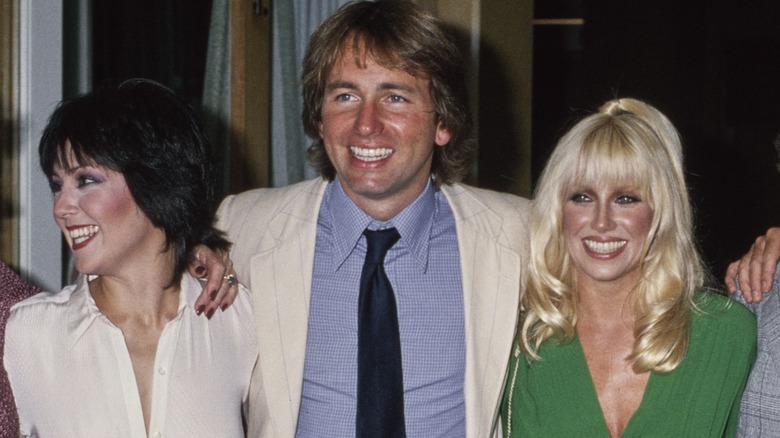
"Three's Company" launched in the preceding decade, but the sitcom was such a smash hit that it lasted well into the 1980s, its brand of humor becoming one of the defining markers of 1980s comedy. The show revolved around John Ritter's character Jack Tripper, who moves into an apartment with Janet Wood (Joyce DeWitt) and Chrissy Snow (Suzanne Somers), two platonic female friends. The idea of one man living with two women was almost unheard of at the time, but the show played the dynamic for laughs rather than scandal, mining much comedy from their various exploits that flouted social expectations.
Somers was one of the show's breakout stars, but as the '70s became the '80s, she realized she wasn't being compensated fairly. She was only making $30,000 per episode while Ritter, for example, earned significantly more. While the exact number has been debated over the years — some outlets maintain he made $50,000 an episode and others state it was $150,000 an episode — there was certainly a chasm between the lead actors' salaries. And so, Somers went to producers and asked for a raise, but it didn't go well. "The show's response was, 'Who do you think you are?'" Somers later recalled to People. "They said, 'John Ritter is the star.'"
Chrissy was written out, and Somers suddenly found her career had come to a screeching halt. "I would have kept on going and probably been in every sitcom after that were it not to end the way it ended," Somers mused. "But I was ostracized. So I went away."
Ted Danson and Shelley Long did not get along on Cheers
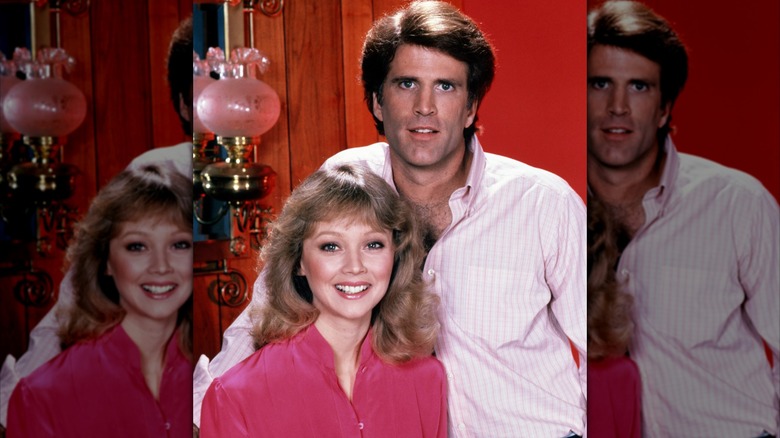
"Cheers" premiered in 1982, and fans were quickly hooked on the fun, zippy dynamics of a group of friends and employees who hung out at the titular Boston bar. The show was particularly successful thanks to the iconic will-they, won't-they dynamic between main characters Sam (Ted Danson) and Diane (Shelley Long). In fact, its drawn-out romantic relationship became a textbook example of how to keep viewers interested by dialing up the tension to a breaking point, before you finally let the characters get together.
To just about everyone's surprise, Long walked away after Season 5. "There was a lot of concern that Shelley leaving would cause the show's downfall," producer Ken Levine told GQ for an oral history of the show. "It's funny, there were actors who said that she drove them nuts, yet they were also mad that she was leaving." One of those actors who didn't always get along with Long was none other than the Sam to her Diane, Danson himself. "My first reaction to Shelley while we were auditioning was, 'Oh, no. No. That's a bad, bad idea,'" Danson later told People. "We were so different ... It was hard for us sometimes to be in the room together," he said.
Thankfully, the two managed to put their differences aside for the most part, making television magic for as long as it lasted. "When we started working, it was just fantastic because you'd smack her and she'd smack you back harder," he said. "She was just brilliant." For the record, Danson also had a long feud with "Cheers" co-star Kelsey Grammer.
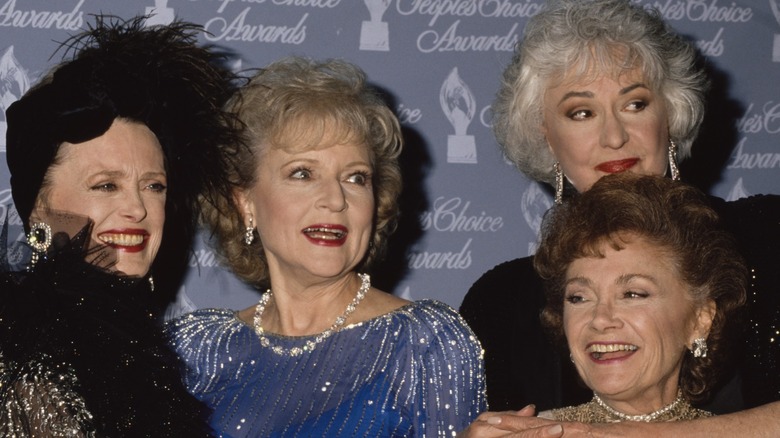
Bea Arthur and Betty White's Golden Girls feud was legendary
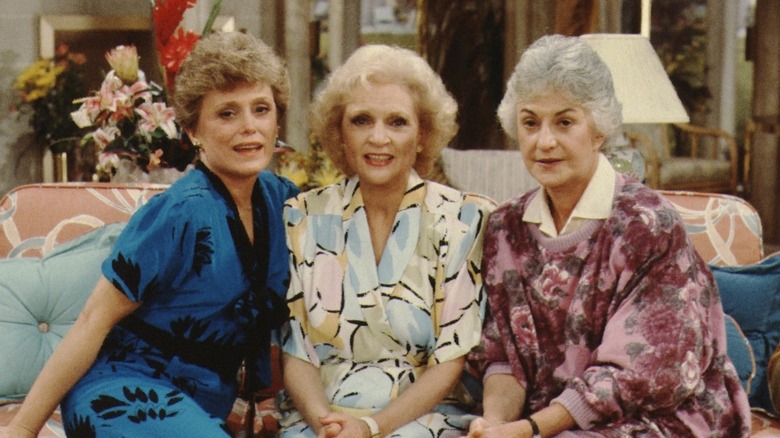
When "The Golden Girls" premiered in 1985, nobody could have predicted what an indelible mark it would leave on pop culture. Thanks to everything from its theme song — the instantly iconic "Thank You For Being A Friend" — to its core cast of four women who were older than your typical sitcom leads, fans fell in love with the deep, abiding sense of love shared by its main characters ... even as they often bickered brilliantly and wittily on the show.
It seems that Bea Arthur and Betty White — who played Dorothy Zbornak and Rose Nylund, respectively – bickered off-screen, too. Their off-camera feud, it turned out, came down to different approaches to their acting. "Bea approached her acting like a Broadway actress. She was very serious about her comedy," writer Mort Nathan revealed during a "20/20" special called "The Golden Girls: 40 Years of Laughter and Friendship" (via People). "Betty was a woman from the TV era, and she knew she could turn it on and turn it off at any time."
For the first few years of the show, the two women were at odds. Producer Marsha Posner Williams reflected, "I used to get calls at home from Bea complaining about Betty." Thankfully, the production staff had an idea that could bring the women together: a practical joke involving naked photos of themselves slid into a Season 3 prop. Writer Barry Fanaro remembered that the photos hit exactly how they were supposed to. "That immediately broke any tension. It was all over," he said. "They were hugging each other."
Diff'rent Strokes wrote off Dana Plato when she became pregnant
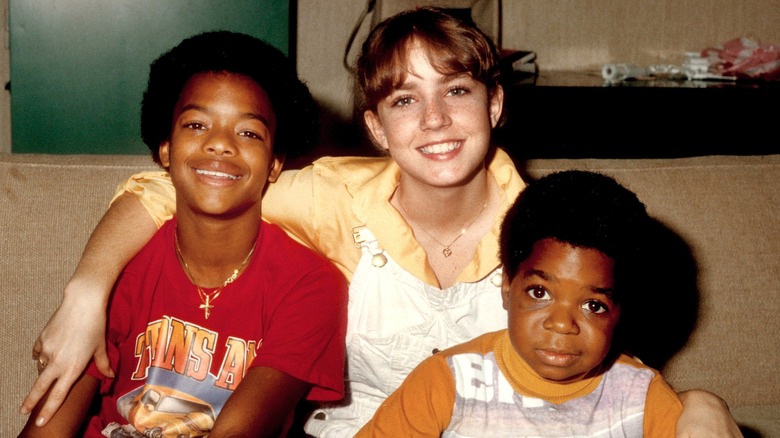
"Diff'rent Strokes" first hit the small screen in 1978, but the bulk of the show's episodes aired during the 1980s. The show was about a white family who adopted two young Black boys, including Willis (Todd Bridges) and Arnold (Gary Coleman); the sitcom found much humor in and cultural differences, but it was centered largely around learning to all get along and find common ground, which made it far ahead of its time.
Unfortunately, the show was plagued with drama behind the scenes. Dana Plato, who played Kimberly, the adoptive older sister of Willis and Arnold, was said to have been written out of the show after getting pregnant. As Plato stated in a 1989 interview with Evening Magazine, "I got blackballed because I got pregnant under contract." She then went on to say that she struggled to find work after getting ousted from "Diff'rent Strokes." "I don't know why I got such a bad rap, but I really, really do, and people are still scared of me," she said. Kimberly went off to Paris, and Plato found herself without a career. She experienced homelessness and addiction, and she died in 1999.
Tracey Gold sought treatment for an eating disorder during Growing Pains
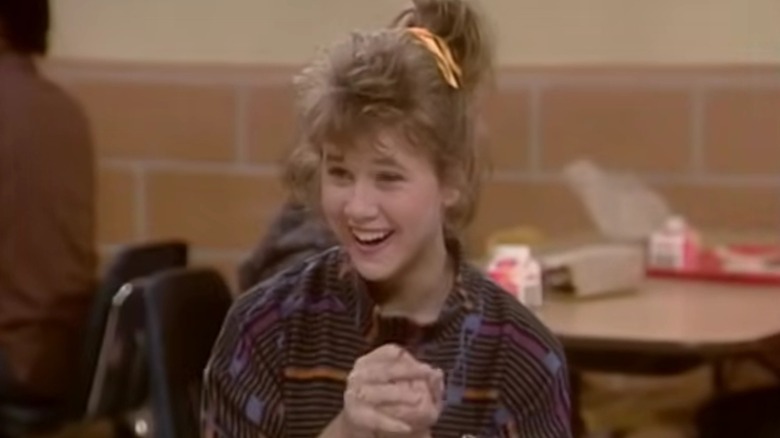
If you think of '80s sitcoms as being more wholesome than the shows we see today, you may be thinking of "Growing Pains." The show centered around the Seaver family, led by patriarch Dr. Jason Seaver (Alan Thicke) and sitcom mom Maggie Malone Seaver (Joanna Kerns). The family at the core of the show included Carol Seaver (Tracey Gold), a character whose storylines ranged in severity from that time she went to jail to the time she fell through the ceiling.
The subtext of the latter "Growing Pains" scene was crueler than one may recall. After Carol comes crashing down to the floor below, she pops up and says, "I'll get on a scale and prove this wasn't my fault!" The show made frequent jokes about Carol's weight, in fact, which took a major toll on Gold. Over the course of the show, she developed an eating disorder that led to her taking time off from the series.
She appeared on the cover of People in 1992, where she opened up about her struggle with anorexia and why she missed several episodes of the show in its final season. "If I were a different person, it probably would have rolled off my back," she mused, noting that comments from casting agents and producers had made it difficult to see herself clearly. "But I have the kind of personality where I will let those comments affect me. I've always wanted to please people."
Punky Brewster star Soleil Moon Frye struggled with being objectified
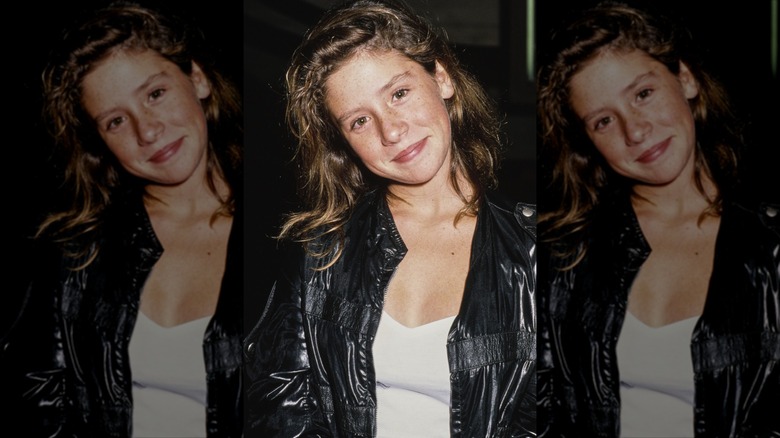
Fans of '80s sitcoms may often find themselves wondering whatever happened to "Punky Brewster." They mean, of course, Soleil Moon Frye, the actor who starred on the hit show as a spunky orphan who taught lessons to her older co-stars as she grew up on camera. The show ran from 1984 to 1988, which meant Frye was beamed to televisions around the country during what turned out to be an awkward stage of life. "I was in this position where I was going through puberty, and I developed very quickly," she told People in 2021. "Everywhere I went I was called Punky Boobster, and people would stare directly at my boobs."
Because of the objectification she faced from fans, critics, and everyone in between, Frye decided to undergo a breast reduction as a teenager. "No one is in charge of how their body develops, but there was so much shame about it," she reminisced. Thankfully, Frye seems to have come to terms with how her teenage years played out. "My experiences made me who I am today. And as much of a roller coaster as it was," she said, "I wouldn't change one thing."
ALF's human stars weren't fans of working with a puppet
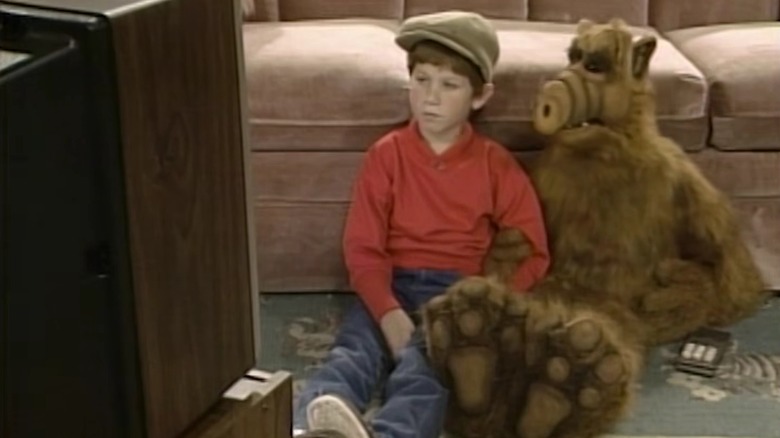
It can be hard enough navigating life on a sitcom set when you're dealing with human co-stars, but some of the actors who starred on the '80s hit "ALF" had an issue with the scene-stealing furry alien who had an appetite for cats.
The titular ALF was played by a puppet, which meant the humans had all sorts of technical limitations they had to work around while filming. The set was constructed four feet off the ground, and everywhere they walked, there were hidden holes so that people could manipulate the puppet from below. It was more or less ALF's world, and the rest of the cast was living in it. As Andrea Elson, who played ALF's adoptive human sister, would later tell People, the behind-the-scenes vibes weren't exactly chill. Evidently, a number of the show's stars were not eager to, as Elson put it, "play second fiddle to a puppet."
Max Wright, who played TV dad Willie Tanner, grew to hate his experience on the show. He told People, "It was hard work and very grim." It all came to a head when they finally filmed the show's finale, which aired in 1990. "I was hugely eager to have it over with," Wright confessed. Anne Schedeen, who played his TV wife, remembered Wright's attitude as they wrapped the episode. "There was one take," she said, "and Max walked off the set, went to his dressing room, got his bags, went to his car, and disappeared."
The girls on The Facts of Life faced scrutiny from producers over their weight
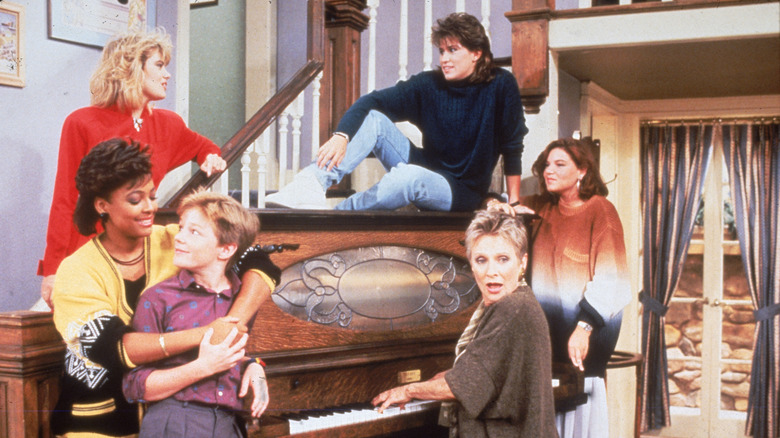
Like many sitcoms in the '80s, "The Facts of Life" was about a group of kids learning important lessons from an adult in their orbit ... and teaching said adult a few lessons of their own along the way. In this case, Edna Garrett played Charlotte Rae, the house mother to a group of girls living at the Eastland School. In the first season, that group of girls included Molly Ringwald, who would undergo a stunning transformation from sitcom castoff to '80s icon in her own right.
The girls who were left on the show, however, faced increasing scrutiny from the public, mostly centering around their weight. Stars Mindy Cohn and Lisa Welchel later told People that the girls were well aware of a recurring bit from comedian Joan Rivers, who referred to the show as "The Fats of Life."
Welchel said the producers sent her to a so-called "fat farm" during several of the show's downtimes, hoping she would lose weight while on break. "I was just a young girl," Welchel recalled. "It was hard feeling that my body wasn't acceptable." Cohn, on the other hand, lost some weight on her own, and then the producers told her to gain it back. "I came home saying, 'I have to gain 40 lbs.," Cohn said. "And my mother said, 'That's not happening.'"
Multiple co-stars accused Charles In Charge star Scott Baio of harassment
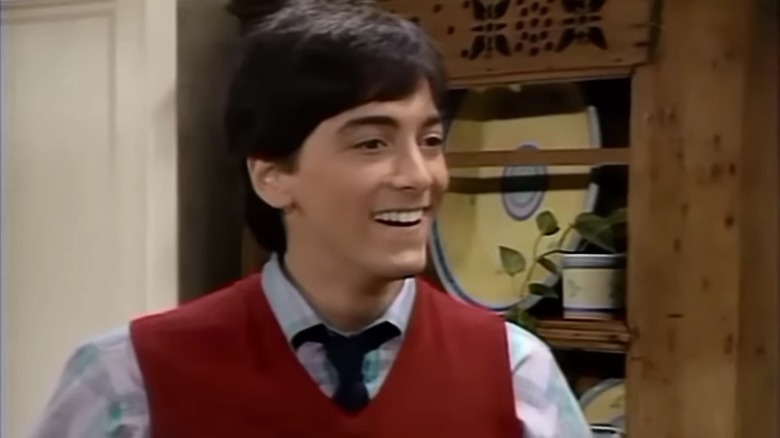
Scott Baio had considerable sitcom experience by the time he was tapped to lead the cast of "Charles in Charge." He played Chachi on "Happy Days," a standout character that was handed a spinoff called "Joanie Loves Chachi." When he led "Charles in Charge," Baio was no longer a supporting character paired with another lead; he was the star.
Baio's co-stars later said the power went to his head, and he allegedly became abusive on set. Nicole Eggert, who went on to be part of the cast of "Baywatch," came forward in 2018 and claimed that Baio abused her when she was a minor on the show; he maintained their relationship was consensual and she was of legal age at the time. "[He] was telling me, 'You can't tell anybody. This is illegal. I'll go to jail. The show will be over. Everybody will be sued,'" she told NBC News. Baio denied the allegations, releasing a statement that read in part, "These false claims are part of a regular pattern of making outrageous and untrue statements."
Eggert wasn't the only one to claim that Baio was abusive behind the scenes. Alexander Polinsky came forward that same year at a press conference (via The Hollywood Reporter) to allege that Baio had subjected him to years of misconduct. In addition to homophobic slurs and inappropriate conversations, Polinsky claimed, "Scott pulled down my pants in front of over 100 people." Baio also denied these allegations.
Bill Cosby clashed with The Cosby Show producers over the series' tone
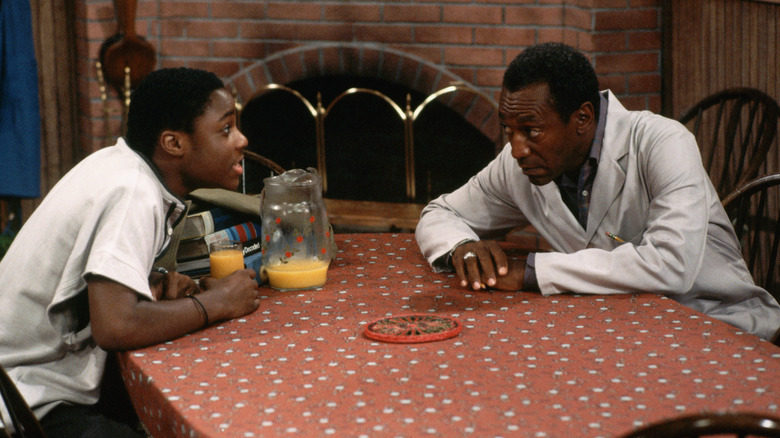
The legacy of "The Cosby Show" is, at best, incredibly complicated, due in large part to the allegations against Bill Cosby. However, once upon a time, it was primarily known for being a groundbreaking and family friendly series. When Malcolm-Jamal Warner, who played Theo Huxtable, read for "The Cosby Show," his initial take on the character did not impress Cosby. In a documentary called "Seen & Heard" (via People), Warner revealed that his audition for the show had gone over well with every producer except Cosby.
"I'd been watching, you know, 'Diff'rent Strokes' and watching these kids on television be smart alecks and what have you," Warner recalled. "That's what my acting had been influenced by." However, this did not align with the star's vision. Cosby made it clear to Warner that there wouldn't be any room for smart alecks in the series' fictional family, warning, "I don't want to see that on this show."
Warner got the role, and he saw Cosby and show producers clash over the sitcom's family-friendly nature time and time again. "I watched him do that from year one to year eight. That battle never, never stopped," Warner said, "until the show stopped."
Lisa Bonet was written out of A Different World when she became pregnant
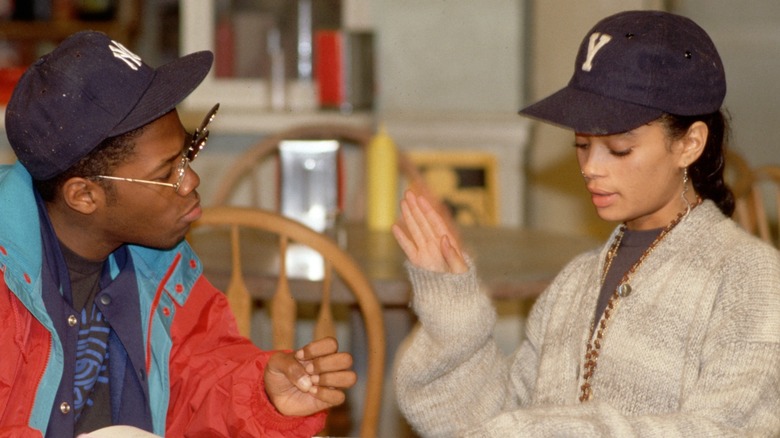
"Diff'rent Strokes" star Dana Plato wasn't the only sitcom lead to find her show snatched out from under her when she became pregnant. The same thing happened to Lisa Bonet, who had starred on "The Cosby Show" before being made the lead of a spinoff called "A Different World." The first season of the show followed Bonet's "Cosby Show" character Denise Huxtable as she went off to college, but Denise disappeared after the Season 1 finale.
At the time, pop culture fans had become obsessed with Bonet's relationship with Lenny Kravitz, and the show's producers didn't like the attention the show got thanks to its star's off-camera love life. When she became pregnant at 20 years old, the decision to yank her from her own spinoff reportedly came from none other than Bill Cosby himself. According to Kravitz's memoir "Let Love Rule," Cosby was furious upon learning of the pregnancy. "Lisa Bonet is pregnant, but Denise Huxtable is not," he reportedly said.
"A Different World" went on without Bonet for many more years, retooled instead around her college friends. In an oral history of the show for Vanity Fair, co-star Darryl Bell defended his friend. "The amount of press and paparazzi that hounded and followed them ... they were 20-year-old kids," he said. "Anyone who has suggested that Lisa was unprofessional or difficult to work with, it's just not true."
If you or anyone you know has been a victim of sexual assault, or needs help with an an eating disorder, see the resources below:
- Visit the Rape, Abuse & Incest National Network website or contact RAINN's National Helpline at 1-800-656-HOPE (4673).
- Visit the National Eating Disorders Association website or contact NEDA's Live Helpline at 1-800-931-2237. You can also receive 24/7 Crisis Support via text (send NEDA to 741-741).