

Supermodels From The '90s Who Deserve More Recognition
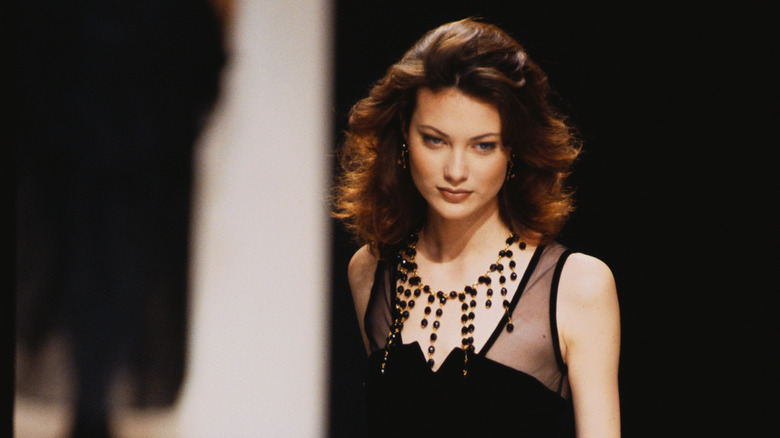
Modeling has changed lives at the drop of a hat. This is especially true for supermodels, since they tend to have more wealth and influence on fashion at large. Although the word "supermodel" goes back to the 1960s, the 1990s were the peak decade to be one. Cultural commentator Richard Benson noted that '90s supermodels led a renaissance of glam after years of "dressing down." He said, "There was a swing back to dressing up — the clubs became a bit more dressed up, there was quite a self-conscious, knowing appreciation of fashion" (via The Guardian).
The biggest stars of the decade, often referred to as the "Big Six," include global icons Naomi Campbell, Cindy Crawford, Kate Moss, Christy Turlington, Claudia Schiffer, and Linda Evangelista. By participating in experimental fashion shows and veering into the TV and film industries, these models built household names that people will recognize for decades. However, not every '90s supermodel is known outside of fashion circles. Despite being muses for high-profile designers and making history on the job, they haven't received enough credit for their impact on the beauty industry. Here's a look at four women whose work shook the fashion world during the supermodel era and deserve more recognition today.
Yasmeen Ghauri had the walk of life
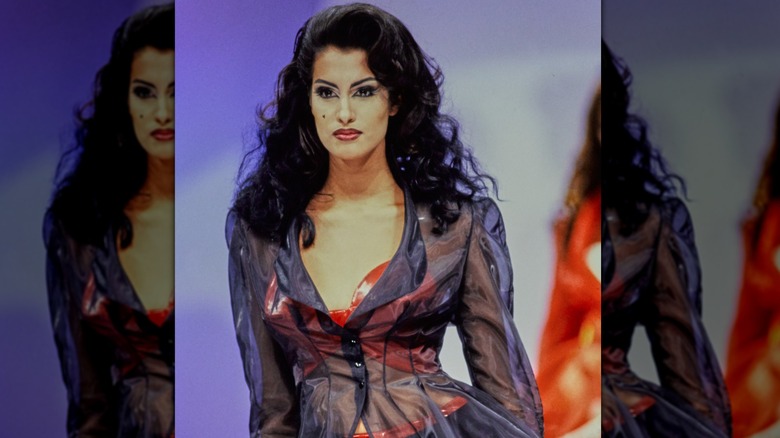
Yasmeen Ghauri became a model in her teens after taking a trip to the hair salon in the late '80s. As a woman of mixed Pakistani and German ancestry, her rise to fame paved the way for younger South Asians in the modeling world. Ghauri also did away with some of the industry's standards here and there, which made her a remarkable figure in fashion spaces. She did her own makeup backstage in response to the lack of diverse foundation shades, and on the runway, she used jackets and shirts to cover her rear end as she turned. The Canadian icon also had a fascinating walk that drew attention to the sway of her hips, which fellow original supermodel Tyra Banks called "the walk of life."
Ghauri credited matching the flow of music and figuring out the most comfortable movements for her iconic walk. "When I first started doing runway, I tried to walk the way people told me to walk, and I never felt comfortable," she said. "Then one day I just tried it, and it felt very comfortable, and I've been doing the same thing ever since," (via YouTube).
Although the Canadian supermodel retired in 1997, her peers in the industry continue to gush over her performance decades later. Ghauri also inspires younger generations in and out of the fashion world, from her walk to her makeup.
Beverly Peele started modeling at 12
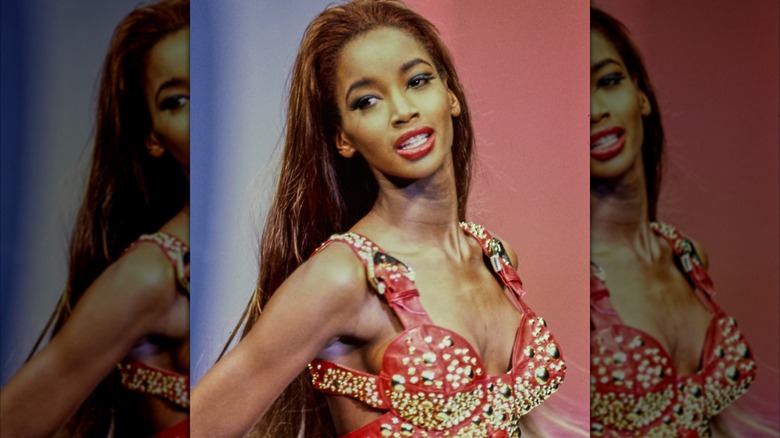
Naomi Campbell and Tyra Banks often come to mind in conversations about the first Black supermodels, but Beverly Peele is another underrated legend. At 14 years old, Peele was the first Black model to appear on the cover of "Mademoiselle" in 1989, two years after launching her modeling career. The L.A.-born, California-raised model appeared in more than 200 magazines in her career and walked the runway for Versace, Prada, and Chanel. She also dabbled in the film industry through her features in the music videos for "Too Funky" by George Michael and "Nuttin' But Love" by Heavy D.
Despite being nicknamed the "next Naomi" and contributing to diversifying the runway, Peele believes she didn't take modeling as seriously as she should have. "Back then I didn't have a master plan. All of the covers that I did – I didn't know that it was going to have such an impact," she recalled. "I didn't know that I made a difference. Now, I see it and I respect it," (via Consciousness Magazine).
Shalom Harlow, the anti-supermodel
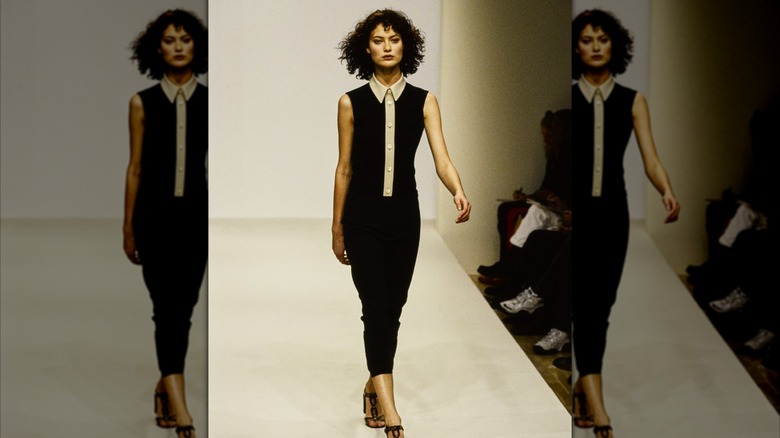
Shalom Harlow is one of many supermodels who accidentally became famous, but her discovery might be more unique. A teenage Harlow attended a Cure concert in 1989 when a scout asked her if she modeled. The Canadian model later recalled that she thought it was a "ludicrous" question in the "Alexander Wang Confessional Series," but she came to appreciate the atmosphere of New York's fashion scene (via The Cut). Many publications called Harlow an anti-supermodel because her work blended high fashion with artistic experiments and styles from alternative movements, such as grunge culture. Despite her unconventionality, the Canadian brunette graced the cover of Vogue in 1996. "I wasn't a blonde and I was on the cover of Vogue. It was significant," she later told Vogue. "Mid 90s minimalist chic. Well that's an iconic moment for sure."
Harlow went on to create more iconic fashion moments while launching her acting career in the late '90s. The finale of Alexander McQueen's 1998 show, in which machines spray painted Harlow's strapless white dress, was certainly unforgettable. Fashion critic Sarah Mower said, "It's a McQueen performance, a coup de théâtre that has made ever-living history, surely up there among the top 10 fashion show thrills of all time," (via Vogue).
Eva Herzigová's career began with a beauty pageant
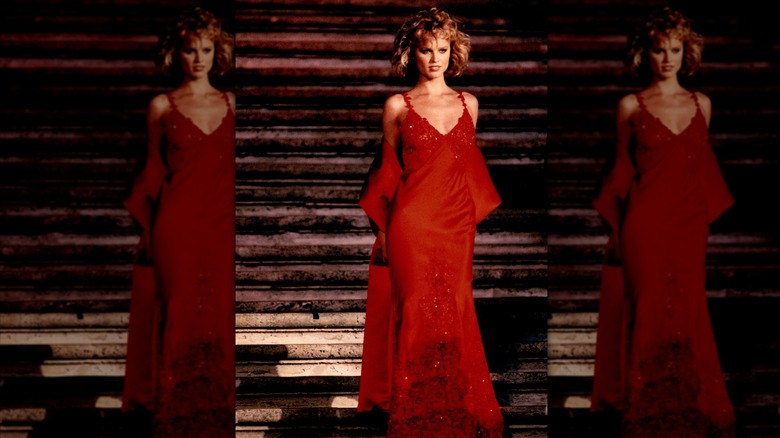
Eva Herzigová was born in a mining town not too far from Germany in what was then Czechoslovakia. When she was 16, a friend of hers put her on the path to fame by coaxing her to go to a beauty contest in Prague. Herzigová told WestEast Magazine, "With my athletic looks and tall, slim body, when I found myself faced with 400 buxom beauties, I understood that I was not within the norms. I ran away, but a French organizer picked me out in a second." The model's tall, slender build landed her gigs with Cosmopolitan and L'Oréal not too long after getting discovered.
Working with Wonderbra in the mid-'90s was one of the most memorable parts of Herzigová's career. The 1994 "Hello Boys" ad, featuring the Czech model in a black lace Wonderbra and matching panties, landed in Campaign magazine's top 10 posters of the century. Although the Wonderbra ad reportedly disturbed traffic and stirred controversy in feminist circles, Herzigová believes that the lingerie campaign empowered women. She told Tatler, "What women are saying now is 'I am who I am. Take it or leave it. We are finally saying 'no' to being objectified." The ad skyrocketed Herzigová's fame.