
Western Fans Agree, These Underrated Icons Of The Genre Deserve More Hype
Once the dominant movie genre, Westerns were part of the birth of cinema, with 1903's "The Great Train Robbery" being one of the first movies to be more than a simple shot showing everyday life, showing that, with good equipment, planning, talent, and editing, movies could tell a story. Starting in the 1940s and lasting some 20 years, Westerns were the prominent genre in Hollywood, which released upwards of 140 movies each year. Some of the most iconic actors of all time are forever connected to the genre, from John Wayne, the epitome of the movie cowboy, to the Spaghetti Western icon Clint Eastwood. Unfortunately, as the audience's appetite for the Western subsided over the decades, many of the genre's once beloved stars have been all but forgotten.
Many of these actors were once household names, while others developed cult followings. In either case, unless you're a devoted cinephile, their fanbases have largely faded away. These larger-than-life heroes of the untamed West ruled the cinema houses for decades, but, like the aging gunfighters they portrayed, the time came when they weren't the fastest gun anymore, and other genres took over.
Still, the work these actors did helped build the movie industry, ensuring that, even if the general audience doesn't remember them, there will always be some diehard fans who will carry their names into the next age as their films wait to be rediscovered by the masses. While there is hardly enough room to celebrate every forgotten Western star — Randolph Scott and Terence Hill come to mind — the following actors are brilliant reminders that there are so many more Western icons than just John Wayne.
Joel McCrea spent 30 years only making Westerns
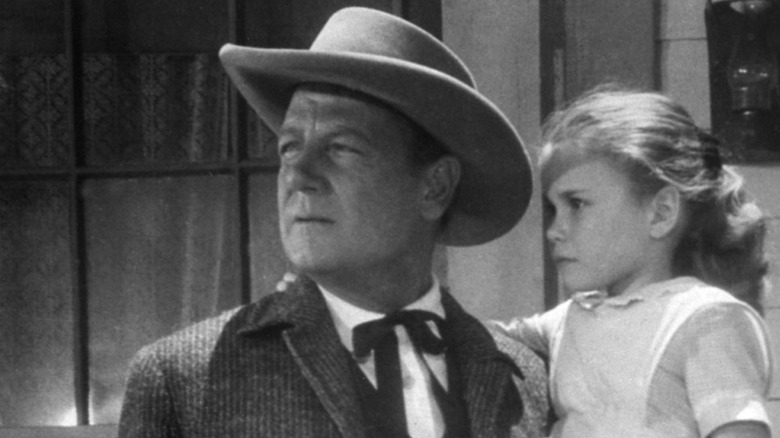
Joel McCrea was born in 1905, when Hollywood was just beginning. McCrea got his start doing stunts while he was still in high school. His first speaking role was in 1928's "The Five O'Clock Girl," but his goal was never to be a movie star. McCrea was only making films to save up enough money to buy some land where he could live out his true dream of being a rancher. As he wrote (via the Camarillo Ranch Foundation), "When I was a boy growing up in Hollywood, my dreams were not of acting, or the motion picture business, but of big, open country, of ranches, of streams and meadows and fields of new-mown hay."
In 1930, McCrae made "Lightnin'," his first of two films with the legendary Western star Will Rogers. The two became close, and Rogers would mentor McCrae, helping the young actor find his way and get the ranch he always dreamed of. At the same time, McCrae's acting career really started to take off. He not only appeared in Westerns, but also romantic comedies like "Adventure in Manhattan" and thrillers such as Alfred Hitchcock's "Foreign Correspondent." However, it was in 1946, while filming "The Virginian," that McCrae decided he would spend the rest of his career only making Westerns.
McCrae spent the next 30 years keeping to that decision, appearing in 30 Westerns in that time, including classics such as "Wichita" and "Ride the High Country." McCrea retired from acting in 1976 and spent the next 14 years living on his ranch, which his family gave to the Conejo Recreation and Park District after his passing. Today, the ranch is used for annual cookouts and hosts a movie series every summer, showing some of McCrea's best Westerns.
Katy Jurado made Hollywood history
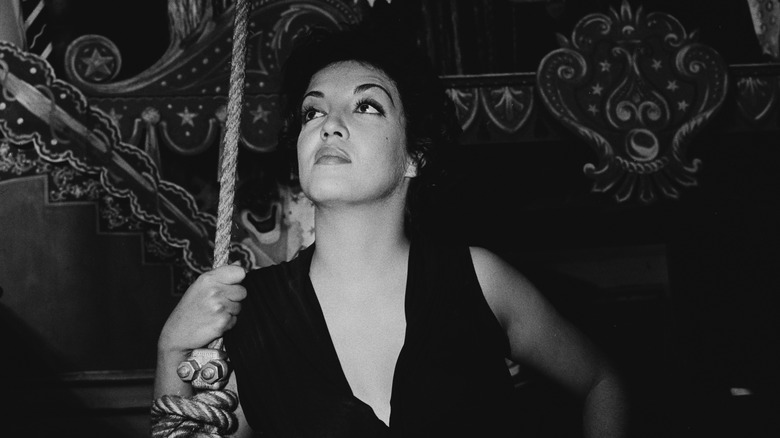
Born in Mexico City, Katy Jurado was one of the first Latin women to become a Hollywood star. Jurado was famously discovered by Mexican filmmaker Emilio Fernández when she was 17, but her parents would not allow her to be in his 1942 film "The Island of Passion." Jurado quickly married her first husband in order to gain her independence and made her film debut in "No matarás," becoming an in-demand actor in Mexico and appearing in 20 movies from 1943 to 1951.
Her Hollywood break happened when the great Western director Budd Boetticher and John Wayne spotted Jurado at a bullfight, and Boetticher cast her in his film, "Bullfighter and the Lady." Her appearance in that film led to Jurado getting a role in the 1952 classic "High Noon," playing Helen Ramírez, the owner of the local saloon. The movie, which starred Gary Cooper and future princess Grace Kelly, was a massive success, and Jurado became the first Latina to win a Golden Globe. Two years later, she made history again by becoming the first Latina to be nominated for an Academy Award for her work in the Western "Broken Lance." Along with her Oscar nomination, Jurado also met Ernest Borgnine in 1954, and the two married in 1959.
Jurado continued to appear in both Mexican and American productions, starring in classic Westerns like "The Badlanders" (alongside Borgnine) and "One-Eyed Jacks," directed by and starring Marlon Brando. Jurado and Borgnine divorced in 1964, and she moved back to Mexico. Jurado's work in America slowed down, with the actor making just a handful of American films over the next 30 years, but she continued to be popular in Mexico until her death in 2002.
Harry Carey Sr. inspired the most iconic Western actor of all time
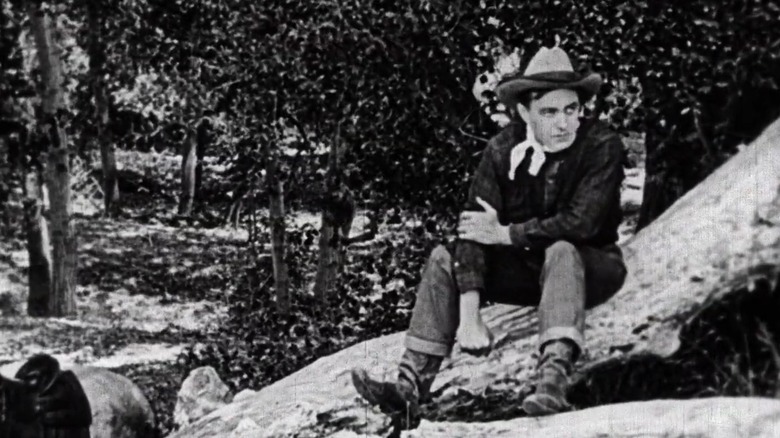
One of the first Western stars, Harry Carey Sr. was born just about as far from the Old West as possible: the Bronx in New York. Carey's plans to become a lawyer were halted when a boating accident left him with pneumonia. It was while he was recovering that Carey wrote his hit play "Montana," which he also starred in. When his next play failed to live up to his first, he decided to try his hand at the newest form of entertainment.
Carey made his movie debut in 1910's "Bill Sharkey's Last Game," directed by the iconic D.W. Griffith. After making several shorts together, Carey starred in the great Western auteur John Ford's first feature film, "Straight Shooting," in 1917. The two would go on to make 25 movies in just four years, including 1919's "Marked Men," which was itself a remake of Carey's 1916 movie, "The Three Godfathers."
Carey Sr. became famous for a specific pose he would make in his movies, holding the elbow of his right arm with his left hand. John Wayne, who was inspired by Carey Sr., paid respect to the actor in Ford's "The Searchers," copying the pose at the end of the movie. Wayne also starred in the 1948 version of "3 Godfathers," once again directed by Ford. This telling of the story also starred Carey's son — and one of the earliest Hollywood nepo babies – Harry Carey Jr.
Carey Sr. passed away in 1947, and "3 Godfathers" was dedicated to him, opening with the text, "To the Memory of Harry Carey, 'Bright Star of the early western sky...'" Carey made more than 250 movies, with the majority being Westerns, but to most audiences he is perhaps best remembered for his supporting role in a non-Western, "Mr. Smith Goes to Washington," which earned him his only Oscar nomination.
Woody Strode continues to quietly inspire cowboys today
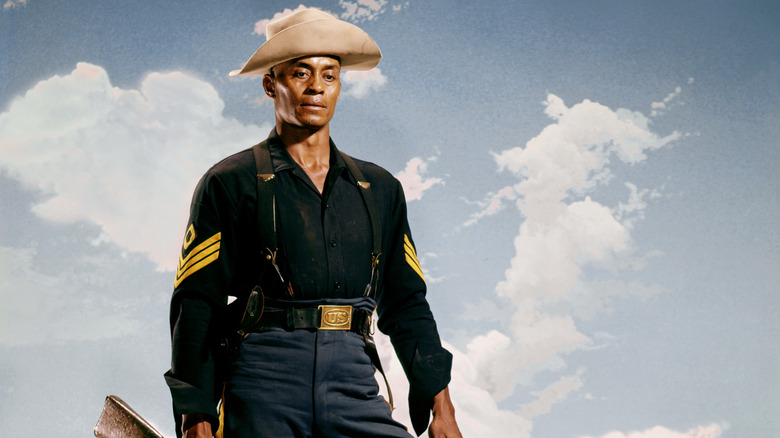
Along with the many movies that John Ford made with Harry Cary Sr. and John Wayne, there was another actor the great Western filmmaker liked to work with who gets less attention: Woody Strode. Born in 1914, Strode first made history when he became one of the first two Black men to play in the NFL in 1946. After serving in the Army Air Corps during World War II, Strode played small roles in a number of forgettable films, but the actor's first big break came in 1959, when Strode appeared alongside Gregory Peck in the Korean War drama "Pork Chop Hill."
It was on the set of "Pork Chop Hill" where he met Ford. The director, impressed with the actor's work, went against the studio's wishes and cast him in "Sergeant Rutledge" as the titular soldier who is accused of assaulting and murdering a white woman. The film was an early, honest depiction of racism, but is often overshadowed by other classics of the time, most notably "To Kill a Mockingbird."
Ford and Strode worked together three more times, and while the actor never had as large a role in their other collaborations, he has one of the most memorable scenes in "The Man Who Shot Liberty Valance," where he begins to recite the Declaration of Independence, forgetting "all men are created equal." This was done as a way for Ford to remind audiences that the country was not living up to that belief. Strode actually became Ford's caretaker for a time during the director's final years. He continued to act, making his final appearance in Sam Raimi's 1995 Western, "The Quick and the Dead." That same year, the first "Toy Story" movie was released, and the lovable Sheriff Woody was named after Strode.