
The Downside Of Starring On Hit Movies & Shows: Celebs Who Have Been Open About Typecasting
Hollywood is, in a lot of ways, a formulaic entertainment factory that relies on repetition for success. If the blueprint for a film works, one can expect multiple renditions crafted from the same mold. Actors often encounter this in the business and risk being typecast based on their looks or after scoring a career-defining role.
The typecasting predicament unsettles younger actors far more than it does their senior colleagues, many of whom either successfully broke out of their molds years ago or comfortably settled into them. Christopher Walken and Alan Dale are classic examples of the latter, employing their acting genius in the niches reserved for them. Others, like Jennifer Aniston and Hilary Duff, have come so far along in their journeys that they have made peace with the labels that follow them.
Jennifer Aniston
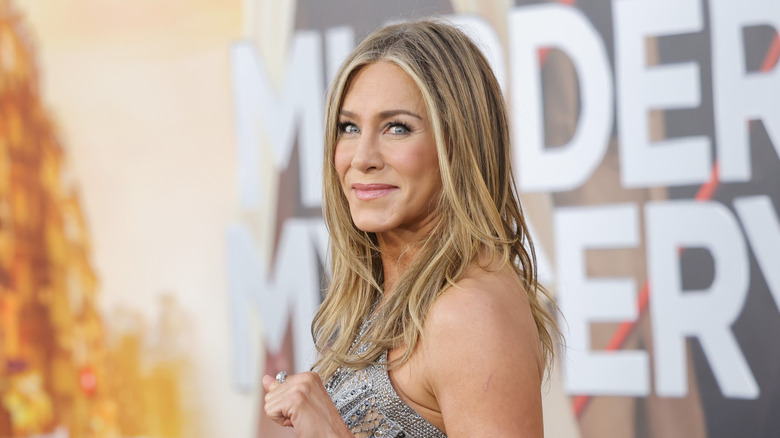
From influencing millennial fashion to inspiring fan lingo, Rachel Green has been an inextricable part of pop culture since she graced our screens in the '90s. But notwithstanding her contribution to society, Jennifer Aniston shares a complicated relationship with her "Friends" alter ego. The actor has often said that she had a hard time escaping Rachel's shadow after playing her across 10 seasons of the successful sitcom.
"You just exhaust yourself. I mean, I could not get Rachel Green off of my back for the life of me," Aniston exclaimed on the roundtable of The Hollywood Reporter, recalling how her girl-next-door character overshadowed her career at the time, until the 2002 comedy "The Good Girl" came along and allowed her to explore her range beyond Rachel.
Considering that Aniston eternalized Rachel into one of television history's most popular characters, her fear of being remembered as "only that girl in the New York apartment with the purple walls" was justified. Though that worry wore off with age — and a widely diversified career — Aniston also seems to have made peace with the fact that to many, she will always be Rachel Green.
Christopher Walken
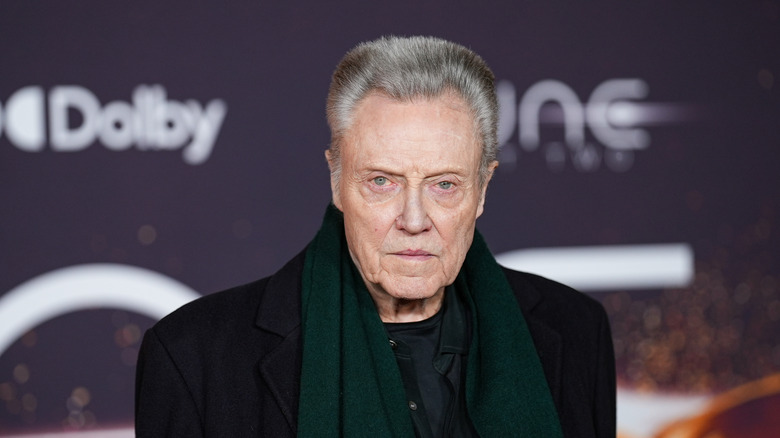
Given his status as one of Hollywood's most decorated icons, there is little doubt about Christopher Walken's acting prowess. Over his 70-year career, a large part of his genius has gone into playing characters who are unsettlingly eccentric, sometimes to the point of villainy. Think "A View to a Kill," "Batman Returns," or "Sleepy Hollow."
So frequent has this antagonistic typecasting been that Walken has coined a term for it: Walkenizing. "Quite often, I'll be sent a script for a movie. And I find that I like it, so I say I'll do it. But then they rewrite it for me. They make it quirky. Odd. I find that rather annoying," he told The Guardian. "I don't usually get to play fathers or grandfathers or uncles."
While he has admitted a desire to escape the box Hollywood put him in — especially given his progressing age — Walken is simultaneously so acutely aware of the industry's workings that he doesn't seem to begrudge the system for its formulaic approach to his talents. As he noted, "Well, movies are so expensive to make that ... if something works you get asked to do it again ... and that's fine."
Salma Hayek
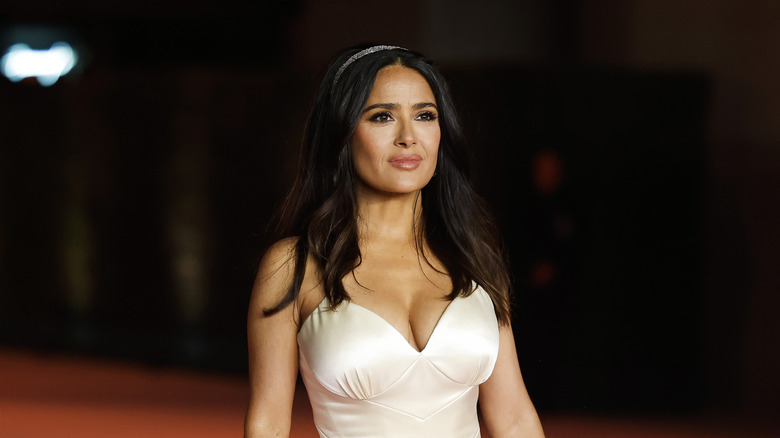
Salma Hayek's transformation has been nothing short of phenomenal. But the journey toward her current Hollywood icon status was lined with difficulties she had to actively combat as a Latina the industry was intent on typecasting. "When I first started, I found that I had to play the part of something they could swallow in Hollywood, which was the sexy Latin girl," she told Allure magazine back in 2011. "I was not dressing like that in Mexico."
Until her pivot with the Frida Kahlo 2002 biopic "Frida," in which she blew the world away with her Oscar-nominated portrayal of the revolutionary painter, Hayek struggled to break out of the often discriminatory ethnic mold Hollywood had fashioned for her. As Hayek told Oprah Winfrey, her bombshell image, especially after "Desperado," disconcerted her. "I guess I'm reduced to that now. That's all I am in the perception of these people," she noted (via Oprah.com).
Such pigeonholing also narrowed her filmography, largely excluding her from genres like comedy that her heart was set on. "They said, 'You're sexy, so you're not allowed to have a sense of humour,'" she told British GQ. Hayek finally realized her dream with the "Grown Ups" franchise, crediting actor-producer-writer Adam Sandler for opening that door for her.
Charlie Day
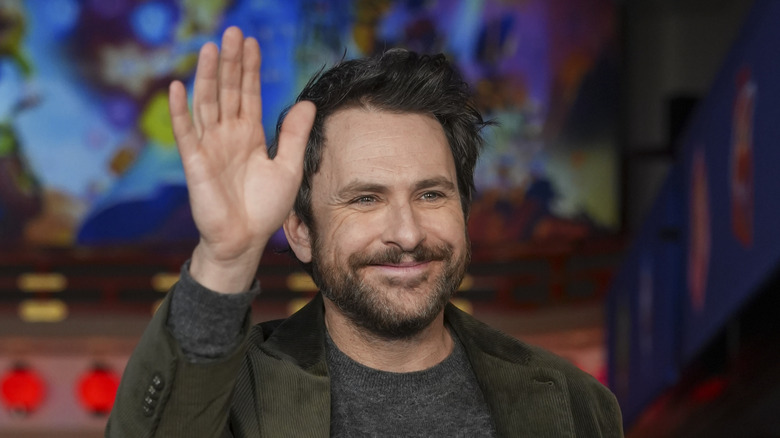
It's almost impossible to visualize Charlie Day without also hearing him. Given his history of playing high-strung oddballs who shriek instead of speak when frazzled, Day has become associated with a specific brand of manic comedy that works well in a deadpan universe, such as "Horrible Bosses" or "It's Always Sunny in Philadelphia." His unmistakable voice was also just as easy to pick out of the lineup of stars who dubbed for "Monsters University."
Though Day's explorations outside his niche have taken him far and wide — even all the way to the action genre, with films like "Hotel Artemis" – he seems to know that completely dissociating from his more famous neurotic characters is not really an option for him or his audience. And so he approaches this typecasting with a touch of his trademark good humor.
As he put it to Shortlist, "Mostly I play despicable people, paranoid people or screaming people high on cocaine, but one of these days I'll get cast in a normal role ... I think it's just that once you play one manic role, everyone wants you for manic roles. Maybe in my next movie I can play Guy Reading A Book."
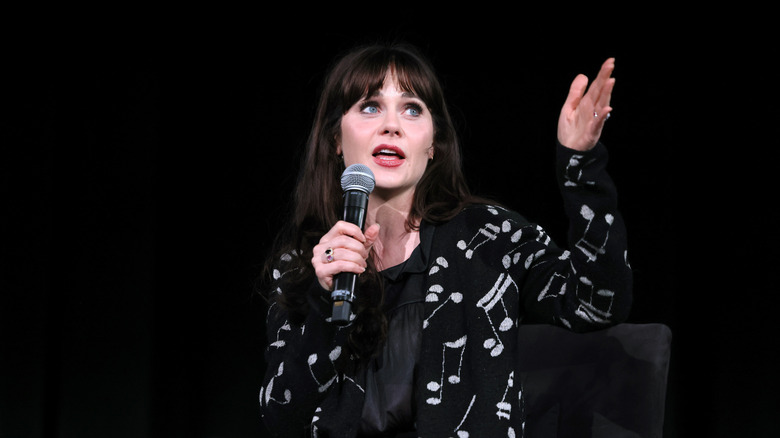
Zooey Deschanel
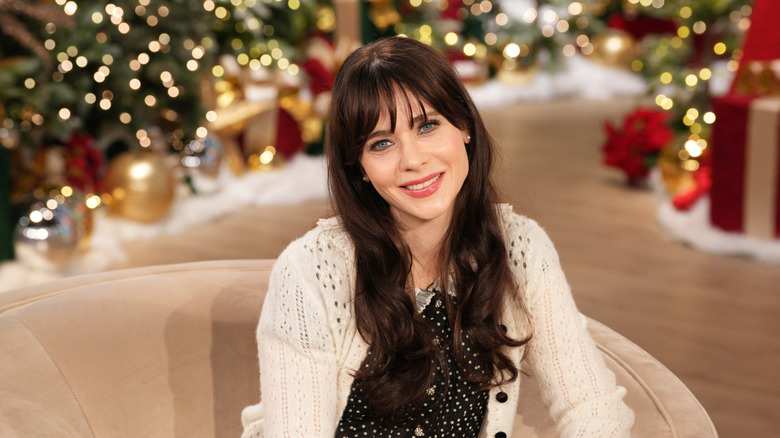
For years, whenever Hollywood wanted to cast an eccentric, fast-talking ball of energy, it turned to Zooey Deschanel. She didn't begin her career in a box, though. Deschanel enjoyed some diversity of roles as a showbiz newbie before films like "(500) Days of Summer" and the hit series "New Girl" — both of which came in quick succession during the late 2000s — helped establish her as the ultimate personification of the manic-pixie-dream girl trope on screen.
Becoming the poster face of adorkability didn't bother Deschanel so much — at least not for a while. As she told The Guardian, "Sometimes you have to play to your strengths. Every actor's known for being good at certain types of role." Her equanimity was understandable, given that it was through these very roles that Deschanel went from a supporting character to mainstream success as a lead star in both film and television.
The pigeonholing eventually became more uninspiring to Deschanel than anything else, and she branched out into newer characters, even deepening her career as a musician on the side. Despite her best efforts, though, her image as Hollywood's beloved quirky girl remains intact.
Alexander Skarsgård
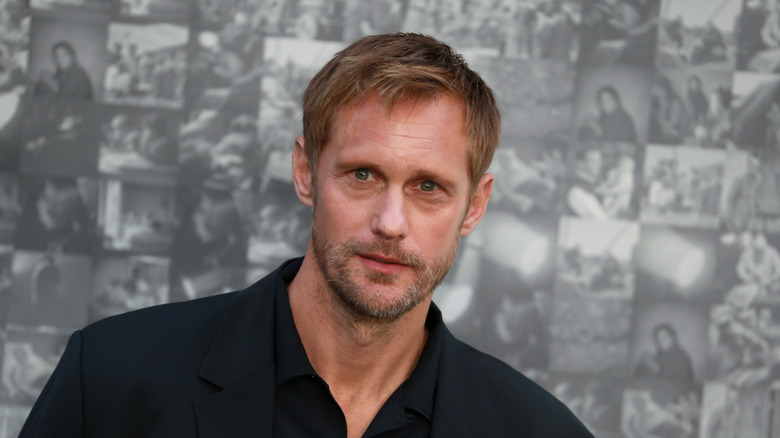
There's no denying that Alexander Skarsgård is an unbelievably good-looking man. But to define him by just that dimension presents an incomplete portrait of him as a performer — which is exactly what the industry did for years before acknowledging his acting range. "I was left auditioning to play the boyfriend of a girl who gets killed in scene four of a low-budget horror movie," he told The Sunday Times, recalling that it was tough for him to get by in Hollywood after "Zoolander," one of his earliest prominent roles.
Over in his home country of Sweden, to which the Skarsgård film family belongs, things weren't any easier. "[A]fter my first job I was on a stupid 'sexy hunky hot list' and then people didn't take me seriously. If you want characters with depth but have been labelled 'a dude who takes his shirt off', you're not going to get those offers." Fortunately, Skarsgård was able to find a balance between taking on more profound roles without giving up on his sex-symbol status, most memorably through his big breakthrough as vampire Eric Northman in "True Blood."
Iwan Rheon
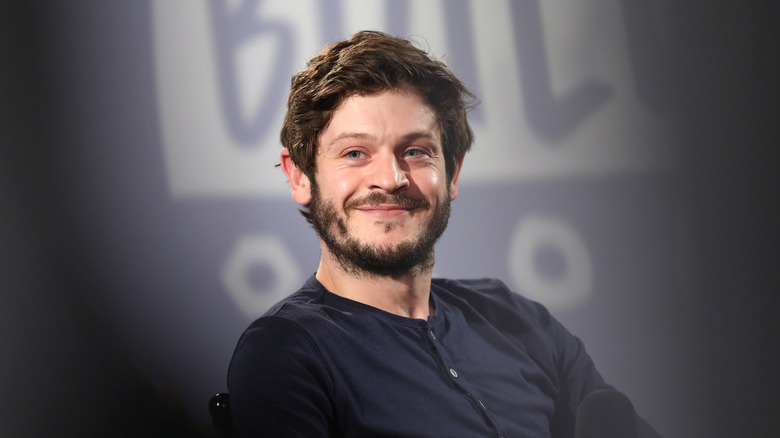
Unlike several of his contemporaries who had to face typecasting at the beginning of their careers, Iwan Rheon encountered the problem later in his acting journey. The television star had already gained fame as the socially awkward Simon Bellamy in "Misfits" when he bagged a role in "Game of Thrones," which set the tone for his immediate future thereafter.
Starting in the third season of the fantasy series, Rheon essayed the savage Ramsay Bolton to such villainous perfection that similar opportunities began falling into his lap. For the 2017 comedy drama series "Urban Myths," for instance, Rheon was roped in to play history's ultimate bad guy Adolf Hitler — an offer he said was hard to refuse, despite the typecasting risk it inherently put him at.
"I think I have to be very wary now of not playing um too many baddies," he told The Geeknd. That same year, however, Rheon also starred in "Inhumans," a Marvel Comics-adapted series in which he played the supervillain Maximus. While fears of being seen as monotonous hung low over this role, too, Rheon made peace with the apparent parallel by connecting with his character beyond his villainy (via Variety).
Anna Kendrick
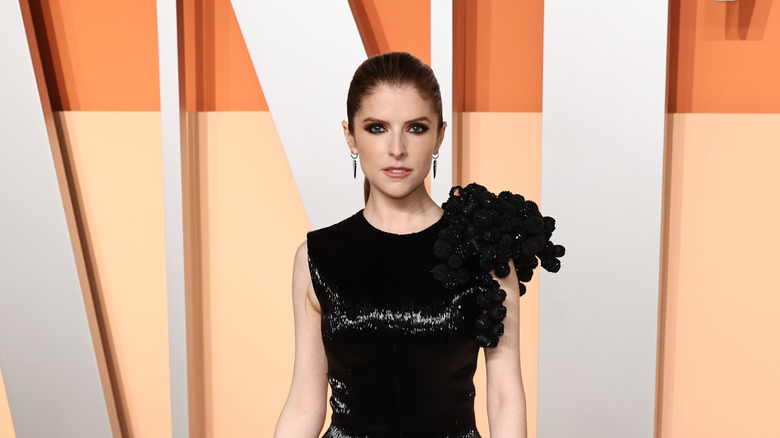
Typecasting was one occupational hazard Anna Kendrick was wary of after her career turned with "Up in the Air." The smashing performance she gave in the 2009 drama alongside George Clooney — as an "uptight, too-big-for-her-britches business type," in her own words to BuzzFeed News — pulled in critical acclaim for Kendrick like never before, even qualifying her for an Oscar nomination. Expectedly, the industry attempted to replicate the success by repeating the formula.
"After that time in my life, I was given a lot of opportunities that I wouldn't have otherwise (received) but in a lot of cases, because 'Up in the Air' was so fresh in everyone's minds, it was a lot of opportunities to play basically the same character, which I didn't want to do," The Philippine Star quoted her as saying.
While she did enjoy the odd low-stakes role, like "ParaNorman," where she played the "dumb cheerleading sister," Kendrick's resume after 2009 featured characters who shared traits with Natalie Keener. But according to Kendrick, it could also just be a big misperception: "My suspicion is not that I'm doing it subconsciously, it's that other people just put what they want to see onto you."
Charlize Theron
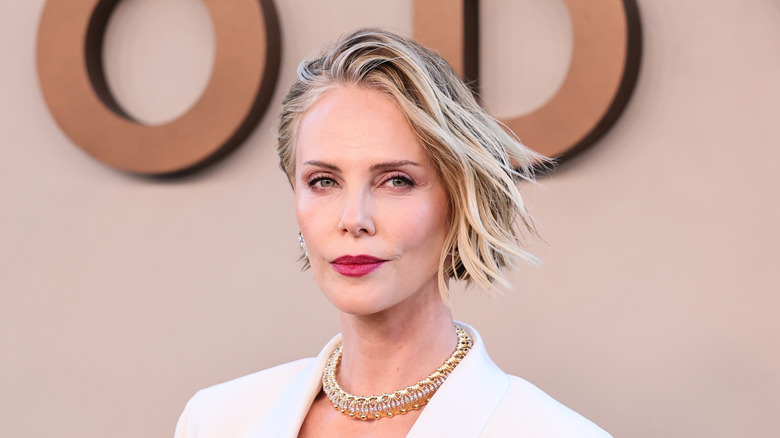
Pretty privilege is real. But, according to Charlize Theron, it also comes with its own downside. "How many roles are out there for the gorgeous, f***ing, gown-wearing eight-foot model? When meaty roles come through, I've been in the room and pretty people get turned away first," she famously quipped to British GQ.
While she didn't explicitly place herself in that classification, the way Theron looked dictated her place in Hollywood when she first started in the industry. The 2003 film "Monster" — for which she transformed into serial killer Aileen Wuornos and won a Best Actress Oscar — marked a turn in her career. "I've made sure that puppy's gone to bed," she told Oprah Winfrey when asked if the industry still defined her by her appearance (via Oprah.com).
In the years that followed, Theron built a solid film resume that few in Hollywood can match. But even with the game-changing success she achieved, the ghost of typecasting seemingly continues to haunt her. In speaking to Elle about her role as Calypso in "The Odyssey," Theron categorically expressed appreciation for director Christopher Nolan for not typecasting her. "I was given a chance to do something that I haven't had a ton of opportunity to do."
Aubrey Plaza
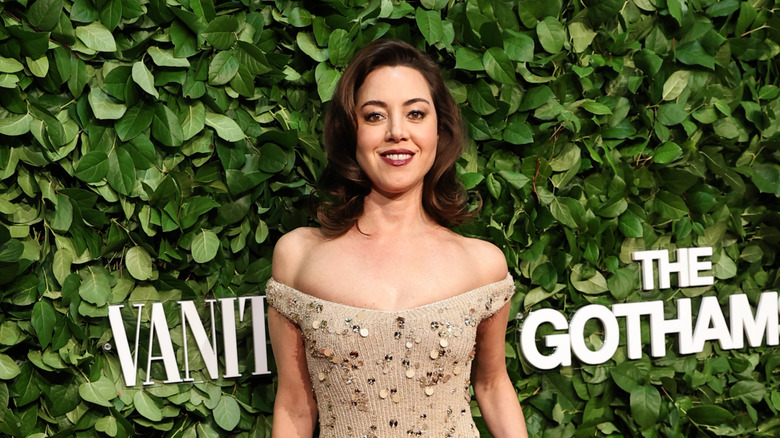
Aubrey Plaza has been up to a lot after "Parks and Recreation" – most prominently, drawing in top nominations for her role in "The White Lotus" — but it was that mockumentary-style sitcom that her career undeniably hinged on for years. As the perennially unimpressed April Ludgate, whom she played across the show's seven seasons, Plaza scored her big showbiz breakthrough that paved the way for the rest of her acting career.
But given how deeply associated she was with the television character and all her traits in the 2010s, it was hard for Plaza to break out of that mold at the time. "You do something, people respond to it, and they want to see you do it again, again, and again," she said during a SAG-AFTRA screening (via IndieWire).
Notwithstanding the limits imposed on her, typecasting also gave Plaza the push to peel back the layers of her acting talent. "I think you just have to be really proactive in changing that narrative for yourself," she added, noting how playing "the blond-haired, big-breasted promiscuous person that wants to have sex with an old man" in the 2016 comedy "Dirty Grandpa" was a conscious choice.
Alan Dale
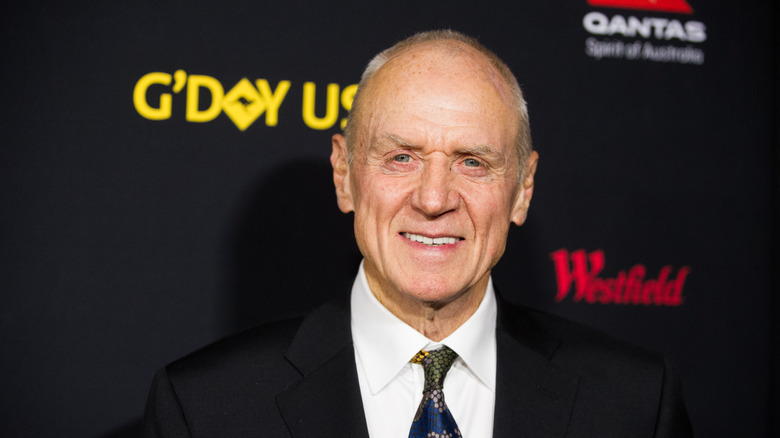
Alan Dale has built a whole acting career out of playing, as he put it to The New Zealand Herald, the entertainment industry's "go-to powerful guy." From "24" to "The O.C." and, of course, "Dynasty," Dale has become synonymous with authority — often the menacing kind — especially on television. And as a senior actor, he feels there is no other alternative. "I'm not going to be a juvenile lead, am I?" he quipped. This wasn't always the case, though.
Dale's initial claim to fame was as beloved family patriarch Jim Robinson in "Neighbours," a soap opera he led in Australia for about eight years. Despite the roaring success it brought, Dale eventually encountered a lull, which brought him to Hollywood for a career reset. "My [drama] teacher taught me that you might want to play great roles, but truth is you will get cast as a specific type. Just work out your type," he told The Sunday Times. And he did, by playing "rulers of the world or the guy who kills the ruler of the world."
Regina King
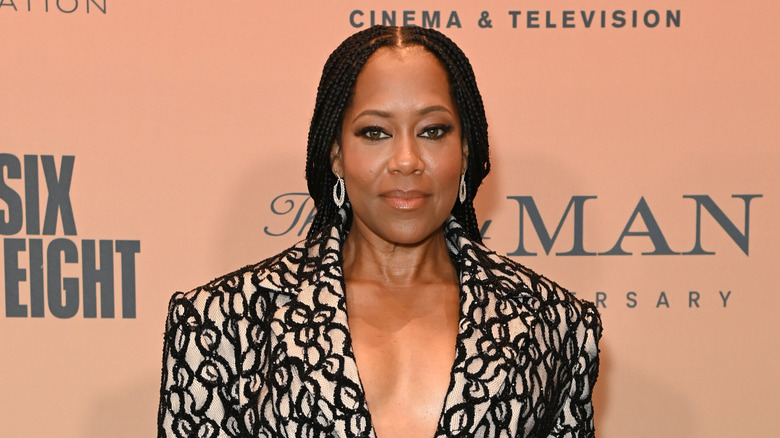
Long before she bagged four Emmys and an Oscar, Regina King was just another actor Hollywood was nudging into a pigeonhole that may have been hard for her to get out of. That risk confronted her right from the get-go, when she gave a smashing supporting performance as the outspoken Shalika — with just a few minutes of screen time, no less — in her debut film "Boyz n the Hood." And where audiences were thoroughly charmed, the industry saw an opportunity.
"I saw that I was being stereotyped," she told Vulture. "I saw that a lot of us were being stereotyped. I didn't want to be part of that — that's not the narrative I was creating for myself." Wary of being boxed into a trope, King devised a method for herself: privately creating a backstory for her character to give it more depth. She also pledged only to accept roles she felt a personal pull toward. "If it doesn't speak to me on the page, if I'm not feeling that connection to it, I'm not going to audition," she explained to Vanity Fair. "It's not fair to myself."
Hilary Duff
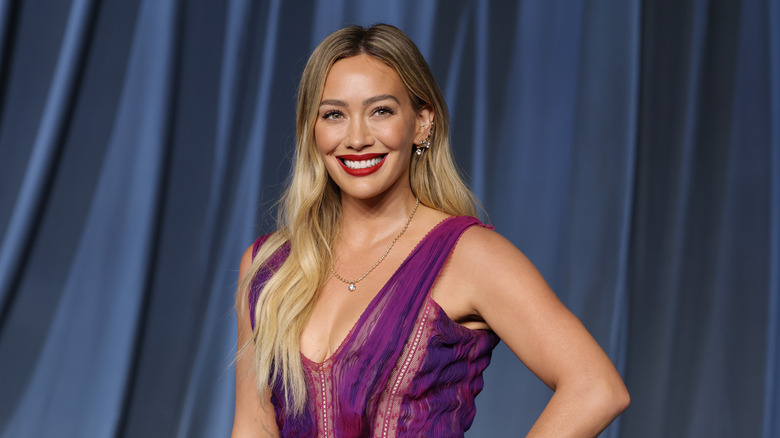
The 2000s were a Disney fever dream, and "Lizzie McGuire" was one of its earliest fountainheads. The sitcom premiered in 2001 and turned its namesake lead character, played by Hilary Duff, into a global teen sensation. Though it only ran for two seasons, the show embedded itself so deeply in millennial pop culture and public consciousness that it became nearly impossible to distance Duff from her screen alter ego for years afterward.
"I definitely went through big frustrations of being like, 'Why can I not get a shot at being someone else?'" Duff told Cosmopolitan UK, recalling how the issue of her one-track identity in the industry weighed on her while she was growing up. The concern was only valid, considering that Duff couldn't really escape her Disney-tinged reputation in the aughts — especially after she followed up "Lizzie McGuire" with projects like "Cadet Kelly" and "A Cinderella Story."
As the years wore on, Duff's perspective on "Lizzie McGuire" and toward being caught in a pop millennial time capsule eventually softened. "I'm at such a different place in my life now, being a mother and a wife ... It just doesn't annoy me any more when people refer to me as Lizzie McGuire."
Rebel Wilson
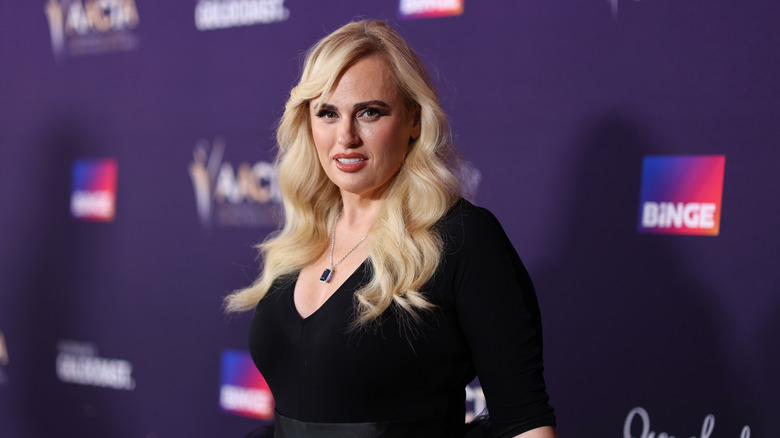
For many years, Rebel Wilson was Hollywood's go-to talent every time the industry needed to fill the fat, funny friend trope — thanks in no small part to the "Pitch Perfect" film franchise, which popularized her as Fat Amy. Wilson, too, leaned into the stereotype, telling The Sunday Times: "I knew I wouldn't be taken seriously like a Cate Blanchett or Nicole Kidman, but I quickly realised that the bigger you were, the more audiences laughed."
As she put it, "It was a really conscious decision to look ugly. It was part of my plan." But that wasn't the only reason behind the size-driven comedy on which the character of Fat Amy hinged. Wilson's contract across the three musical films reportedly bound her to a particular weight that allowed for a wiggle room of just about 10 pounds.
So tightly was she pigeonholed that, before she underwent one of the most stunning weight loss transformations Hollywood has ever seen, Wilson was faced with the concern of losing her comedy niche. But, in what was a telling indictment of Hollywood's persistent size bias, the industry began opening its doors to Wilson in other genres after she shed 80 pounds. "I think I kind of un-typecast myself by losing weight," she told SiriusXM.