

The Many Health Issues Hollywood Legend Elizabeth Taylor Dealt With During Her Life
This article contains references to substance abuse and domestic violence.
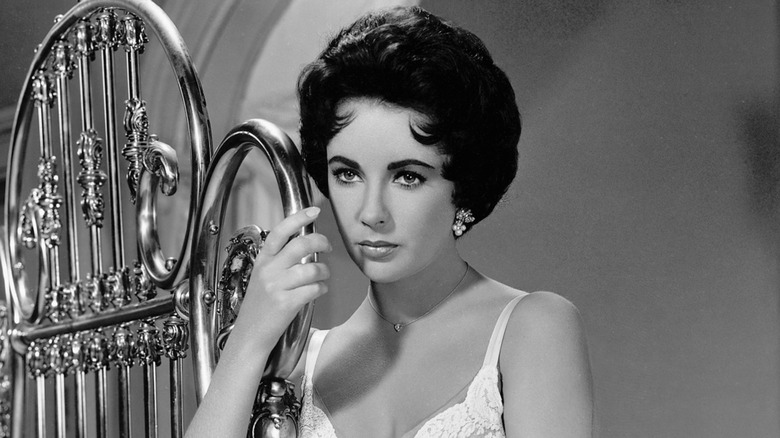
Silver screen legend Elizabeth Taylor captivated the world with her striking violet eyes and phenomenal acting performances. Taylor first soared to stardom in the '40s as a child actor before dominating Hollywood in the ensuing decades, the starlet memorably appearing in a slew of cinema classics like "Giant," "Cat on a Hot Tin Roof," and "Who's Afraid of Virginia Woolf?" Though she was adored for her beauty, fame, and philanthropy, Taylor faced tragic health hurdles behind closed doors.
From debilitating chronic pain to near-fatal bouts of pneumonia, the Academy Award winner faced her fair share of ailments and health issues throughout her illustrious career. Taylor had often been candid about the many surgeries and hospitalizations she was forced to endure throughout her 79 years of life, though she always kept her spirits high.
Known for enjoying a lavish life in excess, Taylor developed an addiction to alcohol and painkillers, vices that proved severely detrimental to her health. "The problem with people who have no vices is that generally you can be pretty sure they're going to have some pretty annoying virtues," she famously once said.
Elizabeth Taylor was born with scoliosis
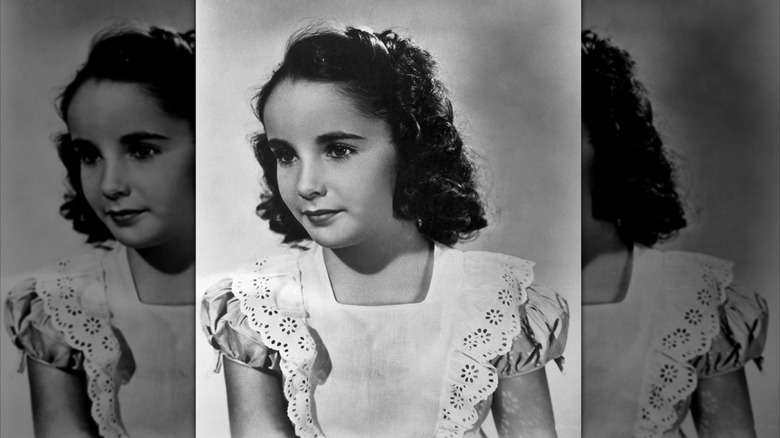
Born in London, England, in 1932, silver screen legend Elizabeth Taylor was born with congenital scoliosis, a condition that caused her persistent health issues the rest of her life and led to chronic back pain. She was ultimately hospitalized over 70 times throughout her life and underwent 20 major surgeries, enduring one health hurdle after another from infancy to the end of her life.
Taylor moved to Los Angeles in 1939 when she was 7, her family fearing for their safety as World War II began to take shape in Europe. The future Hollywood starlet had the acting craft in her blood as her mother, Sara Sothern, was a stage actor. Taylor even performed a dance recital for Princesses Margaret and Elizabeth when she was just 3 years old. She refused to let her scoliosis condition slow her down and wasted no time pursuing her cinematic dreams.
"You just do it. You force yourself to get up. You force yourself to put one foot before the other, and God damn it, you refuse to let it get to you," she once said of resilience (via Parade). "You fight. You cry. You curse. Then you go about the business of living. That's how I've done it. There's no other way." She signed her first contract with Universal Pictures in 1941 at 9, Taylor's striking violet eyes and dark double eyelashes quickly setting her apart from fellow child stars.
She fell off a horse when she was 12
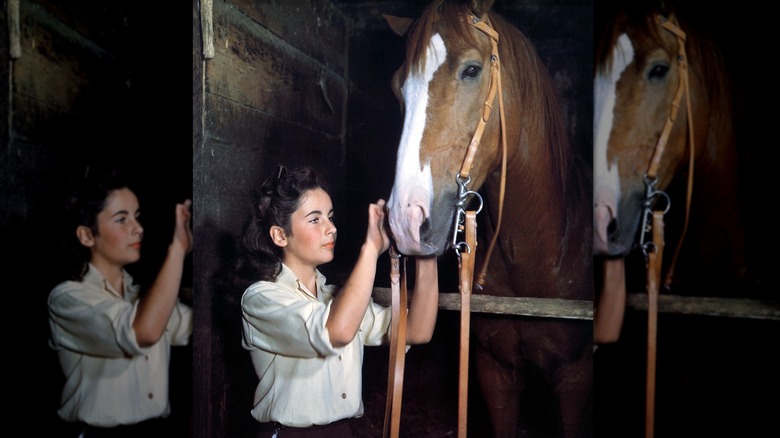
Elizabeth Taylor's lifelong pain from scoliosis intensified after she fell off a horse when she was 12, the future Hollywood legend training to ride for her role in the 1944 film "National Velvet." She broke her back as a result of the accident, and the pain paired with her scoliosis caused even more issues for Taylor throughout her life. The actor was resilient and overcame the injury during production, the mishap not deterring her love of horses.
Taylor had been riding since she was 3, and she jumped at the opportunity to portray an aspiring jockey in "National Velvet." "That was me. And I chose the horse. He was a wild, thoroughbred racehorse that nobody else could ride and, of course, that thrilled me to the core and made me his and he mine," she told Interview Magazine of the formidable experience. Despite the accident, Taylor loved the 7-year-old gelding named King Charles so much she asked to keep the horse and was gifted him on her 13th birthday.
The Oscar-winner further reflected on the accident and her scoliosis in the sit-down with Interview Magazine in 2007, revealing how she was forced to give up riding in the ensuing years because of her back pain. "I was born with scoliosis. I have a double curvature of the spine, and it's forced me to use a wheelchair because the disease has really taken hold. It really saddens me that I can't ride."
Elizabeth Taylor nearly lost her sight from an on-set accident
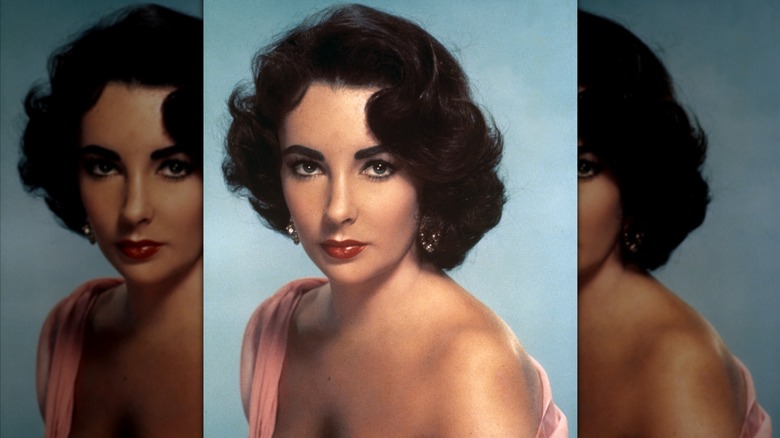
While filming the 1953 drama "Elephant Walk," Elizabeth Taylor had to undergo surgery to save her vision after a flint fragment became embedded in her eye. The leading lady was known for her striking violet eyes, and doctors rushed to remove the splinter and preserve her sight, with Taylor nearly losing her sight as a result of the on-set accident. Though her signature purple gaze helped Taylor become a screen siren, her eyes were actually a deep blue that was accentuated by her double eyelashes, which were caused by a rare genetic mutation known as distichiasis.
In fact, her arresting eyes famously caused on-set issues while shooting her first film, 1942's "There's One Born Every Minute." According to her biography "Elizabeth" by J. Randy Taraborrelli, when Taylor showed up on the first day, casting directors reportedly said, "Get that girl off the set– she has too much eye make-up on, too much mascara" (via The Vintage News).
Taylor's legendary violet eyes became one of her most captivating features, and had they been permanently damaged from the accident, it could have changed her entire career trajectory. "As a girl, my mother told me I'm nice looking and that I have pretty eyes," she once said via Bored Panda about the attention she received from a young age. "It's not your eyes ... it's the expression behind your eyes that will make you truly beautiful."
She suffered a miscarriage and struggled during pregnancy
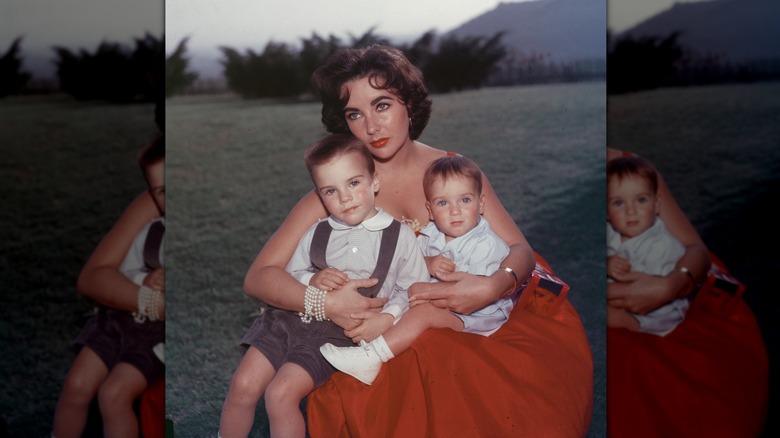
Elizabeth Taylor was the proud mother of four children, though even when she was pregnant, she still suffered from debilitating health setbacks that put her life in jeopardy. Taylor experienced a devastating miscarriage when she was just a teenager, losing the child after her first husband, Conrad "Nicky" Hilton Jr., became physically violent. She divorced the socialite after just 8 months of marriage on grounds of mental cruelty.
"I had no idea that he drank, because we were engaged for nine months and he was on the wagon that whole time. So two weeks after our marriage, when he started drinking, I had no idea that that person existed," Taylor told Barbara Walters in a 1997 interview about her tumultuous, short-lived romance with Hilton Jr. "I was a bit of a punching bag."
After the painful loss of her first child, Taylor welcomed sons Michael and Christopher in 1953 and 1955, respectively, with her second husband, Michael Wilding. In 1957, it took nine doctors to help deliver her third child, Liza, prematurely, who was born by cesarean section at just 4 pounds and 14 ounces. The global superstar adopted her last child Maria, in 1961, with Taylor treasuring motherhood above everything else. "I've never felt more alive than watching my children delight in something," she once said via her official website, ElizabethTaylor.com.
She survived a near-fatal case of pneumonia in 1961
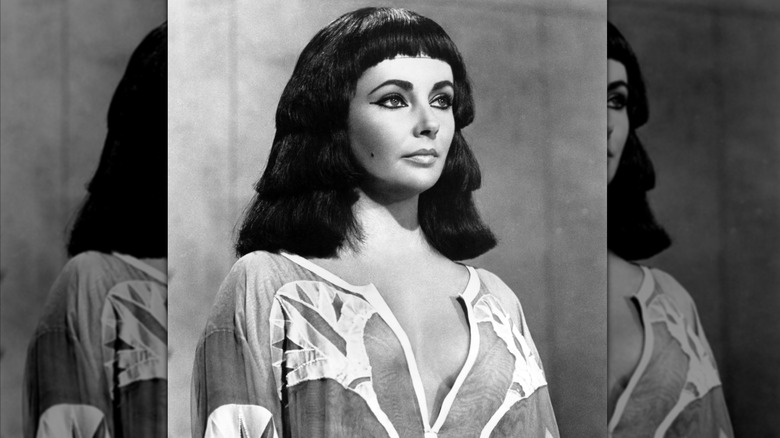
Taylor developed a near-fatal case of pneumonia while filming the historical epic "Cleopatra" in 1961, the actor becoming dangerously ill and having to undergo an emergency tracheotomy as a result. She was rushed to a London hospital and pronounced dead four times after she stopped breathing for 5 minutes. Taylor's then-husband Eddie Fisher was reportedly by her side during the harrowing ordeal, revealing per the Desert Sun that, "There's a slight improvement, but she's not out of danger. We're keeping our fingers crossed from hour-to-hour."
Taylor eventually recovered and detailed the poignant experience she had in a 1992 interview with Oprah (via the Daily Express). "When I had the out-of-body experience and could see the people working around me, I tried desperately to move an eyelid, a finger, something to let them know that I could hear them saying 'well I think we've lost her,'" Taylor shared with the host, adding that she remembered feeling "this welcoming white sun, and warmth."
The beloved icon told Oprah she had been reunited with her former husband, Hollywood producer Mike Todd, who had tragically died in a plane crash in 1958 while they were married. "Mike Todd was there. And I wanted to be with him more than anything in the world. He'd been dead about three years. And I was still mourning him. He said, 'No, baby, you can't. It's not your time. You can't come over. You have to fight to go back.'"
She had an emergency hysterectomy
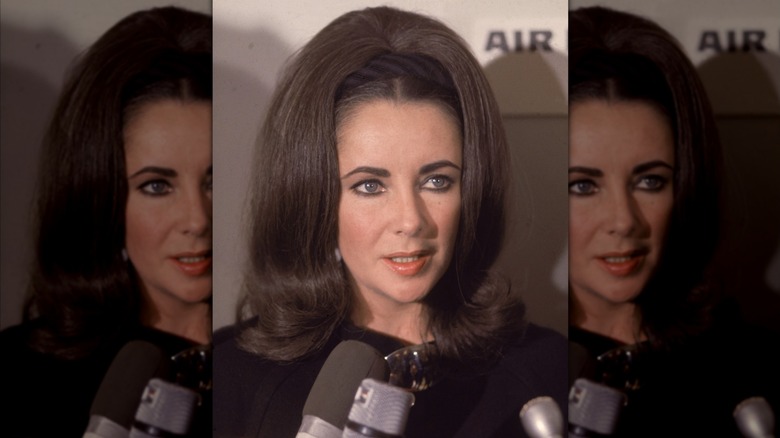
When Elizabeth Taylor was 36 years old in 1968, she underwent an emergency partial hysterectomy in London and was subsequently admitted to the hospital for amoebic dysentery. Taylor's chronic back pain and scoliosis ultimately became more aggravated after the procedure, which also led to persistent hip issues. The screen siren eventually recuperated from the surgery but later developed a dependency on painkillers, likely in an effort to mask her many ailments and their lingering side effects.
Taylor enjoyed an extremely lavish life and was known for being quite indulgent when it came to everything from traveling, fine cuisine, fashion, and her many high-profile romances. Many of these excessive tendencies led to her worsening health conditions, specifically her penchant for painkillers. Her scoliosis and unexpected hysterectomy only exacerbated her pain and overall discomfort, the cinema great detailing her relationship with opioids in 1985.
”For 35 years, I couldn't go to sleep without at least two sleeping pills,” she said to The New York Times. "I'm a genuine insomniac. And I'd always taken a lot of medication for pain. I'd had 19 major operations, and drugs had become a crutch. I wouldn't take them only when I was in pain." Taylor's numerous operations played a major role in her painkiller dependency, and she was eventually forced to face her addiction after her children held an intervention in 1982.
Elizabeth Taylor sought treatment for substance dependency
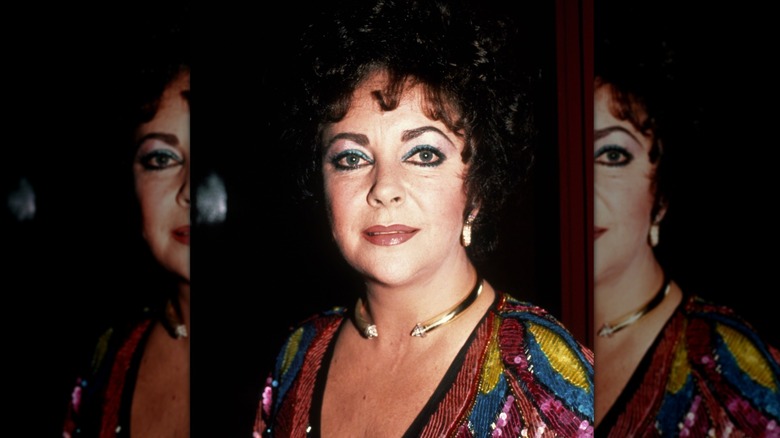
Elizabeth Taylor's long history of pain treatment and alcohol use eventually developed into dependency. In December 1983, she checked herself into the Betty Ford Center for seven weeks to seek treatment, doing so after her children held an intervention. Taylor's son Christopher Wilding has opened up about how terrified her family was for her health and well-being during this period.
"She had physical ailments, especially bad back problems, for which the use of pain meds was a legitimate recourse. When she was little, we had all these miracle drugs and you took a pill. That was her approach — better living through science," Wilding told People of his mother's addiction. "We were all petrified. She was a formidable woman."
Taylor recounted her own personal experience with her family's plight to help her get clean in a private recording featured in the BBC docuseries "Elizabeth Taylor: Rebel Superstar" (per People). "The family intervention stopped me so dead in my tracks. It leaves you totally speechless, and it's so sincere and done with such love that you know it must be agony for them." The Golden Globe winner became one of the first celebrities to publicly admit herself to the famed clinic, and she once again sought treatment after relapsing in 1988.
She had two hip replacement surgeries
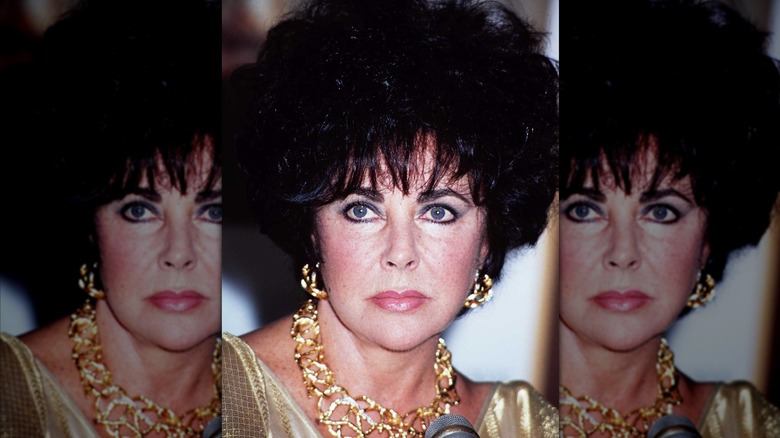
After suffering from excruciating arthritis, Elizabeth Taylor had surgery to replace her left hip in 1994 at 61, the Hollywood icon using a fake name while in the hospital to protect her privacy. The following year, Taylor had her right hip replaced to further alleviate her chronic pain. "My hips just disintegrated," she told Larry King (via Elizabeth Taylor's Facebook) in a 2001 interview. "They had to do three hip surgeries because one was 5/8 of an inch off, so they had to go back and do the first one a second time cause I didn't want to keep getting shorter. God knows I'm short enough."
Taylor was vocal about the discomfort she felt prior to the surgeries and encouraged her fellow acting peers, like fellow legend Angela Lansbury to also undergo the life-changing procedure. "Liz convinced her to do it, and not only recommended the hospital, but also her surgeon. Liz was quite insistent. She told Angel, 'You'll suffer in silence no more,'" a family friend of Lansbury reportedly said (via Morning Honey).
Unfortunately for Taylor, her health woes were far from over following the hip replacement surgeries, as she continued making headlines in the late '90s and 2000s for her physical ailments. 1997 proved to be yet another pivotal year for the screen star, as a series of challenging health setbacks led to the discovery of a shocking brain tumor.
Elizabeth Taylor underwent brain surgery
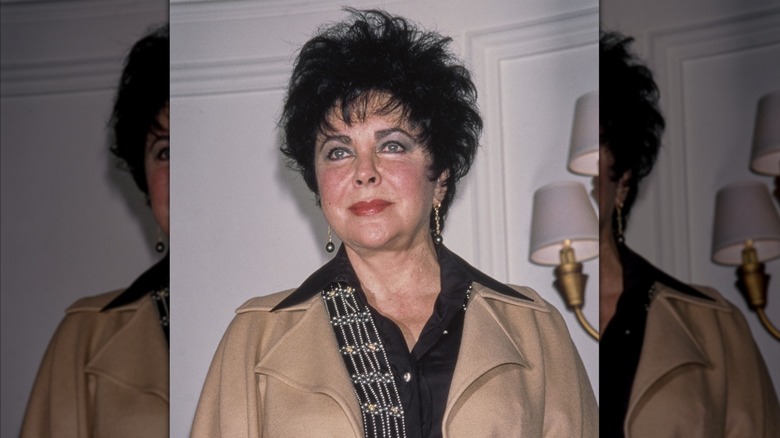
In 1997, Elizabeth Taylor underwent surgery for a benign meningioma brain tumor that was discovered in an MRI after she had been plagued by severe migraines. The Hollywood icon even posed with a shaved head for Life magazine after the successful removal, the surgery taking over four hours to complete. The tumor was found in the left parietal lobe and had been the size of a golf ball, with Taylor experiencing a minor stroke as a result of the surgery and subsequent treatment.
The actor proudly showed off her bald head in the portrait for Life, hoping to inspire and empower other women. "I didn't wear wigs or scarves or anything like that," Taylor told the publication (via Elizabeth Taylor Archives). "I thought, maybe this could help women who have to shave their heads. I was trying to say to women, don't be afraid of being bald ... If it's going to make you better, then be proud of it, wear it as a badge ... of courage, that this is what life is about and I'm not ashamed of it."
Photographer Herb Ritts took the powerful portrait of Taylor, who throughout her life became a fearless and outspoken presence in Hollywood, the actor proudly showing off her surgery scar. Taylor's vulnerability in front of the camera and desire to uplift other women going through a health hurdle further cemented her status as a beloved global icon.
She was treated for skin cancer in 2002
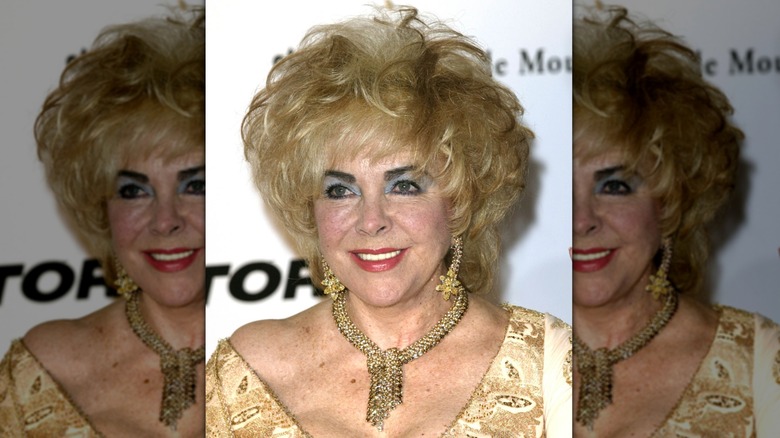
The start of the new millennium did not bring a change in luck for Elizabeth Taylor's health, as she was diagnosed with a treatable case of basal cell carcinoma in 2002. The veteran performer received radiation therapy that helped cure the skin cancer, and after completing treatment, Taylor became more vocal about her endless health hurdles.
"People must think, 'My God, she's still alive?' But there's some resilience in me that makes me keep fighting. It's the damnedest thing — I just keep coming back," she shared in a candid interview with W Magazine in 2004. Taylor acknowledged how her worsening health caused her to step back from charities and causes near and dear to her heart. Taylor had been one of the first Hollywood celebrities to become involved in HIV/AIDS activism, kicking off her efforts in 1984 and helping raise more than $270 million in the ensuing years.
She had been close friends with leading man Rock Hudson, who died from the disease in 1985, prompting Taylor to help announce the creation of the National AIDS Research Foundation that same year. Her health issues prevented her from further devoting herself to the cause. "I haven't done anything for a year. And it really bothers me. Because that's the thing I live for. And I feel so stupid and feeble, that I can't do the work I was meant to do, because of my bloody body," she further told W Magazine.
She was diagnosed with congestive heart failure in 2004
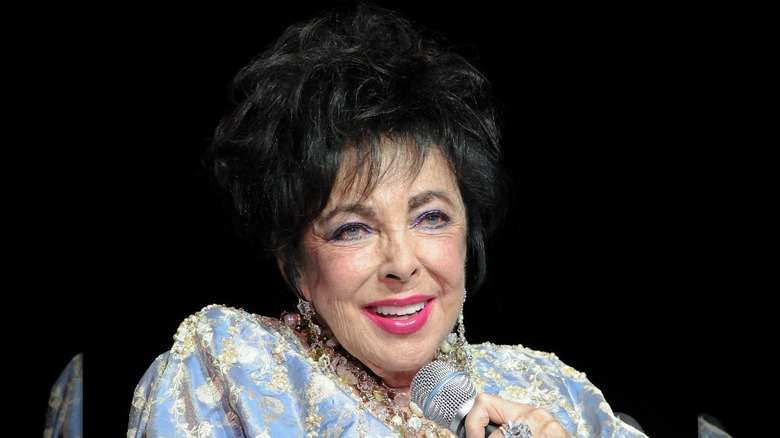
In 2004, Elizabeth Taylor was diagnosed with congestive heart failure, the condition likely amplified by her decades of cigarette smoking and relentless health struggles. Meanwhile, her scoliosis and spinal problems continued to worsen, forcing her to rely on a wheelchair during her final years. Despite the setback, Taylor remained in the public eye, assuring fans and the media that she was still going strong.
The cinema staple remained in good spirits even as her health continued to deteriorate. "My body's a real mess. If you look at it in the mirror, it's just completely convex and concave. I've become one of those poor little old women who's bent sideways," she told W Magazine. "My X-rays are hysterical. The bone doctors just throw up their hands and say, 'Sorry, there's nothing we can do!' Which is so cheery." 7 years after her initial diagnosis, Taylor passed away on March 23, 2011, at the age of 79 after being hospitalized 6 weeks prior.
Even in death, the violet-eyed legend kept the world captivated, as the ceremony for her private Jewish funeral began 15 minutes late; "She even wanted to be late for her own funeral," her representative said per CNN. Through it all, Taylor always kept her fiery spirit. "The ups and downs, the problems and stress, along with all the happiness, have given me optimism and hope because I am living proof of survival," she once told the press (via the Daily Express).
If you or anyone you know needs help with substance abuse or domestic violence, contact the relevant resources below:
-
The Substance Abuse and Mental Health Services Administration website or contact SAMHSA's National Helpline at 1-800-662-HELP (4357).
-
The National Domestic Violence Hotline at 1−800−799−7233. You can also find more information, resources, and support at their website.