

Quote Of The Day By Jean-Paul Sartre: 'It's An Undertaking To Start Loving Somebody. You Have To...'
We may receive a commission on purchases made from links.
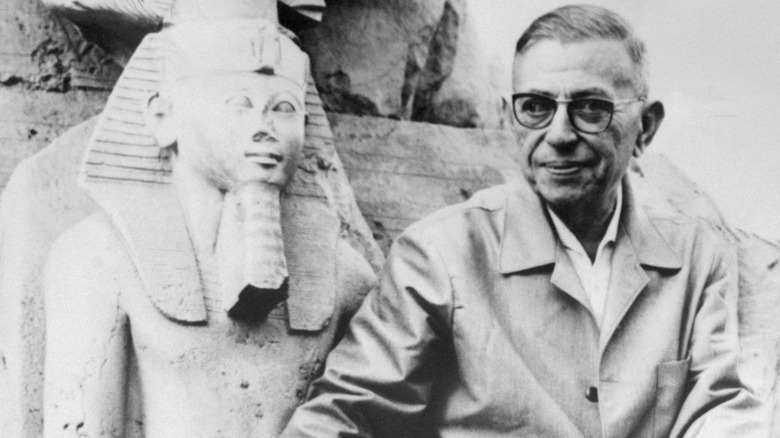
Jean-Paul Sartre was one of the most talented wordsmiths of the 20th century, writing everything from treatises on philosophy and literary criticism to novels and plays. Sartre's fiction prowess was so renowned that he won the 1964 Nobel Prize in Literature. However, since Sartre believed his work needed to stand on its own, he also became famous for not accepting this accolade.
Philosophy was Sartre's first love, and ultimately led to his relationship with Simone de Beauvoir. Born in 1905, Sarte was dazzled by de Beauvoir when they met as students in their early 20s. Similar to Sartre's decision to eschew the Nobel, he and de Beauvoir created a partnership that was based solely on their terms. The two pursued similar career paths in writing and philosophy and their relationship lasted from 1929 until Sartre's death in 1980. De Beauvoir died six years later. While she and Sartre never live together, they're eternal neighbors, as they were buried next to each other.
Sartre and de Beauvoir's relationship wasn't immune to messiness, and some of their rules opened the door to drama. "What we have is an essential love; but it is a good idea for us also to experience contingent love affairs," Sartre explained to de Beauvoir early on in their association (via The New Yorker). While Sartre was interested in pursuing and writing about love in various forms with a variety of people, the esteemed philosopher also acknowledged that love can be a lot of work.
Quote of the Day by Jean-Paul Sartre
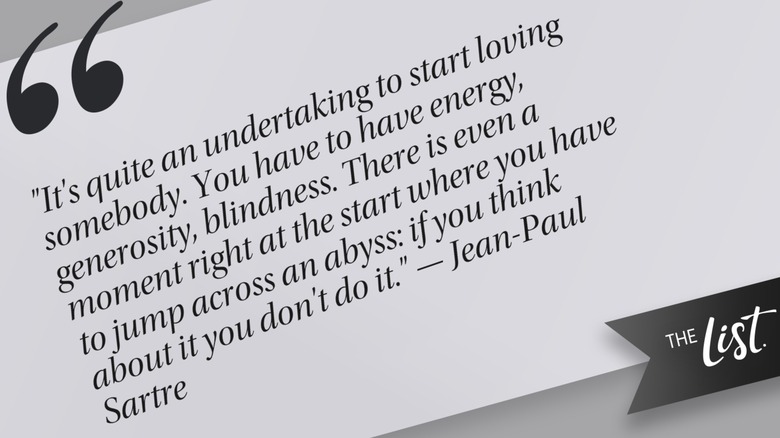
In his 1938 novel "Nausea," Jean-Paul Sartre wrote, "It's quite an undertaking to start loving somebody. You have to have energy, generosity, blindness. There is even a moment right at the start where you have to jump across an abyss: if you think about it you don't do it."
This quote comes from a section of the book where the narrator, Antoine Roquentin, meets up with a former lover, Anny. The sentiments belong to her: she's feeling down and has given up on love completely. However, even though Anny doesn't want to deal with the work romantic relationships require anymore, she does have enough vigor to engage in a philosophical tête-à-tête with her ex.
Just like much of Sartre's other writing, this pithy quote stands on its own, and you don't have to read the book for the words to resonate with meaning. Sartre's idea that romantic love requires taking a leap of faith, as well as the willingness to put in effort to get to know the other person, is a relatable concept.
Deeper Meaning of Jean-Paul Sartre's Quote — Love is emotion, not logic
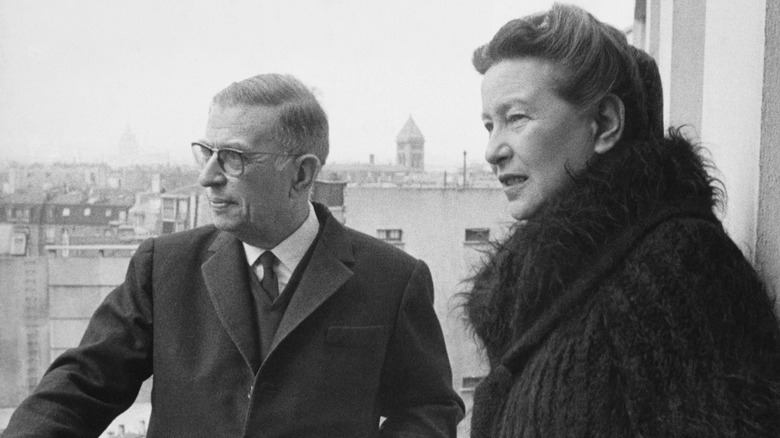
In real life, Jean-Paul Sartre clearly didn't share his character's pessimism about falling in love, and neither did Simone de Beauvoir. Based on the personal correspondence they left behind, there were plenty of romantic encounters during their 50-year open relationship. Unfortunately for Sartre, the thrill of the chase was often more compelling. In one instance, rather than spending time with a lover, Sartre was more interested in dishing spicy details to de Beauvoir.
His adherence to existentialist philosophies also caused major internal conflict. Since existentialism is about people making decisions of their own volition, Sartre struggled with the uncertainty of love. As many have experienced in their own lives, no one can force another person to love them and there are no guarantees a romantic partner won't change their mind over time. Beyond these concerns about the future, Sartre worried relationship interactions could cause people to behave in ways harmful to themselves or each other.
Even though de Beauvoir was a confident alpha female, when she and Sartre first embarked on their unconventional arrangement, it's possible they might have hesitated if they had been able to foresee the complexities of their lengthy relationship. Then again, Sartre's quote, with its image of jumping across an abyss, is breathtaking, and it perfectly captures the feeling of opening oneself to the unknown. While life will always have unforeseen hardships, there are unknown joys in the future, too.
More Quotes from Jean-Paul Sartre
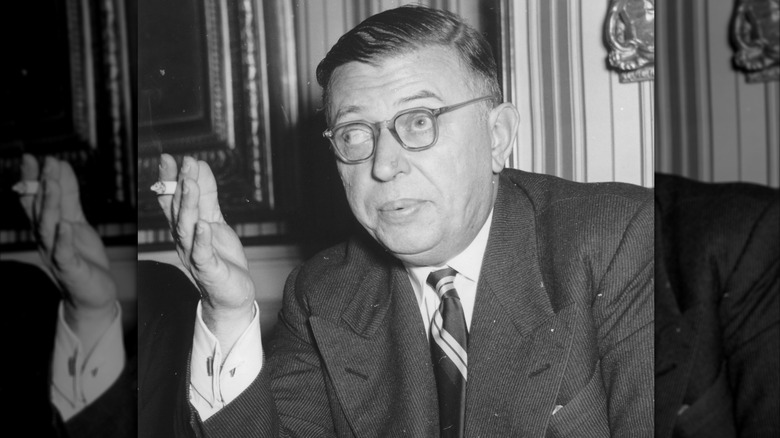
- "Everything has been figured out, except how to live."
- "Hell is other people."
- "The writer must therefore refuse to let himself be transformed into an institution, even if this occurs under the most honorable circumstances."
- "Like all dreamers, I mistook disenchantment for truth."
- "In love, one and one are one."